Data center developers sue county in Arkansas over new regulations
Oct 30, 2026 | 7:40 pm ET
Description
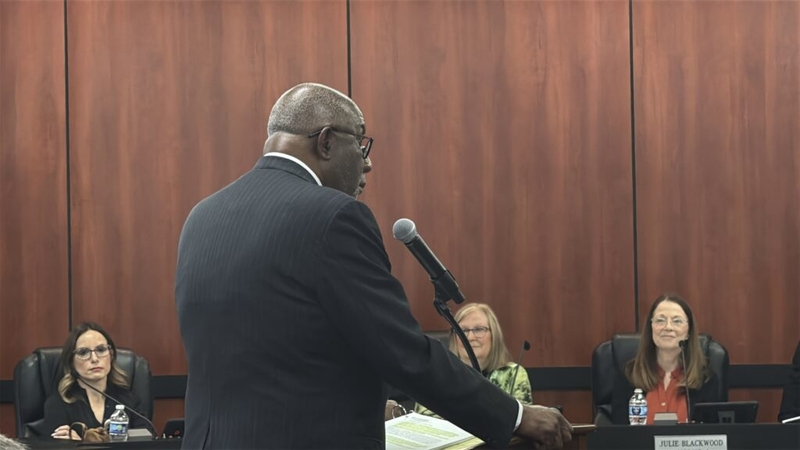
Wendell Griffen, the Democratic nominee for Pulaski County judge, speaks to the quorum court on proposed data center regulations as the proposals sponsor, Justice of the Peace Julie Blackwood, listens on May 12, 2026. (Photo by Ainsley Platt/Arkansas Advocate)
The Connecticut-based company behind a data center planned in Arkansas sued local officials in federal court Thursday over regulations targeting projects like it, claiming the county didn’t have the authority to enact such limits and that the state’s open meetings law was circumvented.
The 38-page lawsuit, filed in the U.S. District Court of Eastern Arkansas, accused Pulaski County of enacting regulations targeting AVAIO Digital’s planned data center that infringe on the federal government’s authority to regulate interstate electrical transmission and commerce.
AVAIO asked the court for an injunction preventing the regulations from being applied to its project, monetary damages and for the disclosure of public records it said had been withheld from them.
It marks the second lawsuit filed in federal court this year connected to data center projects that have appeared in the state over the last two years.
Judge denies effort to block Arkansas outlets from publishing details about data center agreement
Entergy Arkansas unsuccessfully sued the Arkansas Democrat-Gazette, one of its reporters and a local resident in September over the publication of details of the utility’s power agreement for Google’s West Memphis data center that the resident obtained through a public records request.
The regulations AVAIO is contesting went into effect earlier this week after the quorum court overrode Democratic Judge Barry Hyde’s veto of them, and were drafted in response to community anger over AVAIO’s project located just off 145th Street.
The regulations create uncertainty and threaten AVAIO’s “existing business, financial, and investment arrangements,” the company wrote in the complaint.
The lawsuit also accused Democratic nominee for county judge, Wendell Griffen, of having “unlawful control over the Pulaski County Quorum Court,” pointing to his role authoring and advocating for the regulations.
Griffen told the Arkansas Advocate that the lawsuit was expected, and said it was the county’s “constitutional power” to regulate data centers within its boundaries. A spokesperson for Pulaski County did not immediately respond to a request for comment Friday evening.
The company said Griffen and several members of the quorum court engaged in polling and deliberations that violated the Arkansas Freedom of Information Act. The lawsuit also named Democratic Justice of the Peace Julie Blackwood, who was the lead legislative sponsor of the regulations.
Griffen also disputed AVAIO’s characterizations of his communications with quorum court members
“If they contend that a private citizen exercising his First Amendment right to approach members of the legislative body of the county about a matter of public interest is unlawful authority, then they need to reread the First Amendment to the Constitution of the United States,” Griffen said.
The ordinance “is without effect because it is an obstacle to the full exercise of the federal government’s authorities under the Federal Power Act to regulate the transmission of electricity,” AVAIO wrote in its complaint.
The alleged polling, the company said, also makes the passed ordinance invalid.
Judge Lee Rudofsky, who oversaw Entergy’s lawsuit against the Democrat-Gazette, is the assigned judge on the case.
Little Rock