As Pennsylvania’s measles-associated death toll rises, the CDC’s count lags. Why?
Nov 18, 2026 | 5:00 pm ET
Description
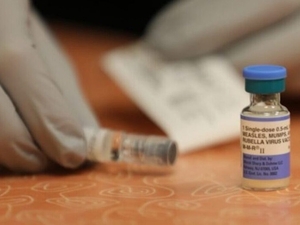
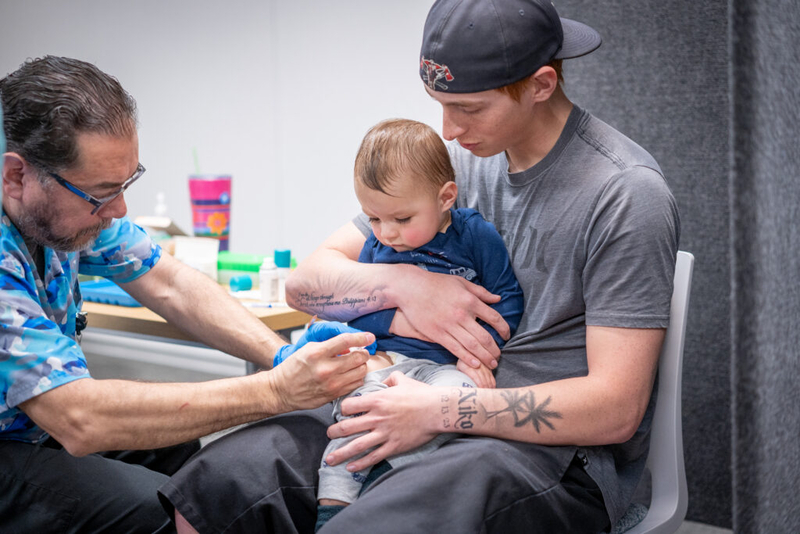
Ethan Turner holds his 14 month old son, Niko, while he gets the MMR vaccine from Raynard Covarrubio at a vaccine clinic put on by Lubbock Public Health Department on March 1, 2025 in Lubbock, Texas. (Photo by Jan Sonnenmair/Getty Images)
On Tuesday, it was announced by the Pan American Health Organization that the United States officially lost the measles-elimination status it had earned in 2000. The virus, they determined, has now spread nonstop in the country for one year.
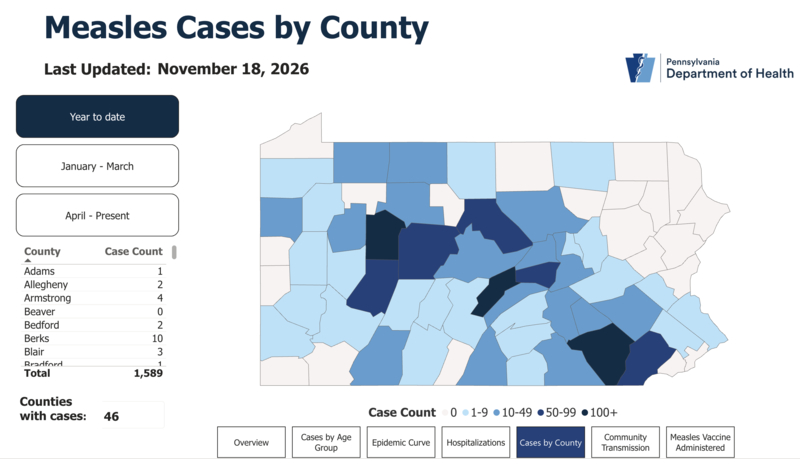
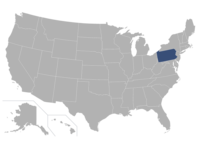
Pennsylvania has emerged as the epicenter of that outbreak, with nearly 1,600 cases and eight deaths reported by public health officials this year to date, more than any other state in the country.
But rifts between state and federal health officials have complicated the picture, and experts warn that could risk the spread of misinformation and confusion over how best to combat the disease.
The conflict is perhaps most apparent in how the state and federal government are counting deaths from measles.
While Pennsylvania’s Health Department has recorded eight measles-associated deaths this year, the Centers for Disease Control and Prevention (CDC) has only recognized six nationwide. Two others measles-associated deaths have been reported by Wisconsin’s health department and one by New York’s, but it’s unclear which deaths are or aren’t being counted by the CDC.
Lizzie Harvey, deputy press secretary for the U.S. Department of Health and Human Services, which houses the CDC, said, for privacy purposes, the agency would not provide any details about the deaths to the Capital-Star, including what state or county the deceased were in.
The schism between the state and federal agencies comes down to a recent change in CDC policy about how they define and count measles deaths. While they used to rely on data from state health departments, in September, the CDC said it would get its tally from the number of deaths reported by the National Center for Health Statistics where measles was listed as the underlying cause.
It’s a change in longstanding precedent. Experts say the NCHS data, because it often lags, is better for retrospective study than understanding the scope of an ongoing outbreak. And it risks undercounting the number of deaths caused by measles.
Many states like Pennsylvania track what are known as “measles-associated deaths,” which the Department of Health defines as deaths that occur within weeks of measles symptoms emerging and not caused by unrelated incidents such as a car crash. This helps to capture deaths where the underlying cause may be another disease or infection that became more severe because of measles’ destructive impacts on the immune system.
Harvey told the Capital-Star using NCHS data “ensures accuracy by preventing the inclusion of cases in which measles may have been present but was not the cause of death. Including such cases could inhibit HHS from assessing the nationwide situation accurately and addressing it with precision.”
But, public health experts warn the change in policy upends decades of generally accepted best practices and risks downplaying the severity of the outbreak.
“I think there’s a generous and a cynical view here,” William Moss, an epidemiology professor at Johns Hopkins’ Bloomberg School of Public Health, said about the change in CDC policy. “The generous interpretation, I think, is that they’re being careful and wanting to make sure that the deaths that are being counted are truly due to measles … The more cynical view is it’s an effort to minimize the severity of measles, and that is consistent with some other messaging we’ve seen from the federal government. I don’t know how to adjudicate these views.”
Health and Human Services Secretary Robert F. Kennedy Jr. has a long history of spreading misinformation about vaccines’ proven efficacy and safety.
At the center of the rift between Pennsylvania and federal officials sits Gov. Josh Shapiro and Kennedy, who have repeatedly criticized one another in public appearances and on social media.
Here’s a breakdown of what has changed so far in how the CDC counts deaths from measles, what it means for Pennsylvania, and why it has experts concerned.
How it started
Pennsylvania recorded its first measles deaths of 2026 in late August, after an outbreak centered mostly in Lancaster County had already sickened more than 400 people in the state.
Shapiro announced the two deaths himself without providing much additional information, which officials said was to protect the privacy of the deceased and their families.
Reporters were later told one victim was an infant whose primary cause of death was laceration to the spleen. The baby had contracted measles from its mother before birth, which can cause inflammation of the spleen and raise the risk of a rupture.
But with little information available to the public, Kennedy took to social media, saying the Shapiro administration may have “fabricated” the deaths. He cited Lancaster County Coroner Stephen Diamantoni, who said that measles had not yet been determined as the underlying cause of death. He also accused the state Department of Health of failing to share data with the CDC, a charge the department and Shapiro’s office have refuted. The Atlantic reported that the baby’s parents believed the death was caused by measles.
The governor, for his part, had accused Kennedy on the same platform of “downplaying the severity of measles” and promoting misinformation that contributed to a decline in vaccination rates.
As the two leaders continued to go after one another over several days, the official stance of the CDC remained that no verifiable measles deaths had been recorded in the country in 2026. Reuters reported that Kennedy himself asked his CDC director not to count the Pennsylvania measles deaths in their nationwide tally.
Less than two weeks later, on Sept. 4, the CDC updated its webpage that tracks measles cases and deaths to note the CDC was “working with the Council of State and Territorial Epidemiologists (CSTE) to develop a standardized case definition for deaths due to measles. This work is intended to promote consistent classification and reporting of measles deaths across jurisdictions.”
Conflicting approaches to defining a measles death
As it stands, the CDC says it is still working on that definition of a measles death.
But Dr. Matt Ferrari, director of the Center for Infectious Disease Dynamics at Penn State, says public health officials already had a widely-accepted definition of what counts as a measles-attributable death based on one promoted by the World Health Organization. And it intentionally includes the deaths of people who died of subsequent health complications after contracting measles.
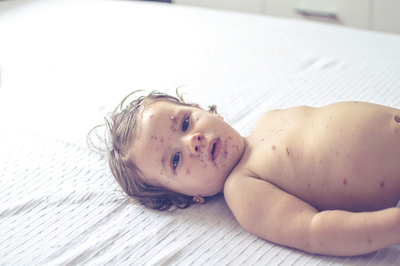
According to the WHO, a measles-related death is any death that occurs in an individual with a confirmed measles case within 30 days of symptom onset and is not due to an unrelated cause like acute trauma.
“The reason we use this definition of a measles-attributable death is because it is a prospective view of, ‘what is the value that the vaccine could provide,’” Ferrari said. “Whether or not that child died when they still had rash, or died because they were immunocompromised and subsequently infected with a bacteria that caused pneumonia or diarrheal disease, a measles vaccine would have prevented either of those outcomes.”
According to Rob Bonacci, a special advisor to Pennsylvania Department of Health Sec. Debra Bogen, the WHO definition almost exactly matches the one used by the state agency. Bonacci noted that the state has relied on definitions from the Council of State and Territorial Epidemiologists (the group CDC says it is working to define measles deaths with) when tracking outbreaks of other diseases. But the group had no such definition for a measles death.
“Part of that may be because measles has been so rare in recent years,” he said.
Despite the back-and-forth between Shapiro and Kenedy, Bonacci says state health officials still work closely with the CDC’s measles team.
“We meet with them on an every-other-week basis,” he said. “We have requested technical assistance from them many times. They have a lot of expert knowledge, and we’ve relied on that knowledge to provide assistance to our outbreak response here.”
Still, Shapiro has continued to criticize the head of the U.S. Health Department.
Rosie Lapowsky, a spokesperson for Shapiro, told the Capital-Star, “Conspiracy theorists like RFK, Jr. have no business leading our nation’s public health agencies. His deliberate choice to ignore medical experts and longstanding death reporting protocols puts lives at risk.”
Shapiro has often invoked Kennedy’s history of questioning the safety and efficacy of proven vaccines.
Before becoming U.S. Health secretary, Kennedy served as the chair of an anti-vaccine nonprofit called Children’s Health Defense. In that role, he advocated for alternative treatments for vaccine-curable diseases and spread misinformation about vaccine safety.
As head of the U.S. Department of Health and Human Services, he gutted and replaced a 17-person vaccine advisory council at the CDC, cut funding for vaccine research and has hired vaccine skeptics.
Roughly five years before the current outbreak, Kennedy spoke to a crowd of hundreds in Lancaster County, telling them that “the cure for measles is chicken soup and vitamin A,” and warning that “public health agencies and the pharmaceutical industry” were hiding science about the dangers of vaccines.
More recently, Kennedy has encouraged vaccination.called the MMR (Measles, Mumps Rubella) vaccine “the most effective way to prevent measles.”
“Under Secretary Kennedy’s leadership, CDC has mounted an aggressive response to measles outbreaks across the country,” said Harvey, the HHS spokesperson. “Secretary Kennedy and CDC Director Dr. Erica Schwartz continue to recommend the MMR vaccine as the most effective way to prevent measles and protect communities from further spread.”
Experts say vaccinations are the key
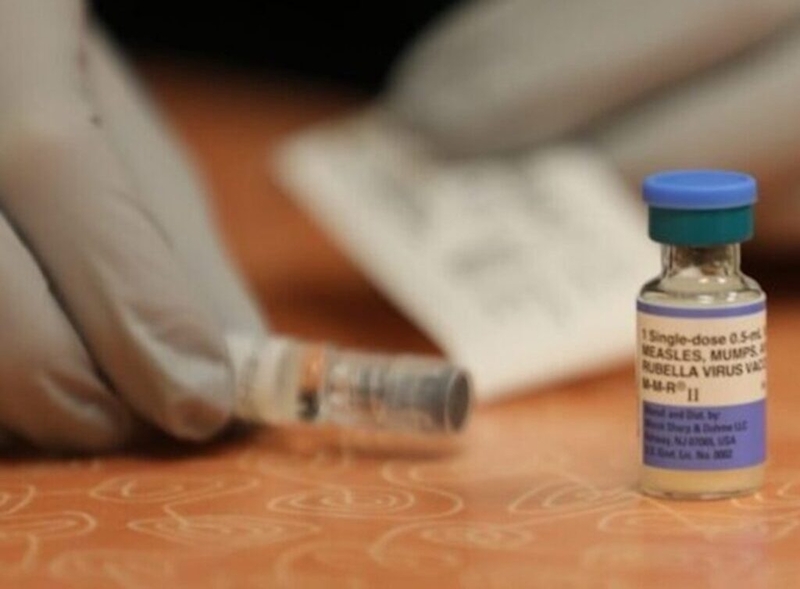
The measles vaccine is highly effective, and nearly universally considered the best tool we have to combat the ongoing measles outbreak. People with two doses of the MMR or MMRV vaccine have 97% protection against measles. Those with a single dose have around 93% protection. In the rare cases where vaccinated people contract measles, they are less likely to have severe symptoms or complications.
Of the nearly 1,600 people who have contracted measles in Pennsylvania this year, less than 1% were fully vaccinated, according to the state Department of Health.
Roughly one in five people who contract measles require hospitalization, with children, pregnant women and unvaccinated people at the highest risk. About one to three out of every 1,000 people who contract measles will die.
Generally, infants receive their first dose of the MMR or MMRV vaccine when they’re around a year old, and a second dose between ages 4 and 6. But the CDC recommends that parents of infants at heightened risk of developing measles, such as those living in areas where the disease is spreading rapidly, consider getting their child an initial dose as young as 6 months old.
However, infants under a year old with developing immune systems will receive less protection from the vaccine. Because of that, it’s recommended those who receive an early shot early still get two additional doses at a year old and between 4 and 6 years old.
“That’s the trade-off,” Moss said. “For 25 years we’ve had the luxury of having measles elimination status in this country. So the risk was low that these children could wait until they’re one year of age when a higher proportion will respond.”
Concerned parents should speak to their pediatricians.
Measles vaccines are widely available in Pennsylvania, including at 59 state health centers that provide them for free to uninsured or under-insured Pennsylvanians. Many county or municipal health centers are providing them as well. Those who are unvaccinated or unsure of their vaccination status are urged to talk to their doctors or visit these centers.
Harrisburg, PA