Outdoor groups sue state over new land exchange policy
Jun 26, 2026 | 3:13 pm ET
Description
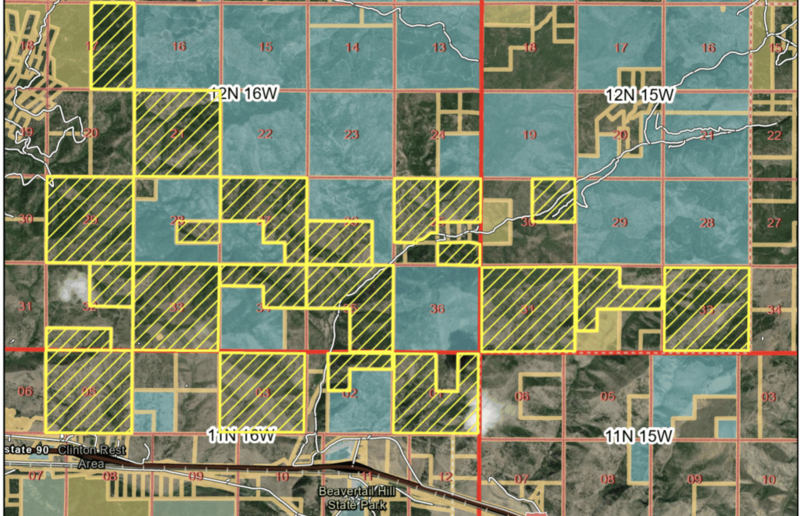
A Montana DNRC map showing a proposed acquisition as part of a land exchange. The state would receive the yellow-hashed parcels in exchange for giving up roughly half the acreage in landlocked parcels elsewhere. (Screenshot from DNRC documents)
Several outdoor organizations have filed a lawsuit against the Montana Land Board arguing a recent update to the state’s land transfer policy was done without adequate public notice or participation.
The lawsuit, filed on June 17 in Lewis and Clark District Court, challenges the first revisions to the state’s land exchange policy since 2004, which shifted some decision-making power to the Land Board and away from the Department of Natural Resources and Conservation.
State Auditor James Brown authored the revised policy, which he said has been a priority since he was elected in 2024. He said the process needed to be streamlined and that decisions about managing state land should be made by the elected officials on the board, rather than department bureaucrats.
But the Montana Sportsmen Alliance, Montana Wildlife Federation and Public Land/Water Access Association argued the public did not receive enough notice of the proposed changes, which were only published in the week before the Land Board’s May 18 meeting.
“During our testimony, we requested a 30-day extension because this was a complex proposal moving too quickly for meaningful public review,” Montana Wildlife Federation Board President Mike Mershon said in a statement. “Governor Gianforte agreed with us and made that motion, but it was voted down. Clearly, we were not the only ones concerned that this process was inadequate for an action of such significant public interest.”
During the May meeting, Gov. Greg Gianforte sought a 30-day public scoping period, which he said was standard practice for the land board when making major policy changes.
“I think your intent to improve the land exchange process is a good one. I think the opportunity to streamline it, so that we can clean up some of this checkerboard and expand access, would be helpful to all Montanans. I support updating the policy,” Gianforte told Brown at the meeting. “I had anticipated, in accordance with land board past practice, that we would first submit the proposal to public scoping before voting on it. It was first posted a week ago, and I don’t believe that that is sufficient time to allow adequate public input before going to public comment.”
A spokesperson for Brown told the Daily Montanan there had been “significant opportunity for public input” on Brown’s proposal, and that the changes were supported by groups of stakeholders “representing broad segments of the public.”
Among the powers given to the Land Board is the ability to exchange public State Trust Lands with other government agencies, or for private land “of equal or greater value” according to Montana statute. One main goal of swapping sections of public and private land is to consolidate state lands, and eliminate parcels the public isn’t able to access, such as those landlocked or cornerlocked by private holdings.
The old policy, instructed DNRC to conduct a preliminary evaluation of a proposed land exchange, with the ability to reject a proposal for not meeting specific criteria. If DNRC decided a proposal met requirements, it would solicit public comment and then send a preliminary report to the Board, which held final decision-making authority.
The revised version no longer gives DNRC the power to deny proposals, and puts a greater emphasis on allowing landowners to hire consultants to facilitate key parts of the exchange process, which Brown said would eliminate costs and staff time from DNRC.
But the lawsuit argues the use of consultants, and changes to how publicly accessible lands are valued and requirements related to fair trades of water-accessible parcels, could make exchanges “harder to evaluate consistently and transparently,” and the public should have been given more time to review and comment.
“We would rather put our trust in the professionals of Montana’s agencies who work for all of us and the public trust instead of a few contractors paid high salaries by the wealthiest few,” said Jock Conyngham, with Montana Sportsmen Alliance.
The legal complaint focuses on the process the Land Board used to adopt the new policy, rather than the substantive changes to the policy itself.
“If the five-member Land Board is going to rewrite the rules governing state land exchanges and give itself greater authority over those decisions, Montanans deserve to know exactly what is changing and have a legitimate opportunity to weigh in,” Mershon said. “They got neither. MWF believes this process needs a do-over—one that includes adequate notice, transparency and meaningful public participation.”
Helena, MT