Out of the Flock and into the Axon: Asked to dump license plate readers, Reno just switches brands
Oct 23, 2026 | 7:55 am ET

Description
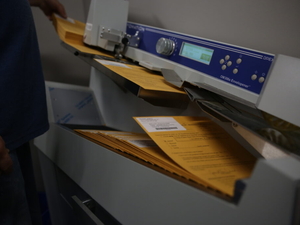
"Axon Outpost combines ALPR, livestreaming, and vehicle attribute recognition in one fixed device," the company advertises. (Axon promotional photo)
Amid growing public scrutiny of automated license plate readers and citywide protests decrying privacy concerns prompted by surveillance technologies, the City of Reno announced this month it would end its contract with Flock cameras.
Instead of discontinuing the use of the technology, the Reno City Council voted 5-2 to expand its existing contract Axon Enterprise to include ALPRs and other artificial intelligence tools.
“Announcing the end of Flock just to switch to another intrusive tech surveillance company is an insult to our community,” Democratic Assemblymember Selena La Rue Hatch said in a statement. “Our constituents have been loud and clear that they do not want the government spying on them, end of story.”
La Rue Hatch, a Reno-based lawmaker, announced in September she plans to bring a bill during the 2027 Legislative Session to ban the technology.
Reno Mayor Hillary Schieve and Reno City Councilwoman Meghan Ebert voted against the $22 million, eight-year contract citing privacy concerns and anger from the community.
Schieve said the outrage wasn’t about Axon or Flock and was frustrated that the conversation “put protection and privacy against each other.”
“Let’s be honest, people, this is about trusting your government with the technology,” she said. “We had the opportunity to get this right, and I think we stepped in this.”
The Reno Police Department already contracts with Axon for use of body worn cameras, tasers, and interview room recordings. It had entered into a separate contract with Flock in 2024 to use license plate readers, which it decided not to renew.
The new contract with Axon approved Wednesday adds automated license plate readers, drones, and artificial intelligence report drafting. The contract also requires quarterly audits and that data not tied to an investigation be deleted after 15 days.
Reno Police Chief Corey Solferino argued the use of surveillance technologies, like ALPRs, was needed to reduce crime and enhance public safety.
“As these calls for service continue to explode, we continue to ask our officers to do more with less,” he said. “At some point, we’re going to reach a critical mass or a tipping point, where we can’t answer all those calls for service. And these efficiency tools that are part of this program are going to free up our officers.”
One of the many points driving apprehension of the technology was ample reporting across the country showing cases of law enforcement using technology to track the whereabouts of significant others, exes, and even random strangers.
The technology, Solfrino said, was not being misused in Reno and he believed the city already had existing guardrails and parameters.
“Any notion that the City of Reno can effectively oversee private surveillance technology is fictitious,” Athar Haseebullah, the executive director of the ACLU of Nevada, said in a statement. “Nobody with any semblance of intellectual honesty actually thinks that the Reno Police Department has more technology savvy than a private surveillance technology company it obtains its surveillance tools from. Reno should not be misspending tax dollars for surveillance expansion programs, including the acquisition of ALPRs and drones.”
Many opposed to the technology implored the city on Wednesday to instead invest in affordable housing, social services, or other resources that target root causes of crimes.
The lengthy contract left many, including some of the council members who voted in favor, with lingering questions about transparency, reporting requirements, and accountability.
Amid unanswered questions around the technology as well as the prospect of the state enacting regulations – if not an outright ban – on ALPRs, many opposed to the contract asked the council to at least consider postponing a vote.
In addition to La Rue Hatch’s proposal to prohibit the use of APLRs in Nevada, the legislative Judiciary Committee voted this summer to bring forward a separate bill to regulate the use of ALPRs.
Solfrino said he didn’t believe the city needed “to wait to determine what is and isn’t going to happen during the Legislative session.”
“We have the opportunity right now to be bold,” he said. “We have the opportunity now to make sure we have a model policy moving forward that protects the community interest.”
Backlash to ALPRs has swept the country this year and prompted bipartisan outrage.
Many cities, like Reno, have similarly ended contracts with Flock in response only to enter new or expansive contracts with other vendors like Axon.
In a letter submitted to the council prior to the vote, the ACLU of Nevada called Reno’s proposal “a bait-and-switch tactic.”
“People in Reno and throughout Nevada have demonstrated time and again that they oppose warrantless mass surveillance,” Haseebullah said. “ACLU of Nevada has consistently made clear that ALPR surveillance technology is deeply invasive and incredibly dangerous.”
Las Vegas, NV