Oshkosh prison guard convicted of sexual assault of incarcerated man
Jun 02, 2026 | 4:45 am ET
Description
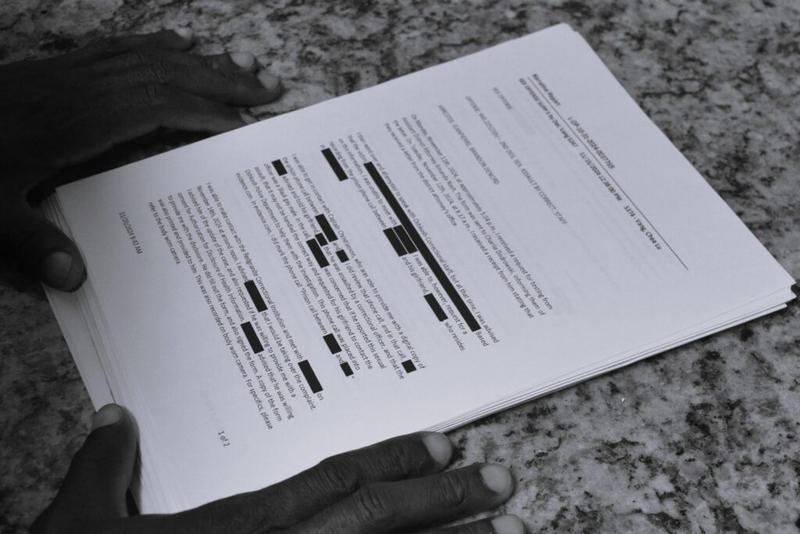
A man who was sexually assaulted by an Oshkosh Correctional Institution officer holds records from the investigation of his case.(Photo by Erik Gunn/Wisconsin Examiner)
A Winnebago County judge has sentenced a former prison guard to two years in prison for sexually assaulting an incarcerated man at a state prison in Oshkosh.
Judge John Jorgensen sentenced Brandon Jeanpierre to two years of prison and five years of supervision in the community on April 9, as well as sex offender registration.
The victim reported that Jeanpierre fondled him in his cell and performed oral sex on him in a laundry room at the prison, according to records obtained from the Winnebago County District Attorney’s office.
According to police records, the victim, whom the Examiner is not naming because he is a victim of sexual assault, said that “although he did not verbally tell the CO to stop or physically push him off, this was not consensual and he simply went along with it because he did not know what else to do.” He said he was frozen and that “nothing like this has ever happened to him.”
Describing a conversation with a police officer, the victim told the Examiner that one of the officer’s first questions was, “Why didn’t you do anything to stop it?” That angered him, and he felt that she was shaming him. He spoke positively of his experience with a different officer, a detective who put him at ease.
“When you’re incarcerated, what they say is law,” the victim said. “When they tell you to do something, you do it. If not, you take the risk of going to solitary confinement, or you never know.”
The victim said he doesn’t know what he could have done to prevent retaliation for not complying, such as Jeanpierre making an accusation against him. He also said he had his girlfriend call the police because he didn’t have the confidence that the Department of Corrections would do the right thing.
In August, Assistant District Attorney Amanda Nash gave notice that the prosecution planned to introduce DNA evidence to the jury at trial. That didn’t happen, as Jeanpierre took a plea deal instead of going to trial.
A police report says the laboratory report is confidential, but a summary of the report implies that DNA swabbed from Jeanpierre’s mouth was linked to DNA swabbed from the victim’s penis. It states that the finding in the lab report “provides a very strong support for inclusion” in the case.
By reviewing video surveillance, prison staff saw that the two men were in the laundry room together on three different occasions, according to a police report. The victim told the Examiner that the other two times in the laundry room involved Jeanpierre touching him.
A member of the prison staff said that they were in the laundry room for a matter of seconds, with the longest period being about 30-40 seconds, according to the prosecution’s criminal complaint. The complaint says the video did not show what happened inside the room.
The staff person who reported it “noted that it was very unusual” for an officer to go into a laundry room with the lights out for any amount of time with an incarcerated person.
The Examiner got in touch with the victim, who was released from prison earlier this year, through his attorney, Lonnie Story. Story gave the Examiner a copy of a letter dated April 22, which he said he sent to the state. In it, Story says his client demands $5 million to settle the case without a lawsuit, and offers to negotiate, asking the state to respond within 30 days. Story told the Examiner on May 19 that he has not received a response.
If the state does not respond “appropriately,” Story told the Examiner, he expects to bring federal civil rights claims based on the sexual abuse, as well as claims concerning the state’s response to his client’s report of sexual abuse.
Story is still in the process of gathering records, but said the case appears to involve both abuse and “substantial questions” about the response after the victim reported it.
Prosecutor asked for ‘strong message’
Jeanpierre wasn’t physically violent, but his ability to punish a prisoner who did not comply with his demands created a serious power imbalance, and “loss of freedom can be a far more significant threat than physical force,” Nash said.
She recommended he spend five years imprisoned and five years on supervision in the community, the maximum amount of time for a third-degree sexual assault.
The victim thought Jeanpierre might be able to do something that would affect his release date, Nash said. She added that, although he was afraid, he came forward and made sure Jeanpierre couldn’t use his position to violate and harm others.
“To take a position of trust granted to the defendant by the State and use it to sexually assault someone is simply unacceptable,” Nash said. “There needs to be a strong message against this type of conduct.”
Nash noted that a more severe second-degree charge was read into the case. Jeanpierre wasn’t found guilty of that charge, but Jorgensen was able to consider it when sentencing him for the third-degree charge.
In a notice to the court in December, Nash said Jeanpierre’s plea deal reflected his willingness to take responsibility for his actions and avoided the need for his victim to go through the stress of testifying at trial.
Mentally and emotionally, the victim has suffered “immeasurable pain,” he wrote in a statement to the court.
“Being taken advantage [of] by someone who was supposed to protect me has caused me to regress to when I was taken advantage of as a child,” he wrote. “The sadness, anger, depression, [sleepless] nights and thoughts of self harm are something I worked years to fight through only to relive it all as a middle aged man. [It] is something that can never be healed.”
Defense, DOC recommended 90 days in jail
At the sentencing hearing, defense attorney Scott Ceman said he agreed with the Department of Corrections’ recommendation for Jeanpierre’s sentence.
When Jeanpierre was found guilty in January, Jorgensen ordered a pre-sentence investigation to help him decide what Jeanpierre’s sentence should be. Jorgensen explained to Jeanpierre that a probation agent was going to prepare a report on him, including his background and the facts of the case. The investigation is confidential and so could not be reviewed by the Examiner.
However, Jorgensen referred to a DOC recommendation during the sentencing hearing, saying that he recognized “the Department of Corrections recommendation of straight probation, 90 days jail.”
He said he did not think that addressed the seriousness of Jeanpierre’s offense.
Ceman said he joined the department’s request and asked for “one to two years initial confinement, [and] three to four years extended supervision [in the community] imposed but stayed.”
In a stayed sentence, a convicted person is placed on probation in the community. If Jorgensen had sided with Ceman, Jeanpierre wouldn’t have had to serve prison time unless he violated the conditions of his probation.
Ceman asked for Jeanpierre to receive 90 days in jail and three to four years of supervision in the community, as long as he didn’t violate his probation.
Jorgensen disagreed, saying that if Jeanpierre did not go to prison, “it could send the wrong message to other guards as well as other inmates that they are at the peril of the decisions of the guards, and there will be no ramifications or [no] serious ramifications if they are violated.”
Nash and Ceman also had different views on whether Jeanpierre regretted his actions. Ceman said that Jeanpierre regrets his conduct and has accepted responsibility for it.
At one point in the sentencing hearing, Nash expressed concern about the pre-sentence investigation’s recommendation.
According to Nash, the agent who conducted the investigation noted that Jeanpierre was “minimizing or refusing to accept responsibility” but recommended that he receive probation. Nash had concerns that Jeanpierre “views this as something that was OK or something that the victim was a part of.”
“The victim had no say, he had no control over his own life, and he was sexually assaulted by someone who could take so much from him,” Nash said.
According to court documents filed April 9, Jeanpierre is planning to seek post-conviction relief. It’s unclear what grounds he plans to use for that challenge. He declined to speak during the sentencing hearing, and did not respond when the Examiner reached out to him in prison through the messaging app GettingOut.
A search of online Wisconsin circuit court records turned up no prior criminal convictions for Jeanpierre. Online DOC records indicate he has been incarcerated at Dodge Correctional Institution since April 21.
According to a notice from Nash to the court, the prosecution believed the victim was comfortable with the plea deal and the state’s recommendation for sentencing.
The victim said he didn’t realize it would be “such a minimal sentence” and he wishes Jeanpierre had been given a longer sentence, but he’s trying to be able to move on from the situation.
Defense arguments
Jeanpierre’s attorney, Scott Ceman, appeared to question whether the victim had consented to the assault, arguing there wasn’t evidence of Jeanpierre threatening him. He acknowledged that under the law, an incarcerated person cannot consent to sexual activity with a staff member.
Due to the authority staff members have over incarcerated people, incarcerated people can never truly consent to sexual activity with a staff member even if they agree, a Wisconsin Department of Corrections handbook states. It’s always illegal for a staff member to engage in sexual activity with an incarcerated person.
Ceman alleged at the sentencing hearing that as a prosecutor, he was a “strong advocate” for the position that the Department of Corrections does not adequately train its employees in the Prison Rape Elimination Act. (Ceman left the Winnebago County District Attorney’s Office in 2019 citing his dissatisfaction with the wages prosecutors receive). He claimed he asked Jeanpierre what PREA training he received and that it was “really nothing.”
Ceman alleged this leads to “grooming-type behavior” by incarcerated people who then report they’ve been sexually assaulted and are moved to a better living area within the prison. Jeanpierre’s victim strongly disagrees with Ceman’s implication and told the Examiner that the attorney was engaging in victim blaming in front of the judge.
He said he was previously incarcerated for 10 years and never accused anyone of sexual assault, and asked why he would do so when he was incarcerated a second time and serving a shorter sentence. The assault took place in October 2024, and he was released from prison earlier this year. Court records show none of his convictions were sexual in nature.
The Department of Corrections did not respond to requests for comment from the Examiner. Its website states that the agency has zero tolerance for sexual abuse and sexual harassment. Department policy states that the DOC tracks such incidents, identifies core causes and takes corrective actions.
The agency trains all employees, contractors and volunteers, and provides incarcerated people with a “comprehensive orientation” about their right to be free from sexual abuse, harassment and report-related retaliation, the policy states.
Employees receive training every two years and “refresher information” on non-training years, covering topics such as the dynamics of sexual abuse and sexual harassment behind bars, according to the policy.
Victim describes multiple assaults
The victim told the Examiner that prior to the events described in the prosecution’s criminal complaint, Jeanpierre initiated conversation with him, such as asking him about his family.
According to a police report, the victim believed that the first assault took place sometime after 8 p.m. in his cell. He only knew that people called the officer who assaulted him “Pierre.”
He said that Jeanpierre said “let me see it” before reaching inside his cell from the doorway and grabbing his crotch. He believed Jeanpierre was drinking because his breath smelled like alcohol.
Jeanpierre told him that Jeanpierre was going to be moving to a “Q unit,” he reported. He said Jeanpierre told him to make a request so he could also be moved there.
He said he sent a piece of paper to get himself moved to Q unit through what the criminal complaint described as “some sort of inter-prison mail,” and Jeanpierre gave him a small piece of paper with a phone number on it.
The victim said the piece of paper he had received from Jeanpierre had been thrown out, and that he had rewritten the number on another piece of paper, which he gave to another incarcerated man. A piece of paper found in that man’s room had the personal phone number that the prison had on file for Jeanpierre.
The victim said he didn’t ask why the officer was asking him to move to that unit, and that, according to the report, he “minds his own business, that he wants to get out on time, doesn’t cause trouble and when a CO [correctional officer] asks him to do something, he just simply does it.”
After their conversation, Jeanpierre walked by him about two to three times and swiped the back of his hand near his crotch, the victim said.
He said that he was working on the janitorial staff that night, and around 10:30 or 11 p.m., Jeanpierre told him to come into the laundry room, where Jeanpierre pulled down the victim’s shorts and put his penis in his mouth without his consent, the victim said.
He added that after he was assaulted in the laundry room, he went to his room and stayed there for the night.
The Examiner reviewed records that give insight into the state’s investigation into the sexual assault, including the transcript of an interview on Nov. 22 with Eric Henslin, identified as an administrative captain at Oshkosh Correctional Institution. The victim said he obtained those records by requesting them from the Department of Corrections.
A camera covers the area of the door that provides access to the laundry room, Henslin said. A window allows the camera to see inside, but the lights were off. After the allegation of sexual assault, a memo went out to direct staff that all lights would remain on in the laundry rooms, he said.
Chad Schepp, the interviewer and a corrections investigator for the DOC, asked Henslin about the victim’s allegation of smelling alcohol on Jeanpierre. Henslin said that if a supervisor doing roll call had any suspicion of Jeanpierre being under the influence of a mind-altering substance, it would be addressed.
Incarcerated man tipped off Examiner
The Examiner learned about the prosecution of Jeanpierre from Jerry Wheeler, 60, who has spent the majority of his life since 2002 incarcerated and is currently at the Oshkosh Correctional Institution.
The prosecution’s criminal complaint against Jeanpierre referenced an incarcerated man identified as “JLW.” Online court records from Wheeler’s past offenses state his name as “Jerry L. Wheeler.”
The victim said he went to Wheeler for advice the morning after the assault, according to the prosecution’s criminal complaint. Wheeler said he didn’t really know the victim and had talked to him a couple of times since he’s been at the Oshkosh prison, the complaint states.
Wheeler said the victim initially spoke hypothetically about how to report a sexual assault and what to do if he was afraid of retaliation, and that he later admitted he had been assaulted by a correctional officer the previous night, the complaint says. The victim told the Examiner that Wheeler convinced him to report the assault to the police.
The DOC’s response so far
Jeanpierre had been with the Department of Corrections for nine months before the incident, according to Ceman’s remarks at the sentencing hearing. A police report dated the day after the assault says that Jeanpierre was being placed on administrative leave pending an investigation.
Jeanpierre resigned on Nov. 6, 2024, about a week after the assault, according to the records obtained by the victim. He did not respond to the DOC’s request to interview him.
A DOC report supplied by the victim states that the department did not interview the victim because of “the graphic nature of the incident,” concern about re-victimizing him and the fact that police already had a detailed statement.
When the Examiner brought this up to the victim, he said he could sort of understand that but he wished someone from the DOC had asked him if he wanted to be interviewed.
The victim said that after the assault, other incarcerated people started to hear about it, and not from him. Incarcerated people told him that correctional officers were talking about it. The victim said he went to security and reported concern for his safety. He was moved to a different institution.
Henslin, the prison captain interviewed by the DOC, said that the victimwas moved from the Oshkosh prison to Redgranite Correctional Institution because of the allegation of sexual assault, according to records supplied by the victim. He was later transferred between multiple other prisons.
The victim spoke positively of his experience with an advocate from a sexual assault services provider, but negatively of the DOC’s response to the assault.
The victim said that “every time I went to a new institution, no one spoke to me… anytime I would ask about the investigation or ask about specific paperwork pertaining to the investigation, no one knew anything.”
He said he was told staff would have to reach out to someone else and find out. Prison psychological services had to fact-check that he was telling the truth when he brought the assault up to them, he said.
Department of Corrections policy states that the agency provides a coordinated victim-centered response to reports of sexual abuse and sexual harassment, including providing medical and mental health services to victims as appropriate while investigating all allegations.
In the victim’s view, the DOC doesn’t have a great track record of being honest or caring for incarcerated people.
“Victims cannot be silent,” he said.
How frequently are sexual assaults reported in Wisconsin prisons?
In 2024, Wisconsin’s adult prisons saw 27 substantiated claims of sexual abuse and 66 substantiated claims of sexual harassment, according to an annual report from the DOC. (2025 data is available on the department’s website, but not at the same level of detail as the 2024 report.)
Most of the substantiated allegations for 2024 involved an incarcerated person abusing or harassing another incarcerated person. Six substantiated allegations involved a staff member, contractor or volunteer abusing or harassing an incarcerated person.
Adult prisons saw 186 unsubstantiated claims of sexual abuse and 241 unsubstantiated claims of sexual harassment in 2024. Most involved incarcerated people allegedly abusing or harassing other incarcerated people.
Ninety-eight claims were determined to be unfounded, and over a third of those claims were made against staff, contractors or volunteers.
The report’s category for a staff member sexually abusing or harassing an incarcerated person is broader than the category for sexual abuse by an incarcerated person. For example, if an incarcerated person consents to sexual contact with a staff member, it is categorized as sexual abuse. That’s not the case for sexual contact between two willing incarcerated people.
Jeanpierre’s conviction wasn’t the first of its kind in Wisconsin. In 2018, former correctional officer Alex Wouts was sentenced to 35 years in prison for sexually assaulting several incarcerated people, the Associated Press reported. Wouts threatened discipline and offered privileges to victims.
The DOC’s 2024 report included a list of specific steps the department took in 2024 to safeguard against sexual abuse, which included making physical changes within facilities and holding various staff trainings.
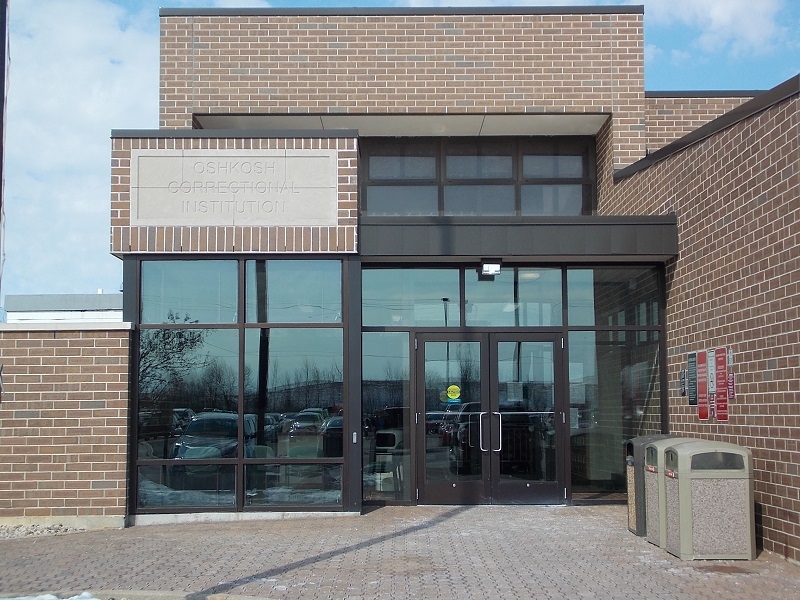
National PREA standards require audits for covered facilities at least once during each three-year cycle. In 2023, an auditor with the Colorado Department of Corrections audited the Oshkosh prison and reported it was in compliance with standards.
As for Department of Corrections staff, public DOC data reports five incidents in 2025 in which staff experienced unwanted sexual contact from incarcerated people.
Awaiting more records
On April 30, the Examiner made a public records request to the Department of Corrections for Jeanpierre’s disciplinary records.
On May 1, the Examiner made a public records request to the Oshkosh Police Department for the final case report for the case that led to the prosecution of Jeanpierre. The department denied the request, citing an ongoing investigation.
A few days after the Examiner took the matter to Winnebago County District Attorney Eric Sparr, citing state public records law and the fact that Jeanpierre had already been convicted, Sparr said that he understood the matter to be resolved and that the department should be fulfilling the request.
The Examiner has received at least some of the police reports in the case through a request to Sparr’s office, but has not yet received all records requested from the Oshkosh Police Department.
On May 5, a police records clerk told the Examiner that she is unsure what was still being investigated, and that the report has been approved to be sent. Using language from state public records law, she said the Examiner would receive the report as soon as practicable and without delay.

Madison, WI