OPINION: In tackling the childcare challenge, Nebraska’s advantage is working together
Sep 03, 2026 | 6:45 am ET
Description
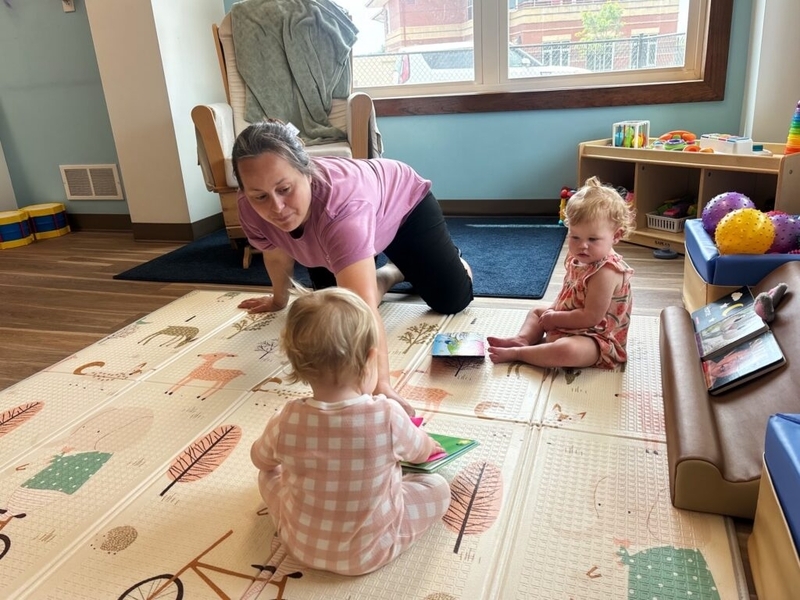
An employee at Cubby’s Childcare Center in Bridgeport, West Virginia, plays with two infants in July. A bipartisan group of state lawmakers say it’s time to rethink the nation’s fragile childcare system. (Photo by Amelia Ferrell Knisely/West Virginia Watch)
When a community is facing a challenge as complicated as early childhood, it is easy to ask who is responsible for solving it. Do we look to government? Nonprofits? Businesses? Philanthropy?
From my perspective as the economic development specialist at Nebraska Public Power District, I have learned that some of our biggest challenges do not have one person or organization responsible for solving them. Sometimes the best place to start is simply by getting the right people around the same table and recognizing that everyone has a role to play.
That is one reason I am looking forward to joining hundreds of Nebraskans at the Thriving Children, Families, and Communities Conference in Kearney on Sept. 22. The people gathering there represent different communities, professions, organizations and perspectives from across the state. But we all have something in common. We want Nebraska’s children, family and communities to thrive. That is something we care about at NPPD, too.
At NPPD, we understand how important strong communities are to Nebraska’s future. Communities need families who can build their lives here. Employers need a reliable workforce. And Nebraska needs communities that are prepared to grow and compete. All of those things are connected in the interest of children and families.
That is why early childhood is not an issue that one organization or one sector can solve on its own.
It is a trickle effect that starts with families. Families need access to affordable, quality childcare. Providers need the employees and resources to operate their businesses and provide quality care. Employers need parents who can reliably participate in the workforce. Schools benefit when children arrive ready to learn. Communities need young families to stay, work and build their lives there.
When those needs are connected, our solutions need to be connected, too.
That means collaboration must be more than getting people in a room. It is more than exchanging business cards, sharing updates or agreeing that something needs to change.
Real collaboration means listening to people who may see the issue differently than we do. It means making room for parents, childcare providers, businesses and community leaders to help identify both the problems and the solutions. And sometimes, it means being willing to change the way our own organizations do things if it helps move a larger goal forward.
Real collaboration means listening to people who may see an issue differently than we do. It means making room for parents, childcare providers, businesses and community leaders to share their perspectives and work together toward solutions that support children, family and our communities.
And sometimes, collaboration means being willing to change the way our own organizations operate if it helps move a bigger goal forward. That’s the kind of leadership Nebraska needs.
Leadership does not always come from the person with the biggest title, budget or organization. It can come from the childcare provider who understands what families in her community need. The parent who can explain why a program that looks good on paper is not working in real life. The business leader who recognizes that childcare is connected to workforce. The policymaker who brings people together around a solution. Or the community member who sees an opportunity others have missed.
Nebraska already has many of those leaders. Our opportunity is to connect them.
And that does not mean every community needs the same answer. Some of the best solutions start right in the community, with the people who understand the issue firsthand. What works in one community may not work in another.
Communities can learn from each other. Organizations share what is working, and when we connect those local experiences, we have a better chance of finding solutions that can make a difference beyond one community.
This is why events and conferences like the Thriving Children, Families and Communities Conference are so important. The value is not just in what we hear that day, it is in the relationships we build and what we take back with us.
Nebraska’s future depends on strong communities, and strong communities depend on children and families having the opportunity to thrive.
No single organization can make that happen alone. But each of us has something to contribute.
And when we work together, Nebraska communities can accomplish things that none of us could accomplish on our own.
Lincoln, NE