Operation Metro Surge showed the hidden public safety cost of immigration crackdowns
Apr 15, 2026 | 7:00 am ET
Description
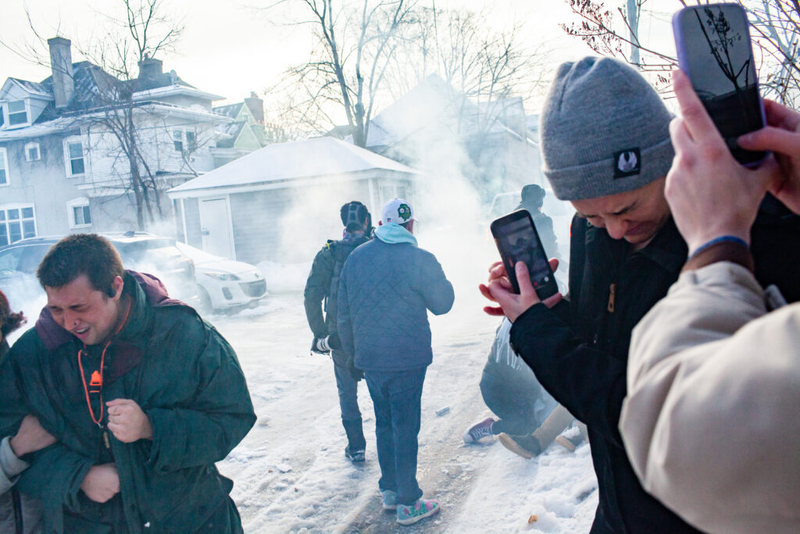
People react to tear gas as demonstrators gather after ICE agent Jonathan Ross shot and killed Renee Good through her car window Wednesday, Jan. 7, 2026 near Portland Avenue and 34th Street. (Photo by Nicole Neri/Minnesota Reformer)
As Minneapolis surveys the fallout from Operation Metro Surge, the true cost of heavy-handed federal immigration enforcement is coming into focus. Recent reporting has put the price tag in the hundreds of millions of dollars, driven by increased police overtime, lost wages and declining business activity.
But those figures don’t capture deeper disruptions to public safety that are harder to measure and slower to repair.
In January, federal authorities flooded the Twin Cities with roughly 3,000 immigration agents, overwhelming the Minneapolis Police Department’s roughly 600 officers. As the operation unfolded, daily life in parts of the city began to fray. Students stopped showing up to school. Clinics reported missed appointments, including among seriously ill children. Tens of thousands of residents stayed home, driving sharp declines in customers and staffing for businesses.
The human toll was even more severe. Two U.S. citizens were fatally shot by federal agents during the surge. In the weeks that followed, federal courts stepped in to address failures in due process for immigrants. Judges ordered access to legal counsel for detainees in response to clear violations. Another court intervened to ensure clergy access inside detention facilities.
This climate of fear directly undercut the ability of police to do their jobs. When people believe that any contact with law enforcement could trigger immigration consequences, victims hesitate to call 911 and witnesses think twice before coming forward. Routine policing takes on new risks. Crimes go unreported, offenders get a pass, and public safety suffers.
While federal officials have framed aggressive deportation efforts as a straightforward path to safer communities, Minneapolis’ experience is a reminder that public safety cannot be reduced to arrest totals or enforcement alone.
As former law enforcement officials, we know that public safety depends on a more complex ecosystem. Law enforcement plays a critical role, but our effectiveness is dependent on public trust and legitimacy. Safety also relies on the steady functioning of schools, hospitals, courts and other core institutions and services. Disruptions to any of these components can have far-reaching consequences, weakening the very structures that keep communities safe.
In light of this, it’s no surprise that local leaders elsewhere are now seeking to push back against federal incursions. In Chicago, Mayor Brandon Johnson has directed police to document and investigate potential unlawful conduct by federal agents. Denver Mayor Mike Johnston has moved to limit federal activity on city property and protect peaceful protesters.
These responses reflect understandable frustration. But they are imperfect solutions that risk placing additional strain on public safety systems. Local police do not oversee federal agents, nor are they trained or equipped to do so. Every officer pulled into managing federal operations is one less officer responding to calls, investigating crimes, or maintaining order.
The bitter irony is that federal-local partnerships, when done right, can strengthen public safety. Joint efforts targeting violent offenders and criminal networks combine federal resources with local knowledge and trust. But that cooperation depends on clarity, restraint and mutual respect — key pillars of any effective law enforcement strategy.
While the immigration surge may be over in Minneapolis, its lessons should not be ignored. It is increasingly clear that an approach to federal immigration enforcement built on overwhelming force and minimal coordination is not sustainable. The consequences are tangible, weakening emergency response, straining day-to-day policing, and eroding the social fabric and connections that are essential to public safety.
There is a better approach, and it starts with enforceable guardrails. Federal authorities must coordinate with local leaders in advance of major operations, even in jurisdictions that oppose their mission. That means clear communication, designated staging areas, defined command structures, and protocols for handling critical incidents.
Immigration agencies should also adopt basic standards of transparency and accountability. Federal agents operating in public should be clearly identifiable, body-worn cameras should be standard, and independent investigators must have access to evidence after any serious use-of-force incident.
At a minimum, federal authorities must respect the institutions that sustain community life. Hospitals, schools, courthouses and places of worship must remain accessible. People should not have to weigh the risk of immigration enforcement before seeking medical care, attending school, practicing their faith, or reporting a crime. Forcing that calculation onto everyday activities is antithetical to public safety.
Minneapolis offered a clear warning. Public safety cannot be built through force alone. It must be sustained through trust, stability and cooperation. Policies that undermine those foundations do not make communities safer. They make them more vulnerable.

Saint Paul, MN