Online students lose thousands of dollars following closure of SC’s Limestone University
Description
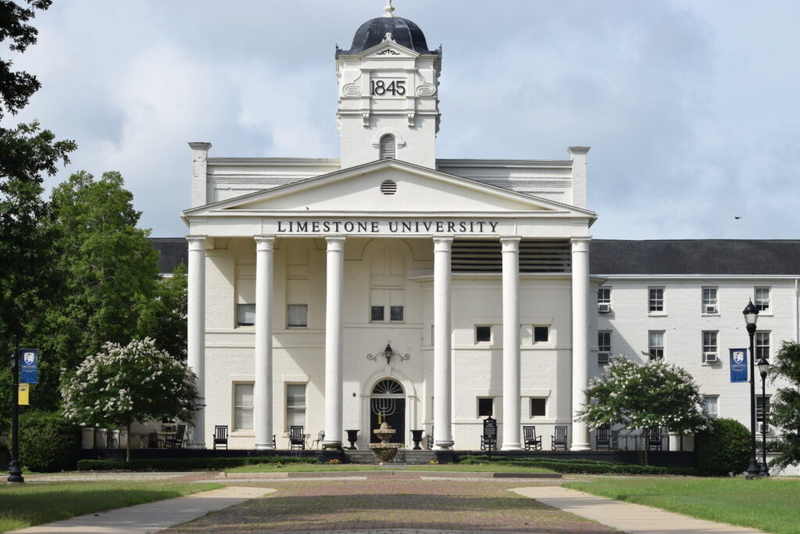
The Curtis Building pictured Tuesday, June 10,2025, on the Limestone University campus in Gaffney, South Carolina, served as the college's administration building until the school's closure at the end of April 2025. (Photo by Jessica Holdman/SC Daily Gazette)
GAFFNEY — Limestone University required students to pre-pay for summer classes. Now that the college has closed for good, some say they’re out thousands of dollars.
The school’s initial announcement that the 179-year-old, private college in South Carolina’s Upstate needed to raise $6 million to stay open came as online students faced a deadline.
On April 13, school officials told virtual students, including Mike Thielen, to submit their payments for summer classes within five days, according to emails reviewed by the SC Daily Gazette. The April 16 announcement of potential closure said online classes would continue, suggesting online students need not worry.
But after two weeks of frantic fundraising fell short, the school’s governing board ultimately voted for total closure. Online offerings ended too.
“That blindsided everybody,” Thielen said.
It’s been six weeks since the board vote. Thielen and half a dozen others say the school has still not refunded their money.
Limestone personnel designated as a point of contact after closure have not responded to emails sent by the SC Daily Gazette.
‘Total failure of leadership’
At first, Thielen received email replies from staff saying they were working on returning the $4,000 he paid for two classes.
He followed up several times and received the same response until layoffs became official and people stopped returning messages altogether.
“I don’t know if I’ll ever see my money again,” Thielen said. “Everyone is passing the buck. It’s just really shameful.”
Thielen enrolled in Limestone’s online program while working for a Spartanburg software company, which had a partnership agreement with the school. When he took a new job, he continued studying with Limestone, hoping to become the first person in his family with a master’s degree.
The online Master of Business Administration student, who lives near Fort Worth, Texas, and works as a healthcare recruiter, was just three classes away from finishing his degree. Now he’s left finding a new school — one that may not accept all of his transfer credits. And he’ll have to come up with more money to pay for it, on top of what he lost.
“It was just a total failure of leadership,” he said. “They rushed to shut it down and now they’re hiding.”
SC governor calls for study to consider consolidating colleges ahead of ‘enrollment cliff’
The story is similar for South Carolina Army National Guard member Thomas Martin.
The master sergeant from Charleston has worked for the Guard full time for two decades and was pursuing a bachelor’s degree in business on the side. Martin said Limestone’s online program was a popular choice among his fellow guardsmen because they could use federal and state benefits offered to military members to pay for it.
When Limestone’s final spring semester ended, Martin still had about $1,000 in state aid available, which he had hoped to put toward summer classes or textbook costs. The school, which received students’ allotment directly from the state Commission on Higher Education, has yet to credit him for those unused state dollars.
“I had a great experience with Limestone up until this,” he said. “Now they’re not even acknowledging my emails. It’s disappointing.”
Financial straits
Martin said he was repeatedly referred to South Carolina’s higher education agency for help. The commission’s staff told him they would research the matter but weren’t hopeful that the aid dollars would be returned.
Commission spokesman Mark Swart said the agency has not received any official, written complaints against Limestone at this time. He said the agency referred several students to Limestone’s former chief of staff, who the school designated as a point of contact.
Martin told the Gazette he didn’t realize the complaint process existed.
When Limestone announced the final decision to close, laying off 478 people employed by the college, leadership cited enrollment declines impacting colleges nationwide and rising costs as the drivers behind the school’s financial straits.
Limestone’s enrollment fell by half over the past decade, from 3,214 students in fall 2014, according to state higher education data, to 1,600 this semester, including both online and in-person students, according to the university’s announcement.
Auditors reported the school had a $7.6 million operating loss as of June 2024. To make up for losses, the school had borrowed some $22 million from its small endowment, which had a balance of just $9.2 million last June.
The school also faced an additional $30 million in debt, largely from a U.S. Department of Agriculture Rural Development loan, which Limestone took out in 2018 to construct a new library and student center, purchase a residence hall and refinance previous debt. The school offered campus land and buildings as collateral.
So far, USDA is not calling in that loan.
In a statement, a USDA spokesperson said it “takes its stewardship of taxpayer funds seriously” and “continues to actively engage with the university’s board and leadership to explore all available options to protect the federal investment and ensure the best possible outcome for the community and taxpayers.”
The school also has not filed for federal bankruptcy protections. No liens have been filed against the school in South Carolina district court. Nor are there any small claims filings from students at this time.
Other impacts
$500M for colleges, a bigger share for traditional public schools: How SC budget funds education
Not only does Limestone’s closure impact the college’s students, it also affected college employees and 13 K-12 public charter schools that relied on the college’s associated charter school management operations: Limestone Charter Association.
A former employee has filed suit in federal court alleging the school violated national labor laws when it only gave two weeks’ notice to workers. Federal law requires companies with 100 or more employees to give at least 60 days’ notice for layoffs, though there are some exceptions.
In its notice letter filed with the state employment agency, Limestone claimed the exemption allowed for employers actively seeking funding that an earlier notice could have jeopardized. The school has yet to respond in court filings.
Meanwhile, the state Department of Education is allowing the Limestone Charter Association, which operates as a separate nonprofit with its own staff, to continue operations through the coming school year as the charter schools it serves search for a new authorizer.
According to staff at the K-12 agency, the charter association will continue to receive state funding and act as an authorizer until July 1, 2026. It cannot accept any new schools starting July 1, 2025, and the state Education Department is recommending charter schools apply to a new authorizer by December.
The Limestone Charter Association schools:
- South Carolina Preparatory Academy, Anderson
- South Carolina Preparatory Leadership School, Anderso
- East Link Academy, Greenville
- Global Academy of South Carolina, Spartanburg
- Mountain View Preparatory, Spartanburg
- Goucher Charter Academy, Gaffney
- Legion Collegiate Academy, Rock Hill
- Horse Creek Academy, Aiken
- OCSD High School for Health Professions, Orangeburg
- Summerville Prep, Summerville
- Oceanside Collegiate Academy, Mount Pleasant
- Atlantic Collegiate Academy, Myrtle Beach
- Coastal High School, Myrtle Beach
Columbia