One student enrolled in WVU Washington Center after GOP lawmakers mandate creation of program
Jul 08, 2026 | 12:40 pm ET
Description
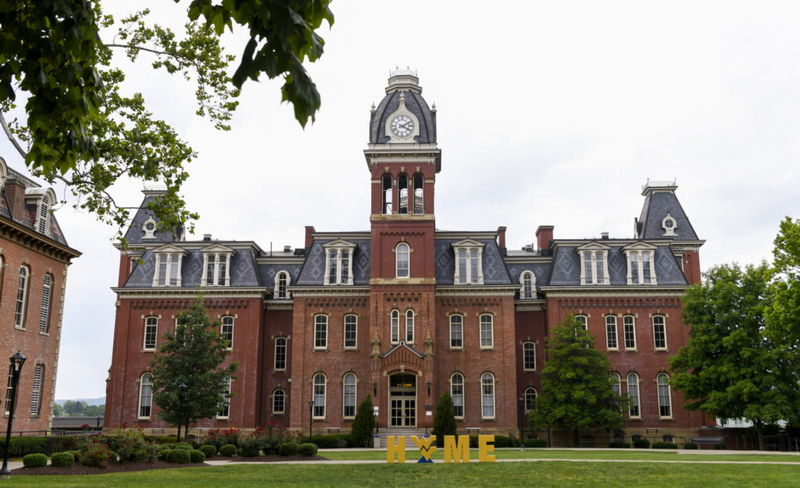
Woodburn Hall on the downtown campus of West Virginia University in Morgantown, West Virginia. (Photo by Lexi Browning/West Virginia Watch)
Only one student has registered for courses at West Virginia University’s new Washington Center, an academic program mandated by Republican lawmakers for the campus.
State lawmakers have allocated $3 million in state dollars to the “Washington Center for Civics, Culture and Statesmanship” in the last two years ahead of it officially opening this fall.
“I do think that it’s important for the Legislature and for the governor to reflect on this… there is a question about whether or not this is the best use of public funds,” said Erik Herron, a professor of political science at WVU. “I think the Washington Center, ironically, seems to be exactly what it complains that higher education has become. It was created in Charleston, and it was imposed on the university, so it’s a big government mandate.”
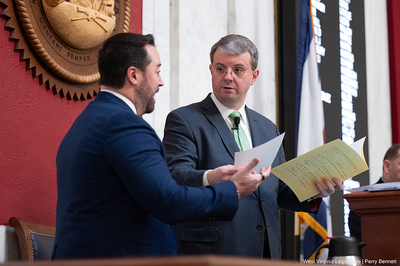
House Speaker Roger Hanshaw was a co-sponsor of the 2025 legislation creating the Washington Center at WVU.
He said the low enrollment was expected as the university hasn’t yet approved Washington Center courses to be counted toward credits for already existing academic majors at WVU.
“I’m not necessarily surprised that enrollment hasn’t begun to tick up … it’s not part of what a student is majoring in or minoring in, then the students have to take courses that do fit those approved parameters,” said Hahshaw, R-Clay.
He continued, “There’s a process by which those courses get approved and integrated into the academic structure to officially become part of a major … I think what we have here is an administrative process where the program just isn’t stood up yet.”
Del. John Williams, D-Monongalia, opposed lawmakers mandating the Washington Center at his alma mater, WVU.
“I’m not happy about it,” he said. “Now we’re in a position where we’ve allocated so much money towards this program, and only one person is taking advantage of it.”
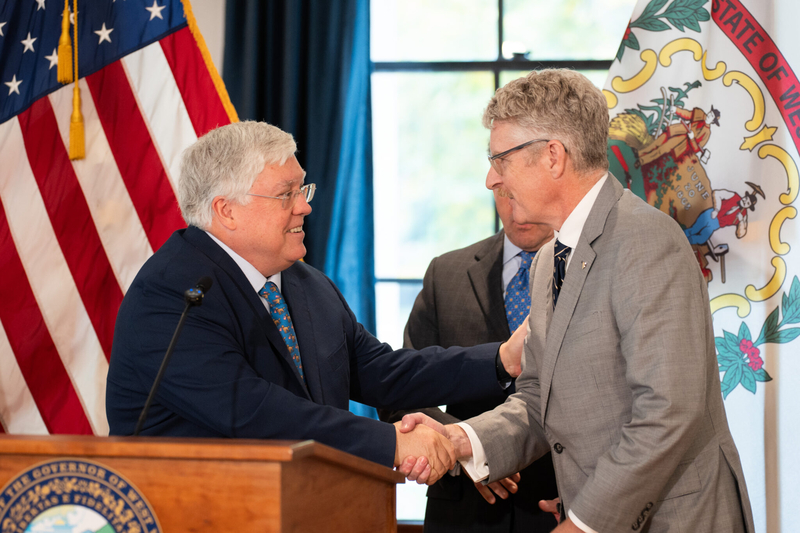
Morrisey appointed Washington Center director
Lawmakers gave Gov. Patrick Morrisey the task of appointing its director in consultation with the Senate and WVU’s Board of Governors. Morrisey, who publicly supported the center, named Dr. Patrick Lee Miller to the position last October 2025. The state funding goes to Miller’s annual salary of more than $300,000.
“Dr. Miller and the Washington Center are going to push back on the woke ideology that has infected our schools and help return higher education to its true purpose,” Morrisey said during a press conference last year.
House Bill 3297 mandated that WVU operate the Washington Center focused on teaching constitutional studies and “great debates of Western civilization.”
Proposed college courses this fall include “Woke,” “Nation and Migration” and “The New Right.” The center has hired faculty members ahead of its launch.
“As of June 22, one student was enrolled in three separate Washington Center courses,” said Shauna Johnson, WVU’s executive director of strategic communications. “Twenty-four courses were originally proposed/listed for the Fall 2026 semester. Eighteen are now available.”
The $3 million in state funding, which included $1.5 million in the Fiscal Year 2027 budget, also covers a scholarship available to Washington Center students.
Miller did not return interview requests for this story.
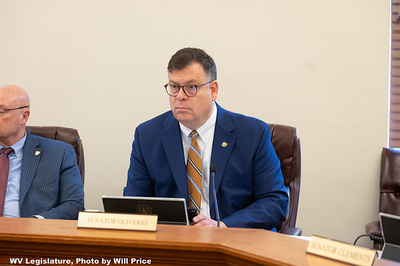
Sen. Mike Oliverio, R-Monongalia, amended the 2025 legislation to require the Senate to advise and consent to the governor’s appointment of the Washington Center’s initial director. It also requires an annual report from the director to lawmakers.
“At the end of the day, I was excited when the Legislature wanted to send $1.5 million additional dollars to my alma mater,” Oliverio said. “I was excited about the opportunity of civics education, an area that I think only strengthens our republic.”
Like Hanshaw, Oliverio believes enrollment will pick up once Washington Center courses can count toward an academic major or minor.
“These classes are not required by any major, so students may be interested in the subject, but they may choose another class over these that is required for them to be able to complete their degree on time, and so that’s a real limiting factor here,” he said. “A minor in statesmanship, that might drive more participation.”
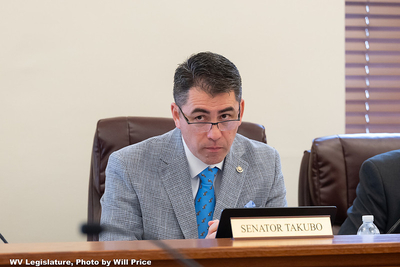
Sen. Tom Takubo, R-Kanawha, voted against the legislation.
“I felt it was really creating more of a political statement,” Takubo said, noting that he didn’t disagree with the idea of teaching students about U.S. history, civics and statesmanship. “To me, it’s not the legislators’ jobs to be mandating those things, and maybe putting one university at risk, because now they’re gonna have to continue to fund this.”
Washington Center mandate followed widespread WVU job cuts
Hanshaw said that teaching students how to think — particularly in an age of internet-connected cellphones and artificial intelligence — is valuable. After meeting with Miller and faculty coming on board at the Washington Center, Hanshaw said he was encouraged by their approach to education.
“One of the real challenges we have at the level of the government or at the level of society, is cultivating leaders — cultivating the men and women who will make decisions on behalf of 1.8 million West Virginians,” said Hanshaw, a WVU alumni. “If we can provide a forum for students to spend a few years or a few courses thinking deeply about what it means to lead others in the tradition of Western society, then I think that serves us all well.”
WVU has already offered similar courses proposed at the Washington Center, Herron said.
“It’s not in the interest of the students or departments that are already covering these things, and so I have some concerns that there could be overlap,” he said, adding that the center has been able to operate outside of normal university standards, like operating its own website and its hiring advertisement.
Herron said a specialized academic center encouraging civics education and student engagement could be beneficial at WVU.
“I would love to see our students have the kinds of opportunities to interact with politicians with people from the business community in kind of public forums as local residential fellows for a short period of time, to have opportunities for internships that these kinds of programs provide,” he said. “I don’t know that that fits the plan of the Washington Center, but there are centers on public and private campuses that do these sorts of things, and to great effect.”
Lawmakers’ move to mandate the Washington Center followed a high-profile $45 million budget shortfall at WVU. It resulted in the axing of 28 academic majors and hundreds of jobs, including faculty members.
“My concern was not that I was against the premise of having something like this, and what it was trying to teach, but at a time when the university was having to make significant important cuts, like it was cutting out foreign languages,” Takubo said.
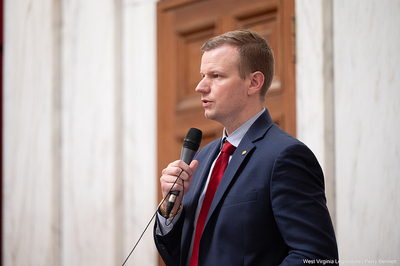
Williams, who lives in Morgantown, said the area is “still living with feelings of what happened a few years ago.”
“We still haven’t seen the full effects of what happened, so it’s frustrating when state government, since I’ve been in the Legislature, is so unwilling to make a meaningful investment in higher education, and then they come around with this pet project that we now see has one one enrollee,” he said.
Republican lawmakers in Ohio and Iowa recently mandated similar academic centers at their flagship universities, and enrollment in both programs has been low. Students at Iowa University are required to take a course through the Center for Intellectual Freedom beginning in 2028, according to the state law, to combat lagging enrollment.
“I think that the difficulties these centers are facing in terms of enrollment suggests that students aren’t clamoring for what they’re offering,” Herron said. “We’ll certainly see what happens in the fall, but based on the experience at other universities and the current enrollment, given that most of the fall enrollment (has) been completed, student interest does seem to be low.”
Charleston, WV