Oklahoma’s GOP Legislature left out key info on property taxes state question: the financial impact
Oct 19, 2026 | 6:29 am ET
Description
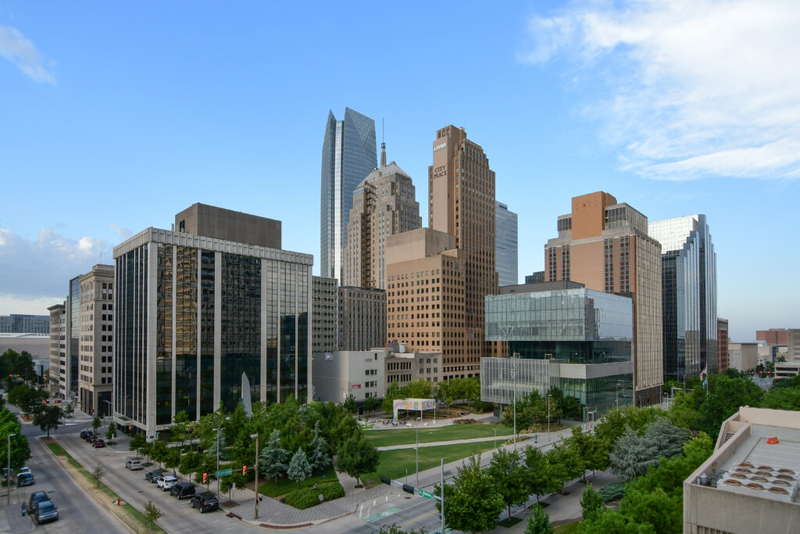
The downtown Oklahoma City skyline is pictured. (Photo by Kyle Phillips/For Oklahoma Voice)
If any emoji best represents the property tax state question Oklahoma lawmakers have placed before voters, it would be the grimace.
For those who need a translation, we use that face to express tension. In this case, it’s because our Republican-controlled Legislature, in all its wisdom, tacked on this disclaimer to their proposed constitutional amendment: “If passed, this measure would have a fiscal impact on the state, but the exact impact is unknown.”
(Insert eye-roll emoji.)
Lawmakers, in their zest to convince us they are cutting taxes as inflation rages on, decided that taking the time to suss out how eliminating a chunk of revenue via State Question 847 will affect senior citizens, public schools, CareerTechs, counties and some municipalities wasn’t as important as having a talking point on the campaign trail.
Because that’s where our property taxes go. Reminder: property taxes typically fund the functions of municipal and county governments. State government doesn’t get a dime from these taxes.
Maybe that’s why they weren’t sure about the fiscal impact?
I don’t know whether this oversight was sheer laziness, a blatant disregard for voter intelligence or if legislators’ effort was a rush job that overlooked the finer details – including how complicated it probably is to calculate the impact.
But in any case, this is an unfair scenario for Oklahoma voters who have to make a decision on Nov. 3 about whether to change the structure of our property tax system. Voters deserve to have all the facts ahead of time, and lawmakers should not be permitted to omit them.
Since they did, though, I’ll fill in the gaps.
An Oklahoma Tax Commission analysis estimates local jurisdictions would lose about $45.78 million in revenue in the first year if voters approve this question. Over the next 10 years, that lost revenue could top $450 million.
That’s a whopping sum of money for a ballot measure that lists its fiscal impact as being “unknown.”
State Question 847 is one of the most convoluted and complicated state questions on the ballot this year, and that’s saying a lot given some of the other issues that lawmakers have placed before voters. (Who can forget that manufacturing tax credit that voters soundly rejected in August?)
Right now, the fair cash value of a home can’t increase by more than 3% a year for homesteads — better known as the homes we own and live in — and for most agricultural land. Commercial property values are capped at no more than a 5% annual increase.
Lawmakers have decided it’s time to lower that cap to a seemingly random 1.75% a year for homesteads and agricultural properties and to 4% for commercial properties.
They also have decided to muck around with the income cap that senior citizens must meet to qualify for a valuation freeze. The amount of the increase would be calculated on a tiered system ranging from 0% to 1.75% based on a formula that is way too complicated.
Supporters argue that the measure would create the “lowest cap on growth” for homesteads in the U.S. and save cash-strapped Oklahomans money.
Critics, though, point out that besides the previously mentioned budget cuts for public schools, CareerTechs, county governments and some municipalities, it would also make it harder for those entities to borrow money for future needs.
They say this is not really property tax relief. The value of properties will continue to go up, and so will Oklahoman’s taxes. This merely just slows the rate of growth a bit.
But they also warn that because it will reduce revenue, many Oklahomans should expect to see their tax rates go up to pay the existing bills.
That’s because bond debt – that borrowed money I just mentioned – will not miraculously vanish. All bonds are set based on the revenue expected to be generated from existing property taxes. When someone screws around with the formula, it messes up those expected revenue streams.
The only feasible way right now to make up that lost revenue is to adjust the millage rates — better known as the tax rate assessed on real estate. That means everyone will see an increase in their taxes, but I suspect senior citizens living on fixed incomes could feel the pinch more.
Lower-income senior citizens’ home valuations have long been frozen to provide them an idea of what their tax bills will look like each year. Most probably have not budgeted to abruptly pay higher taxes.
How much millage rates will increase depends on how reliant an entity is on the revenue source and whether local jurisdictions have enough resources to adjust.
Rural residents in particular will likely be harder hit because those entities have less resources to draw on.
So instead of cutting expenses at the state government level that they control, lawmakers plan to force those cuts on local governments. How is that fair?
Oklahomans’ wallets definitely need relief from soaring property insurance and utility rates as well as high gas, diesel and grocery prices, but this plan doesn’t do anything to address that.
Maybe rather than monkeying around with our property tax formulas, lawmakers should first look at why their policies have resulted in us having the highest homeowners insurance rates in the country — more than double the national average. Reducing those rates would certainly provide welcome relief without harming our local revenue streams.
But it seems like state leaders prefer to live in a fairy tale where instead of apples or peaches, money grows on trees for the benefit of our cities and towns. And instead of doing the hard work of confronting insurance lobbyists and fixing broken state spending, it’s easier to ask voters to pass a plan with an unknown budgetary impact.
Here’s the reality: No business wants to come to a community that doesn’t have good schools, good roads and bridges and solid public services. Those services are primarily paid for by property taxes.
To put this plan back in emoji speak: big red question mark.
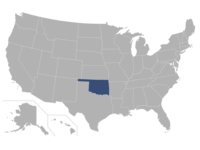
Oklahoma City, OK