Ohio judge allows telemedicine abortion care for a third time
Jul 10, 2025 | 4:45 am ET

Description
Stock photo from Getty Images.
An Ohio judge has blocked enforcement of a state law related to medication abortion for the third time, in a new Hamilton County court decision.
The 2021 law at issue in the case, Ohio Senate Bill 260, prohibits telemedicine abortions, and the lawsuit has since been amended by the challengers to include laws that keep not only doctors but “advanced practice clinicians,” like nurse practitioners and physician assistants, from virtually prescribing mifepristone, which is used for medication abortions.
Under the original law for which entities like Planned Parenthood Federation of America and the ACLU of Ohio sued, physicians could be charged with a fourth-degree felony for a first offense of providing abortion-inducing drugs via telemedicine, and a third-degree felony for subsequent offenses.
The ACLU and Planned Parenthood argued that certain statutes regarding medical licensure in Ohio Administrative Code and Ohio Revised Code “could be read to preclude (advanced practice clinicians) from providing medication abortion care,” even with two other court orders withholding enforcement of the telemedicine abortion law.
Hamilton County Judge Alison Hatheway agreed, saying the regulations taken together with other provisions “could be read to preclude otherwise qualified (nurse practitioners) or (certified nurse midwives) from providing medication abortions merely because they are licensed by the Board of Nursing, not the (State) Medical Board.”
Hatheway said the plaintiffs in the case “have shown a substantial likelihood they will succeed on their claims that they and their patients’ constitutional rights are being violated,” leading to her decision to once again temporarily stop the law as the case goes forward.
The ruling comes after the U.S. Supreme Court decided that a lawsuit challenging expanded access to mifepristone couldn’t continue, and the drug could continue to be available nationwide.
Since the original state law on telemedicine abortion care was enacted, a constitutional amendment was passed by voters in Ohio that legalized the right to abortion in the state, which judges in Hamilton County and elsewhere have used to strike down laws like the state’s six-week abortion ban and a requirement that a patient wait 24 hours after having an appointment about an abortion procedure to have the procedure itself.
Hatheway noted the constitutional amendment in her ruling on the medication abortion case, saying, under the amendment, “patient health is the only state interest that an abortion regulation may constitutionally advance.”
“Therefore, any restrictions on abortion must be narrowly tailored to further protect patient’s health and such restrictions must be the least restrictive means to advance the patient’s health ‘in accordance with widely accepted and evidence-based standards,’” Hathaway wrote, referencing the amendment.
The judge added that the amendment “grants sweeping protections ensuring reproductive autonomy for patients in Ohio,” and that in the case “substantial evidence” was provided by the challengers that the law on virtual medication abortions violates the constitutional amendment “and actually causes harm to plaintiffs and their patients.”
She noted that the state permits advanced practice clinicians to prescribe the exact same medication for “other non-abortion purposes,” like miscarriage management.
The parties challenging the law were “relieved” by the decision, saying advanced practice clinicians are “completely qualified to provide medication abortions under their state licensure and should not be punished by the state for providing vital care to patients in line with their scope of practice,” according to a statement by the ACLU, the ACLU of Ohio, the Planned Parenthood Federation of America, and Planned Parenthoods of Greater Ohio and the Southwest Ohio region.
Anti-abortion group Ohio Right to Life called the decision “reckless judicial interference in women’s health” and said the group is confident “pro-life Attorney General Dave Yost will have ample ground to appeal this decision all the way to the Supreme Court.”
“It’s tragic that women’s lives will hang in the balance while lawyers instead of doctors make these decisions,” the Ohio Right to Life statement said.
Pro-abortion rights advocates have said there are still dozens of laws on the books that regulate abortion in a way that is against the language of the constitutional amendment, and the groups plan to fight against all of them.
Alternatively, Democratic lawmakers in the Statehouse are trying to codify reproductive rights in state law as well, along with repealing some of the “archaic laws in our state that do not improve outcomes or access to care,” state Rep. Anita Somani said when she helped announce plans for legislative action.
The measures have an uphill battle in a Republican supermajority whose members have supported legislation that would undermine the constitutional amendment, and even most recently put up an effort to establish a total abortion ban in the state.
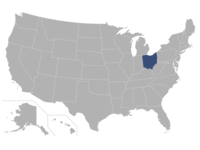
Columbus, OH