Deadly 2026 heat season shatters state records for heat-related emergency calls, fatalities
Oct 09, 2026 | 6:03 pm ET
Description
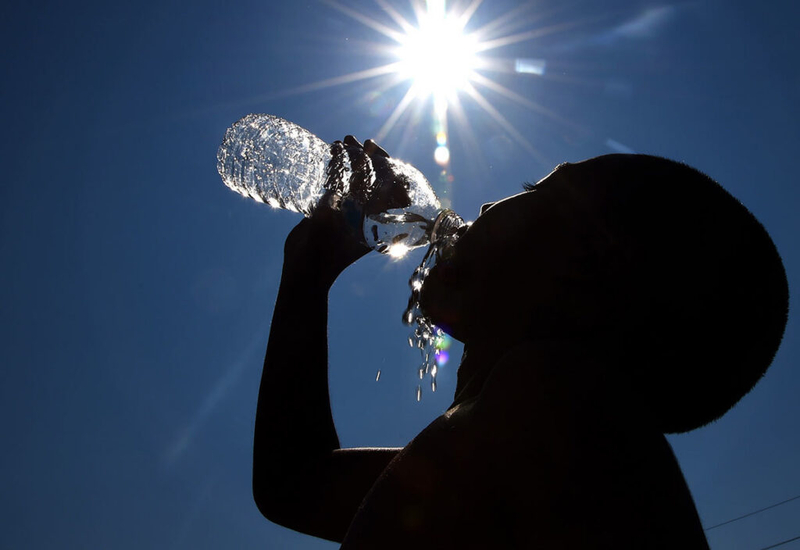
Maryland ends the official 2026 heat season with a record-breaking 61 fatalities, though public health advocates warn that there's still time for another heat wave this year. (Photo by Staff Sgt. Sheila deVera/U.S. Air Force)
The annual Maryland heat season ended with a record-breaking year for heat-related illnesses and deaths, with the state reporting that 61 Marylanders died due to hyperthermia in the season that ended Sept. 30.
It shattered the previous record of 42 fatalities, set in 2012, according to available public data, and came close to doubling last year’s 34 deaths, continuing a troubling four-year rise in heat-related fatalities.
This heat season also saw the highest number of calls to emergency medical services for heat-related illnesses in a year, at 1,657, up from last year’s 1,634.
The 1,603 visits to emergency department or urgent care this summer were down slightly from the record 1,670 set last year, according to the final data update for the 2026 heat season released Wednesday by the Maryland Department of Health.
Public health advocates say climate change is leading to longer heat waves and hotter temperatures during the summers, which puts more Marylanders at risk of heat exhaustion, heat stroke and death.
Dr. Georges Benjamin, executive director of the American Public Health Association anticipates those dangerous conditions will continue.
“It’s right now being exacerbated and driven a lot by climate change,” Benjamin said. “This is going to get worse…. The heat waves we’re having now are higher heat but also persisting longer.”
Heat-related deaths have been on an upward trend in Maryland since 2022, when five heat-related deaths were reported for the summer.
The Maryland Department of Health notes that of the 61 deaths reported this year, 41 occurred from the last week of June into the first week of July, “where the high temperatures were consistently in between the high 90s to low 100s, and the lowest temperatures at night were in the upper 70s.”
“As the climate warms, we are seeing longer periods of hot weather and higher temperatures, and both of those are contributing to increased risk for Maryland residents,” Cliff Mitchell, environmental health bureau director for the state health department said in a written statement Thursday.
“In many cases, it’s not just about how hot it is during the day, but whether things cool off enough at night. If people don’t have a chance to recover from scorching afternoons, the physical toll on their body can be fatal,” he said.
There were 29 deaths that occurred indoors, representing 48% of all heat-related fatalities this summer. Of the remaining deaths, 26% occurred outdoors and 26% occurred in a vehicle.
Jamie Madrigano, associate professor with the Johns Hopkins Bloomberg School of Public Health, who is researching the health impacts of climate change and extreme weather, said it’s not surprising that many fatalities occurred indoors.
‘Dangerous’ winter weather broke state records for cold-related deaths, ER visits
“A lot of the guidance is, ‘Seek shelters indoors. Try to get out of that extreme heat situation.’ That is important and correct guidance,” she said. “But a lot of these fatalities are occurring inside…. They’re occurring when people either don’t have access to air conditioning or are not running it because of the costs to their utility bills.”
Benjamin with APHA added that indoor infrastructure to combat hot weather may be lacking in regions that have not historically had high temperatures.
“We have hot weather in places that were not as hot as before, and so our fundamental infrastructure isn’t designed to address it,” he said. He noted that low-income areas may not have adequate air conditioning in their homes and even the lack of greenspace in those areas contributes to higher temperatures.
Certain populations, such as elderly residents, are vulnerable to heat-related illness and fatalities. Among the 61 people who died this summer, 62% were age 65 and older. Meanwhile, people from 45 to 64 accounted for 26% of heat-related deaths. Another 10% of fatalities were among people between the ages of 18 and 44. The department reports at least one child, age 4 or younger, also died due to heat-related illness this year.
While the “surveillance period” for the 2026 heat season ended and state officials will not continue weekly updates, Benjamin warns that there could still be another heat wave before the end of the year.
“We’re not out of the woods yet,” he said. “But we should begin planning. That means spending time identifying who are the high-risk people in the community, putting together plans so you can identify these folks, educating the community broadly about the risk.”
Annapolis, MD