Oʻahu’s Shade Trees Could Take Decades To Grow Back After Storms
Sep 21, 2026 | 6:01 am ET
Description
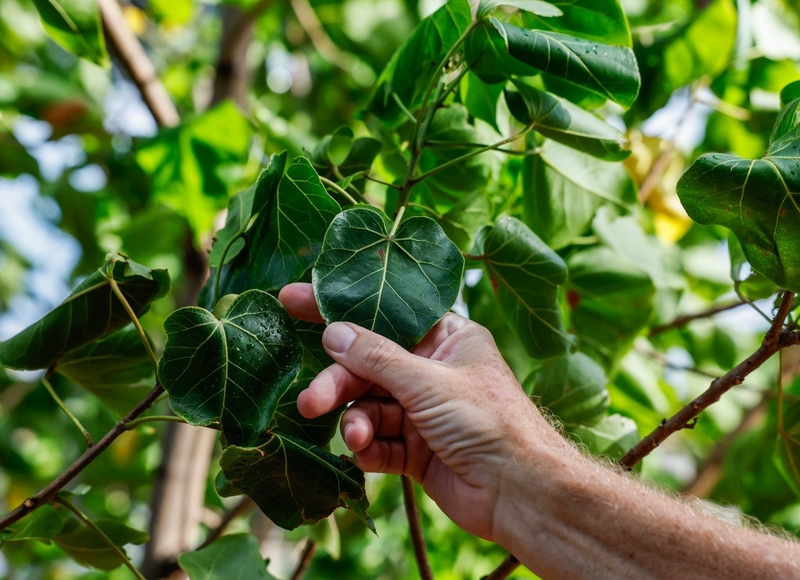
Photo courtesy of Honolulu Civil Beat
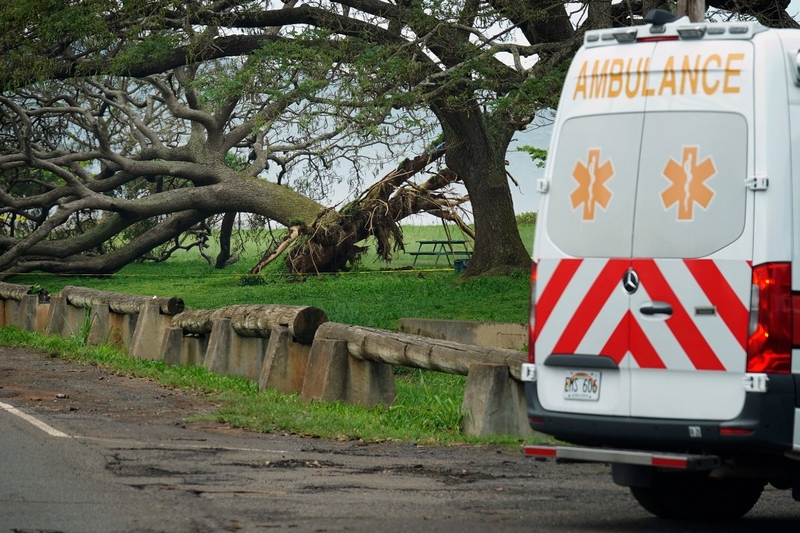
Between the Kona lows and two hurricanes, Honolulu has been cleaning up and removing fallen and damaged trees for six months straight — and they’re not done yet.
This comes at a time when O‘ahu's tree canopy has already been declining for years. Between 2014 and 2017, it dropped 5% or an estimated 76,000 trees, forest stewards say. And as temperatures rise, the city needs the services those trees provide more than ever.
There is no official count, but Roxanne Adams, urban forestry administrator for the City and County of Honolulu, told Civil Beat that several hundred more trees were either knocked down or pre-emptively removed because they posed a safety risk during hurricanes Lala and Lowell. Many were large trees with giant canopies, the kind that are key to providing shade over sidewalks and parks.
While many of the lost trees will be replaced, it will likely be years, if not decades, before their replacements grow to be the same size.
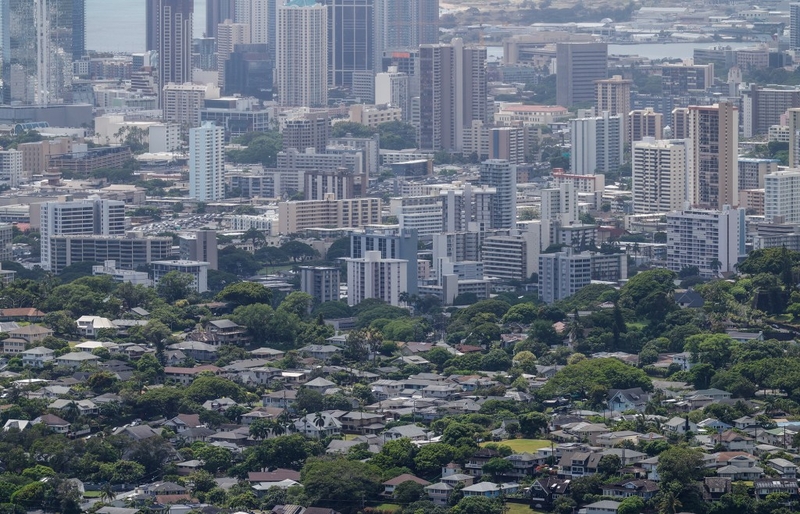
Camilo Mora, a professor in the Department of Geography and Environment at the University of Hawai‘i Mānoa, said he did an experiment where he calculated the tree coverage while walking from Mānoa to Waikīkī.
"I spent 95% of that time under direct sun exposure," said Mora. "I am healthy and young; an old person cannot take that walk without potentially having some serious health problems."
Not only do urban trees cool cities — one study found that asphalt was nearly 15 degrees cooler under a tree canopy than outside it — but they also remove air pollution, store carbon, increase property values and cut down on energy use due to the reduced need for air conditioning in a shaded building.
To protect the urban canopy, the city and state will have to spend more to support the network of groups focused on preserving mature trees and planting new ones. And it will have to convince private landowners to invest in maintaining the trees they already have. So far, neither is happening fast enough to keep up with the rate of decline, advocates say.
“We're trying to get people accustomed to having to take care of trees," Adams said. "They’re infrastructure — just like your plumbing or your electric lines. Every once in a while, they need fixing. Except trees are the only thing that actually becomes more valuable over time.”
Heather McMillen, who coordinates the state Division of Forestry and Wildlife’s Kaulunani Urban and Community Forestry Program, works to provide education, training and capacity building for the constellation of agencies and nonprofits that are on the ground managing Oʻahu’s tree canopy.
“Trees are not ‘beautification,’" she said. “Trees are essential for our health, well-being and survival.”
The Agencies Behind The Canopy
The majority of the trees in O‘ahu’s urban forest are on private land. However, more than one-third of the trees are managed by county and state government — 23 agencies to be exact.
Forest Solutions, a land management and forestry company working at the state level, recently interviewed representatives from those agencies for the Kaulunani Program and released a report and storymap about the urban forest based on the interviews. The hope, McMillen said, was to “make sure our side of the street is clean before we go around telling private property and homeowners what they should be doing.”
One key takeaway was the loss of 76,000 trees between 2014 and 2017. McMillen said the data shows that canopy loss tends to happen gradually, as “death by 1,000 cuts” rather than all at once — although this year's storms have likely proven to be an exception to that rule.
“It wasn't due to a big fire or any one development project, it was like all over. Trees were not prioritized,” McMillen said. Instead, they are often seen as risks or liabilities.
Eighty percent of agency representatives Forests Solutions interviewed said they had noticed a palpable canopy loss on public and private lands. They often cited liability concerns as the reason. Three-quarters of them said that financial or budgetary constraints affected their management. Most agencies work with contractors and can’t afford in-house tree maintenance staff.
Half of the interviewees have no formal inventory of the trees they maintain, and the Kaulunani Program recommends a collaborative to inventory the urban forest — beyond the state’s Tree Canopy Viewer, as it might make it easier for more agencies to gain a fuller sense of what’s needed to protect the existing trees.
The report recommends more interagency collaboration and working with community groups such as The Outdoor Circle and Trees for Honolulu's Future to form working groups that would create more standardization on the work and planning behind the trees.
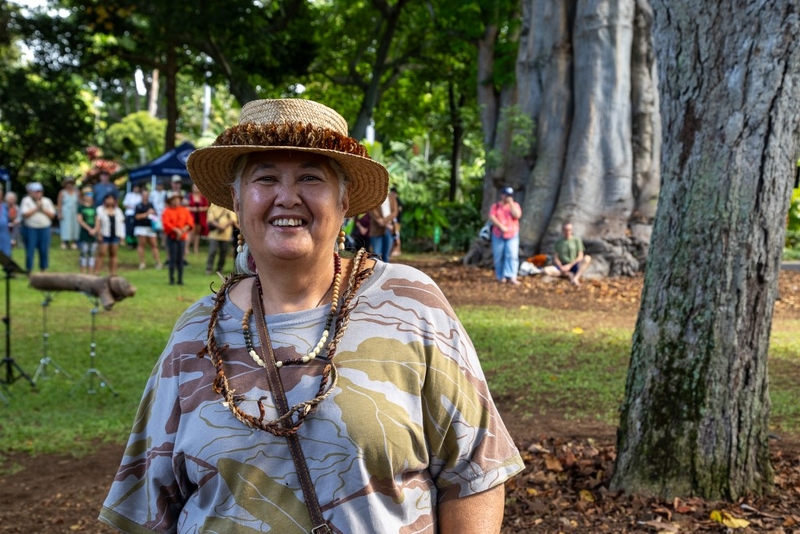
In the meantime, Adams said that the Department of Urban Forestry, which cared for more than 100,000 trees in 2023, the last year there is data for, is planting trees with a specific focus on providing up to 70% canopy coverage in parks, especially the ones without sports fields.
“In those parks, we want to get the canopy cover up way high to help cool ambient temperature and act kind of like the lungs of the neighborhood,” she said. In addition to parks, the agency is prioritizing major roadways, with the intention of providing as much shade as possible for drivers and pedestrians.
Adams, who spent years overseeing the trees on the University of Hawaiʻi Mānoa campus, is also focused on “choosing the right tree for the right place,” after years of city trees that were often treated as one-size-fits-all. And she’s working to bring more native trees into the mix as well.
The agency has its work cut out for it, and like most agencies working to maintain the urban canopy, it’s trying to do more with less. The Department of Urban Forestry received almost $2 million in federal funds in 2026 but it also lost $1 million in federal grants that it said it had budgeted for planting trees.
“It’s really about being a lot more observant and more thoughtful about the tree that we choose to plant, not just the species of the tree, but the form itself,” Adams said.
Many trees are codominant, for instance, which means they have two or more main stems, rather than a single trunk, and that can make them more prone to breakage during a storm.
The agency is also prioritizing planting more trees on the west side, where dry conditions call for irrigation. Most parks in the area don’t have irrigation, so it will take more money and effort to get them established. But it will also give the trees a fighting chance.
“We're trying to add water to these trees so they get a solid start to carry them through some of these dry times that we know are coming. In between the El Niños are La Niñas, and we're going to have to deal with those drought conditions as well,” Adams said.
The agency has community plantings and feedback sessions coming up, including a planting of 40 trees in ʻAiea in October.
An Aging Canopy
Just like the trees that came down in the recent storms, most of the agencies pointed to the fact that many of the larger trees that shade Honolulu were planted over 30 years ago and the canopy itself is aging. A comprehensive replacement plan could help but that doesn’t mean that they should all be replaced, or that younger trees are inherently better, McMillen said.
“Tree planting gets a lot of excitement. It's sexy. Everyone likes to do it, and get kids involved,” McMillen said. “But to get the benefits of a large tree, it takes a long time, and so there's not enough emphasis on maintaining the existing canopy that we have.”
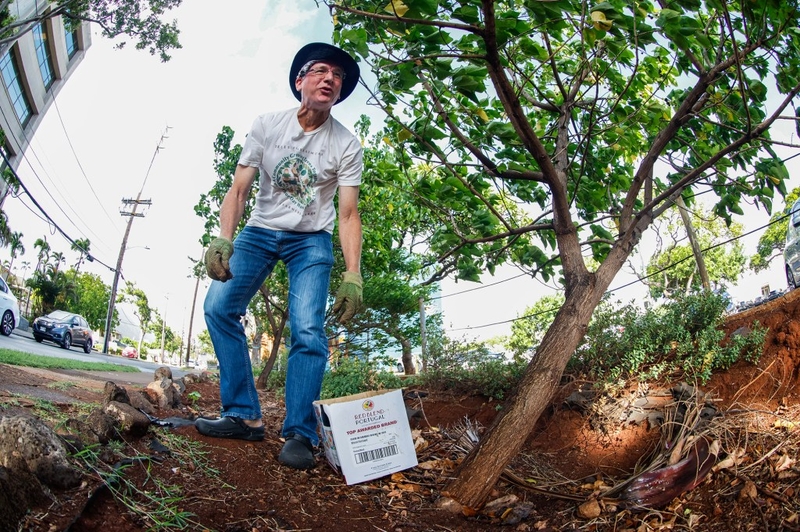
Mora has been working on a tree planting effort with the goal of eventually planting 1 million trees on Oʻahu. But he said maintaining the existing canopy is just as important. He compared the removal of a full-grown tree with "taking a diamond and breaking it with a hammer," because of how much time and care is required to see them reach maturity.
Although older trees can be an added risk during storm conditions, they can also help protect communities during storms, said Myles Ritchie, programs director at The Outdoor Circle.
Not only do healthy mature trees act as effective windbreaks, but their canopies also slow down the process by which rain enters the soil and help absorb water once it does.
“People don't realize that larger trees can take up hundreds of gallons a week,” Ritchie said. “That helps to make the ground not as saturated right after these high storm events.” As a result, flooding is less likely in areas where large, mature trees are rooted.
Older trees need more consistent maintenance, however, and that can be a challenge to fund.
He wants to see public incentives made available for property owners who care for mature trees — similar to the state’s Exceptional Tree Program, which helps fund the maintenance of legally protected trees around the state for up to a $3,000 tax deduction.
“Yes, it's going to cost money, but at the end of the day, if you can reduce the damage that poorly cared-for trees have on our communities,” he said, it’s more than worth it given the cost of the recent storms. The damage from the Kona low storms alone cost Honolulu an estimated $100 million.
What Comes Next
Looking ahead, it’s clear that the urban canopy is going to have to evolve and adapt to changing conditions. The right tree in the right place is a common refrain in the forestry world, and as climate change brings warmer temperatures and more weather extremes to Hawai’i, Adams isn’t the only one considering native trees as an important solution for Honolulu’s urban forest.
Wiliwili Weaver, operations forester at Forest Solutions, wants to see more species diversity in close proximity — an approach that runs counter to the standard approach to city trees but more closely mimics what happens in nature when forests developed on their own. The kīpuka, a multi-species island of forest, is a useful model. “We could start to think of parks as kīpuka,” said Weaver. Kukui nut trees, loulu or endemic palms, and Weaver’s namesake, wiliwili trees, are a few examples of trees that could begin to appear more often in urban areas.
“One could look toward the plethora of plants and trees thriving in Hawaiian ethnobotanical gardens — canoe plants and endemic Hawaiian plants we have found to be of particular use for food, fiber, medicine and recreation,” Weaver said.
One challenge in large-scale planting of native trees, said Adams, is the limited quantity of native seeds, and the fact that nurseries need ample warning if they’re going to ramp up native production to meet the need for larger-scale plantings. Neither barrier is absolute, but they both stand to slow down the process.
Ritchie sees getting nurseries on board with growing more native and other climate-resilient trees an important next phase in preparing the canopy for what’s ahead. He wants to see pilot testing and street tree trials, and if they prove effective, it will make sense for the agencies planting them. “It’s this complex pipeline — from conceptualizing change to actually getting them in the ground and thriving,” Ritchie said.
Daniel Dinell, executive director of Trees for Honolulu’s Future, is also thinking about how to re-engineer the city using trees and other green technology, such as bioswales, which help water move across landscapes in a way that allows more of it to enter the soil, and potentially the aquifers that need replenishing around the state. The nonprofit is in the process of creating a multi-story food forest at the Hongwanji Mission in Palolo Valley. The demonstration project, funded by Hawaiʻi Sea Grant, is designed to capture rainwater, prevent runoff, and grow produce at the same time.
“It’s a triple win because water's not running off into the Ala Wai Canal, the temple doesn't have to pay the city and county for water and the associated wastewater and you're growing food,” Dinell said. The organization has also built a rain garden to capture stormwater and prevent it from running straight into the ocean near a freeway entrance in Kaimukī, with the intention of modeling a solution that can be picked up and replicated elsewhere in the city.
“These two little projects aren't going to change the world. But 1,000 or 2,000 of them? That's going to change the world,” Dinell said.
For urban trees to have that kind of an impact, the first step, advocates say, is to help more residents and lawmakers start to see trees for the many practical solutions they bring, and not just as an attractive backdrop to city living.
“Trees enhance and make life better anywhere that we encounter them, and we take them for granted because they're there providing us with the ecosystem services that just sort of happen in the background,” Weaver said.
Of course, that’s not to say some Oʻahu residents don’t already place enormous value on the trees that shade and protect their neighborhoods. As the Department of Urban Forestry has been cleaning up downed trees this spring and summer, Adams said she has been surprised by the responses they’ve heard from the people living nearby.
She thought some might complain about the inconvenience of the fallen trees, but many have shared their grief about the losses instead.
“People were giving their thanks,” Adams said, “and they were asking for parts of their trees to keep, so they could remember them.”
Honolulu, HI