Number of Montanans on Medicaid falls to lowest level since expansion as charity care rises
Apr 16, 2026 | 3:11 pm ET
Description
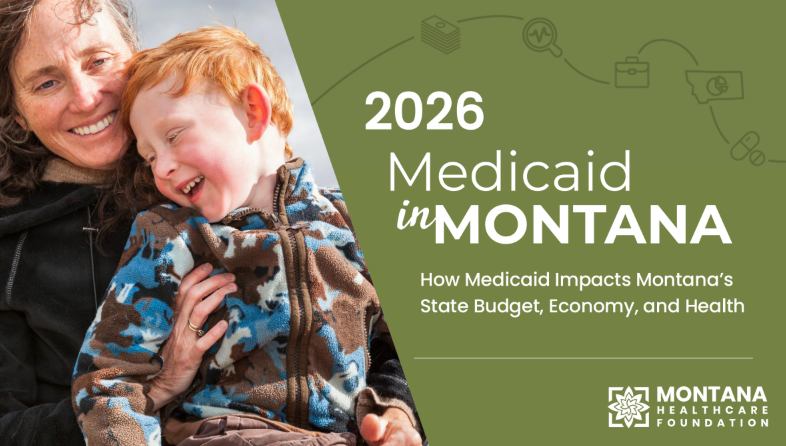
The cover of a report, "2025 Medicaid in Montana" prepared for the Montana Healthcare Foundation. The foundation has produced the annual report since Medicaid expansion was introduced in the state.
An annual Medicaid report tracking the federal and state healthcare program in Montana has been released and it shows what happened after state lawmakers and health officials changed eligibility rules for it, leading to the lowest number of enrollees since the program began.
The report, “2026 Medicaid in Montana” produced by the Montana Healthcare Foundation, also noted “uncompensated care” — or charity care — for hospitals and healthcare providers has been creeping up. That is care that hospitals and healthcare systems are mandated to provide, but is not reimbursed by insurance coverage. For years, that number has been slowly declining in Montana as Medicaid expanded. That trend started reversing significantly during the past year.
Despite those shifts, which were predicted by healthcare professionals and advocates who warned the state’s new rolling redetermination of eligibility would lead to some dropping off the program who would otherwise qualify, the report also showed as people got on Medicaid their overall health improved, and less money was spent per person on emergency care and more on preventative care.
Furthermore, the report shows as Medicaid expansion has solidified in the state, the number of mental health providers has exploded, and some rural healthcare systems have been able to expand offerings.
Dr. Aaron Wernham, the executive director of the Montana Healthcare Foundation, said the report still shows the benefits of the program, most notably in rural areas, which have been able to add back services, which don’t just benefit Medicaid patients, but all people in the area.
“It means they can stay closer to home for things like orthopedic surgical care or even behavioral health,” Wernham said. “And that benefits everyone because those services will serve the entire community.”
The current Montana Medicaid numbers show more than one-in-five Montanans are covered by the program, which includes approximately 40% of the state’s children.
Numbers dropping, reasons increasing
Wernham and the report pointed to several different factors that could be partly responsible for the decrease in enrollment.
First, states were not allowed to drop Medicaid enrollees from coverage during the public health emergency of COVID-19, which did not end until 2023.
Then, Montana lawmakers opted to discontinue Montana’s continuous eligibility, which previously meant that once a person qualified for Medicaid, he or she would continue to receive benefits for the next year. “Continuous eligibility,” advocates have argued, reduces the churn of people falling off rolls or coming back into programs, and give providers some stability. But, some Republican lawmakers argue that “continuous eligibility” unnecessarily raises costs by providing benefits to those who may not be eligible.
Lawmakers, with the support of Gov. Greg Gianforte, a Republican, switched the state to a rolling redetermination, which means that eligibility will be checked throughout the year. While supporters of this concept argue that it means the state will not end up subsidizing those who are ineligible, opponents have argued the paperwork-laden process results in eligible people losing benefits because of bureaucracy, and the process tacks on additional staffing costs for the state.
Wernham said the combination of redetermination and the state’s changes have made it hard to figure out why the number of Medicaid enrollees has fallen to its lowest point since expansion.
He said that the foundation has been concerned by reports of residents having long wait times to speak to workers or patients being frustrated or confused by the process. He shared that some Montana healthcare systems have created positions for staff to help guide patients through the registration and eligibility process as a means of stopping large financial losses.
Medicaid enrollment hit a high of more than 300,000 people during the COVID-19 emergency. In 2025, the most current yearly data available, the number of people enrolled sat at 217,711 — the lowest since before the program began in Montana, and more than 90,000 fewer than it had at its high point. In 2025, the number of enrollees dropped by 6.1% or 14,162.
Still, the demographics of people utilizing Medicaid expansion is relatively stable and constant. For example, in the state’s urban areas, the utilization is around 36% while the utilization in rural areas is at 35%. Counties vary by usage with Roosevelt County seeing nearly 46% of its population enrolled in Medicaid, while Gallatin has just 9.5% enrollment. Four of the top five Montana counties that utilize Medicaid have sizable portions of Native American populations or reservation communities.
As redetermination rules and the pandemic has ended, Montana’s number of people who are not insured has started to creep back up, and with it, the amount of uncompensated care healthcare systems must write off.
When Medicaid expanded in Montana in 2016, approximately 12.2% people were not insured. That fell to a low of 10.7% during the COVID years. Meanwhile, the number who were Medicaid-insured went from 15% to 18.9% at its peak in 2023.
Those numbers have tailed off, though. Today, the percentage of Medicaid enrolled adults sits at 14.6%, lower than when the expansion began, and the number of uninsured adults nearly mirrors the 2016 statistic at 12.1%.
Before the Medicaid expansion came to Montana, uncompensated care for Montana hospitals hit $390 million. Since then, it has dropped, but has since slowly crept back to pre-expansion rates.
In 2017, the rate of uncompensated care had been almost cut in half from $390 million to $179 million in just two years. But that number has increased to $370 million last year, worrying healthcare leaders about the losses that the low-margin healthcare systems can endure.
Uncompensated care for critical-access hospitals, which are often rural lifelines for communities, has shown a similar trend. In 2015, the amount of uncompensated care was at $26 million. By 2017, that number had fallen to $11 million, but by 2024, the number had returned to $21 million.
“That isn’t good news,” Wernham said.
Wernham has warned that what has happened in Montana could become even more problematic with more verification requirements in the future. He said state data shows residents aren’t being turned away from the program because they don’t meet eligibility guidelines — it’s for an unrelated reason.
“There has been a huge decline in kids and adults during redetermination,” Wernham said. “Half didn’t receive it because they were ineligible for reasons like they had incomplete documentation or they didn’t get something in the mail.”
What’s next
The Montana Healthcare Foundation is warning both state leaders and residents that Medicaid could be in for another large shift as the Trump administration has implemented new work requirements for adults on the program.
That new requirement, which is slated to begin in July, will require states to monitor whether some adults, who have not reached classification as “senior citizens,” (ages 19 through 64) work for at least 80 hours a month. That may complicate or slow the verification and eligibility process, the foundation said. It’s also unclear whether Montana will be ready for the new requirements, although state officials last month with the Department of Public Health and Human Services said that they’re staffing up to prepare for the additional verification.
However, in the yearly Medicaid report put out by the foundation, it shows that 94% of those enrolled in the Montana Medicaid program are either in the labor force, a qualified caregiver, a student, or disabled — all categories exempt from the work requirements. This means that only 6% of the adults ages 19 through 64 are likely to be affected by the new rules.
Wernham said even though the number of people coming off the Medicaid rolls has slowed, the process is still cumbersome and confusing.
“The applications aren’t easy, and there aren’t many offices in the state that offer assistance,” he said. “We really need to think about making applications and redetermination as simple as possible.”
Prevention versus emergency
One of the items that remains constant in the reporting that has been done for years is as people come onto the system, how money is spent on their behalf changes. The report said that as people enroll in the program, they are more likely to need emergency services, often because of neglected or undiagnosed medical conditions, Wernham explained.
But as healthcare professionals work with the enrollees, the money needed to sustain them shifts, often lowering. Within three years, the average number of emergency visits plummets, as preventative screenings, routine yearly checks and pharmacy expenses rise.
The Medicaid in Montana report shows Medicaid enrollees had more than 58,000 wellness exams, as well as a variety of screenings from alcohol abuse to diabetes to preventative dental services, which alone totaled more than 112,363 visits in the past year alone.
And Wernham points out the sheer number of some exams may be dropping because the number of Medicaid Montana enrollees are dropping, but the percentages of residents getting a yearly wellness exam continues to increase. In 2023, approximately 15% of adults got a routine yearly screening. In 2024, that number had increased to 17%.
“Really, the goal is prevention and early detection,” Wernham said.
In a chart showing different chronic conditions, Medicaid Montana enrollees who got coverage all showed fewer trips to the emergency room. For example, those with diabetes saw the number of emergency room visits drop by 8% within two years. Those with mental health or substance-use disorders dropped by more than 10%.
Mental health
Though some politicians have debated the cost and efficacy of the Medicaid program, many lawmakers in a bipartisan way have supported the expansion, including Montana Gov. Greg Gianforte. Gianforte included the expansion in the 2025 biennial budget, signaling his administration’s support for keeping the program — something not all Republicans wanted.
Gianforte has also been a champion and advocate for more mental health services and more counseling programs for substance abuse. Those priorities have also showed strong results in the annual report.
For example, in 2015 — before the expansion — Medicaid had treated 1,115 cases of substance-use disorder. In 2024, that number had risen to 6,972 — a 525% increase in just nine years. Treatment for mental health conditions also grew rapidly from 18,028 in 2015 to 43,718 in 2024, an increase of 143%.
Wernham credited state leaders and the Gianforte administration for putting extra emphasis on the mental health and substance-use disorder, especially in a largely rural state that has perennially tackled the related problems of too few mental health providers and stubbornly high suicide rates.
Medicaid costs money
Even though some federal support for the program has changed or lowered, Montana, relatively speaking, gets a good deal and hasn’t spent significantly more for the coverage.
Montana’s Medicaid budget in state Fiscal Year 2025 was $2.5 billion, with 76% coming from federal funds. That means that the remaining approximately $500 million has come from state coffers. As a percentage, Montana pays nearly the lowest among states for the Medicaid expansion. The U.S. average sits at approximately 20%; Montana’s is 15%.
2026 Medicaid in MT_FINAL
Helena, MT