Not everything is for you: Notes on pluralism during Pride
Jun 24, 2026 | 7:00 am ET
Description
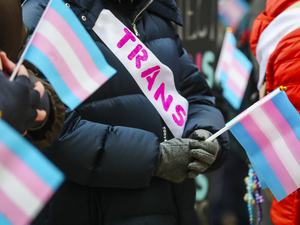
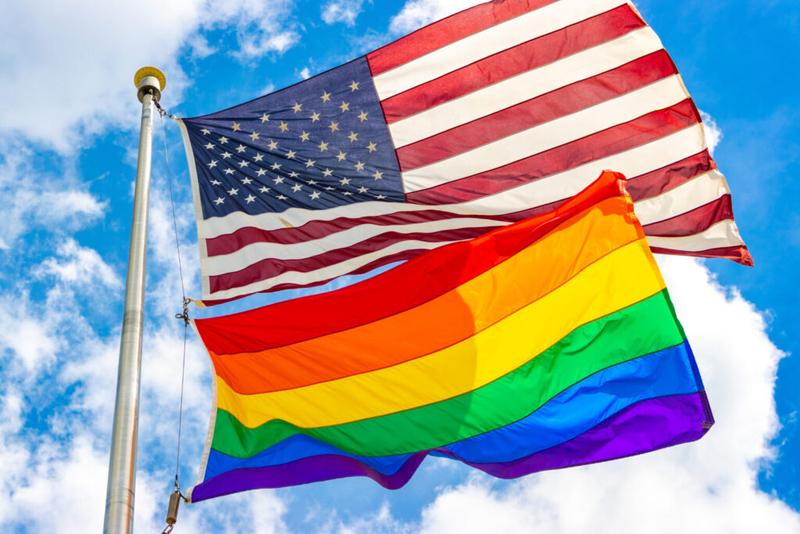
"Not every public celebration is a demand for ideological surrender," the author writes. "Often it is merely an invitation into a modest form of civic goodwill, the recognition that other human beings also possess sources of meaning, identity, attachment, ritual, memory and joy." (Photo by Getty Images)
Minnesota’s governor has officially proclaimed June Pride Month. The proclamation is not a catechism. It is part of the state’s commitment to pluralism.
Minnesota has long depended on a particular civic habit: People who disagree about fundamental questions nevertheless share public institutions. The state includes churches, mosques, synagogues, secular neighborhoods, immigrant communities, tribal nations, and one of the nation’s most visible LGBTQ populations.
Public life works not because these groups agree with one another about everything, but because they have learned, however imperfectly, to occupy the same civic space.
One of the things I learned over the years working in parks is how many different kinds of meaning people bring into public space.
In the Twin Cities, I have watched ordinary parklands become gathering places for pagan and nature-oriented festivities. Circles formed in open grass. People carried symbols I did not recognize. Rituals were performed near lakes, trees and trails. Families wandered nearby while drumming and ceremonies took place a short distance away.
What strikes me now is not that I encountered beliefs different from my own. Public life contains that constantly. What strikes me is that I did not experience any urgent need to interpret it.
I did not feel compelled to determine whether the rituals were metaphysically true, socially healthy, politically threatening, or secretly directed at me. I did not stop to construct a theological response. My assumption was simply that whatever was happening there mattered to the people participating in it.
Then I went back to work.
That may sound trivial, but I increasingly suspect it describes one of the ordinary disciplines required for a healthy pluralistic society.
We are living through a period in which citizens are encouraged to experience nearly every public symbol as requiring immediate classification and judgment. Every parade, flag, holiday, festival, television show and public gathering is treated as a referendum on civilization itself. We are constantly invited into a posture of interpretive hypervigilance. What does this mean? What ideology does it represent? What does my reaction to it say about me? Am I endorsing something merely by encountering it?
Eventually, this becomes psychologically exhausting. A society cannot remain livable if every public expression is interpreted as a demand for either conversion or resistance.
This is one reason I have become skeptical of attempts to construct official counter-programming to Pride Month through things like “Fidelity Month” or “Nuclear Family Month.” Such efforts often inadvertently turn Pride into something larger and more symbolically charged than many ordinary participants actually experience it to be. Christmas is not counter-programming for Ramadan. Most people understand instinctively that their neighbors celebrating Eid are not issuing a personal religious challenge to them. They are simply celebrating something meaningful in their own lives.
A pluralistic society requires the ability to understand that distinction.
This does not mean abandoning moral judgment. I have strong objections to many aspects of contemporary culture. A minor example: I find reality dating shows like “The Bachelor” morally distasteful, not because the show displays sex and sexuality, but because the structure of the program seems to instrumentalize intimacy itself at the expense of the dignity of both participants and viewers. Emotional vulnerability becomes spectacle. Genuine attachment becomes content. Sex and romance are folded into competition, elimination, audience manipulation and profit.
Yet my response to this is not to demand the program be prohibited. I simply do not watch it.
That is not moral relativism. It is recognition that pluralistic societies contain many public expressions one may regard as shallow, degrading or misguided without requiring either panic or suppression.
The same tensions appear within Pride Month itself, and more concretely in the way Pride manifests through parades, festivals, corporate sponsorships and public celebration.
Parades and festivals that began in the aftermath of the 1969 Stonewall riot in New York City between bar-goers and police now routinely include police both as participants and as security for events such as Twin Cities Pride. This represents either progress or a drift away from the history of Pride itself.
Likewise, the commercialization of Pride, which puts LGBTQ messaging and merchandise before millions, suggests that the market has gone mainstream while also producing two distinct kinds of backlash. Social conservatives complain that this represents an effort to reshape societal consensus on morality, while many inside the LGBTQ community see Pride becoming domesticated and defanged by commercialization itself. Yet the story is not simply one of growing acceptance. Even some of Minnesota’s most recognizable corporate supporters have stepped back from Pride-related sponsorships amid broader retrenchment around DEI initiatives.
The tensions visible at Twin Cities Pride are, in some ways, Minnesota tensions. The state contains both strong traditions of religious conservatism and some of the nation’s most vibrant LGBTQ communities. Public life here requires people with sharply different convictions to encounter one another not as abstractions but as neighbors.
Yet for many LGBTQ people, Pride is not primarily an abstract ideological proposition. It is something much more personal and concrete: relief at being visible, gratitude for community, remembrance of exclusion, joy at gathering openly, or simply the pleasure of not feeling alone. One does not need to fully resolve every theological or philosophical question surrounding sexuality in order to recognize that reality.
In fact, the healthiest civic posture may simply be the ability to say: This matters to other people.
Not every public celebration is a demand for ideological surrender. Often it is merely an invitation into a modest form of civic goodwill, the recognition that other human beings also possess sources of meaning, identity, attachment, ritual, memory and joy.
A stable pluralistic society depends less on universal agreement than on the ability of citizens to coexist without experiencing every visible difference as existential hostility. That requires a kind of restraint. Not every symbol must be decoded. Not every celebration must be morally totalized. Not every public expression requires an immediate declaration of allegiance or opposition.
What we really owe one another in public life is something both smaller and harder: clarity about our own convictions combined with enough confidence to allow others to inhabit shared civic space without constant fear and escalation.
Minnesota’s best civic traditions have never depended on universal agreement. They have depended on the mostly unstated assumption that people who disagree profoundly can still share schools, parks, sidewalks, workplaces and public celebrations without treating one another as enemies.
In an age of constant escalation, that may be a tradition worth preserving.

Saint Paul, MN