North Carolina cannabis council considers public consumption policy for THC products
Oct 01, 2026 | 3:02 pm ET
Description
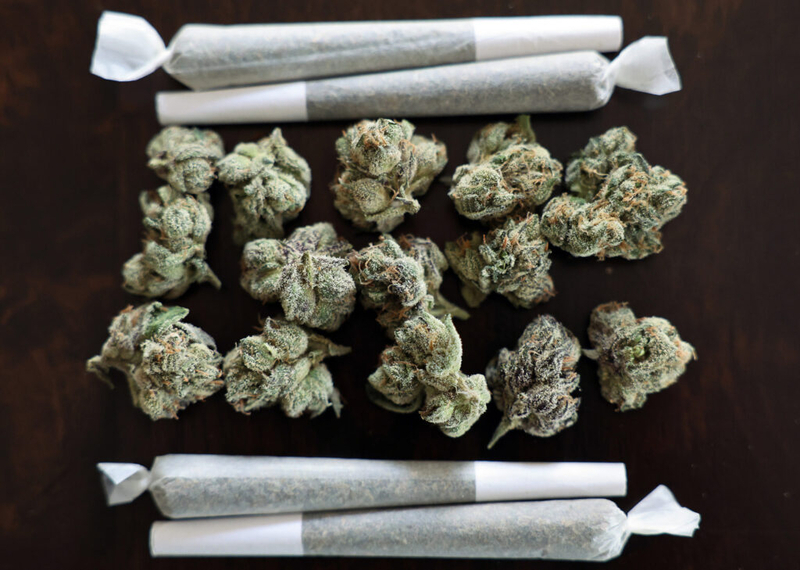
Members of the North Carolina's Advisory Council on Cannabis gave the public its first glimpse this week of how a public consumption policy might be crafted. State legislators would first need to give their approval to any changes to existing law. (Photo by Mario Tama/Getty Images)
North Carolina’s Advisory Council on Cannabis faces a December 31st deadline to issue final recommendations for a comprehensive cannabis policy to Gov. Josh Stein. While the legislature would have to agree to enact any changes in existing law, the council gave the public its first glimpse this week of how a public consumption policy might be crafted.
Anne Doyle and Kaycee Deen with the state Division of Public Health told council members that cannabis consumption needs its own framework of policies, because it doesn’t fit neatly within state laws governing alcohol or tobacco use.
To establish a cannabis-specific policy, Doyle said her team has examined how other states have opted to regulate public consumption.
In Virginia, retail sales of recreational cannabis begin July 1, 2027, but it will be illegal to smoke it in public. Lawmakers there are already considering increasing the civil penalty for public use from $25 to $250.
In California, smoking or ingesting cannabis in public is prohibited, but they do allow for its use in designated lounges or cafes.
Colorado likewise bans open products and public consumption but allows for local exceptions in hospitality spaces.
Across all those states, Doyle said the baseline is that legal possession does not mean that you have the right to use or consume cannabis in public.
Defining public spaces
Deen said after many conversations with policymakers and public safety officials in other states, they drafted five recommendations for THC consumption in North Carolina.
The first recommendation prohibits the consumption of all THC products in any public place. Public spaces could be broadly defined to cover restaurants and bars, beaches, parks, event venues and public buildings.
“The goal is to make the rule very intuitive,” said Deen. “We want the public to understand exactly what this means. We don’t want to have to have law enforcement try to guess at businesses, are they public or are they private?”
The recommendation becomes trickier when it comes to housing. A homeowner would be free to consume cannabis in their private residence, but different rules might apply for renters.
“The landlord who owns the home makes a decision that that home should be smoke-free. You do have to abide by that,” said Deen.
Deen said other states advised North Carolina to avoid relying on “private event” labels that could turn a public business into a consumption site.
“Let’s say a famous pop star decides to rent out the Lenovo Center for her wedding. If we had an exception for a private event, they would be able to allow smoking during that event while it was rented out privately,” Deen explained.
Another policy choice to consider would be a narrow exception for THC beverages, Deen said.
“You could allow licensed restaurants to be able to sell THC beverages for on premises consumption only, not to be taken off the property,” said Deen. “They would be like a menu item similar to mixed drinks or beer wine.”
Deen said restaurants are a very controlled environment, where staff could be trained on THC products, and they would have 21 plus ID verification.
“They have limits on serving sizes and THC per serving,” she said. “Another thing that we’ve learned from the alcohol space is that a way to limit consumption is to raise the price.”
The second draft recommendation would prohibit consumption of THC in a moving vehicle by drivers and passengers. An open THC container in the passenger area would also be prohibited. The vehicle rule would not require impairment to be enforceable.
Narrowing consumption locations
A third proposed recommendation would be to not allow dedicated consumption lounges.
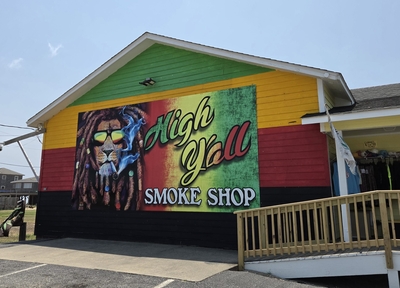
“It’s always easier to restrict something at the beginning and then open up those laws later,” Deen advised. “They complicate enforcement.”
A fourth draft recommendation is to preserve authority for private housing to further restrict these cannabis consumption laws.
This would be a safeguard for HOAs or condominium associations. Deen said spelling this out in the initial policy could help prevent a lot of litigation.
Forrest Parker, CEO of Qualla Enterprises and Great Smoky Cannabis Company, said people are looking for safe places to consume cannabis, which is legal for recreational use on Cherokee land in North Carolina.
While the concept of cannabis lounges may not have worked financially in other states, Parker said they recognize consumer demand.
“We’re actually starting to slightly explore whether it makes sense for us to provide a safe place.” Parker said.
Parker said with a larger portion of their customers being visitors, many are looking for a place they can legally use cannabis when Cherokee hotels, casinos and other public spaces remain off limits.
“We have a lot of campgrounds actually beginning to promote a ‘420 friendly’ vacation model,” Parker said. “They’re closing off certain sections of the campground and building barriers so that children don’t have easy access. Really responsible.”
Recreational cannabis is legal for adults over 21 on tribal land, but upon leaving the Qualla boundary, individuals are subject to North Carolina state laws.
A pushback on civil fines
The final draft recommendation would use civil infractions, or fines, as the default enforcement mechanism for the public consumption rules.
“Just like it was when they enacted the smoke-free restaurants and bars, they got a lot of complaints at the beginning for several years. Then they got less and less,” said Deen. “There was a behavior change.”
Doyle said this is another area where North Carolina can borrow from other states.
“California does not impose infractions or fines on minors. They actually require education,” said Doyle. “That could be a really interesting thing to think about [instead of] punishment.”
Roxboro Police Chief David Hess said the wording on enforcement recommendations needed work.
“If what I’m carrying out of this recommendation is for law enforcement to go around issuing civil fines for public consumption, we’re going to erode public trust,” Hess said.
Hess said in North Carolina municipal law enforcement doesn’t have the statutory authority to enforce civil laws. That’s a function of sheriffs’ departments, he said.
As hemp’s future hangs in the balance, NC policymakers look ahead to regulate cannabis
“You would be entering local law enforcement into a new space that historically has never been permitted in North Carolina. That’s going to come with a significant amount of training,” Hess said.
Col. Freddy Johnson, commander of the North Carolina Highway Patrol, agreed with Hess, but thought many of the state’s open-container laws for alcohol could be adapted to work for cannabis consumption.
Other advisory members indicated they would be agreeable to allowing bars and restaurants to continue to sell THC-infused beverages.
“If we did have legal products, the legislature could limit the amount that you can put in a container, a can, or bottle. Many states have done that,” said Dr. Larry Greenblatt, state health director and co-chair of the advisory council.
Greenblatt said the draft recommendations should be considered a work in progress. Subcommittees will be meeting throughout October and November where the guardrails will be fine-tuned.
Even after the final report is delivered to the governor, the General Assembly would need to agree on the legislation. Attempts to legalize medical marijuana have died in the state House in recent years, despite support from some senior Senate leaders. The Trump administration has called on the U.S. Department of Justice to reclassify marijuana as a Schedule III drug, the same class as Tylenol.
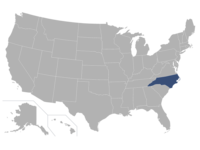
Raleigh, NC