NM US Sen. Heinrich tours Albuquerque Food Farmacy to tout fruits and vegetables as medicine
Sep 09, 2026 | 5:07 pm ET
Description
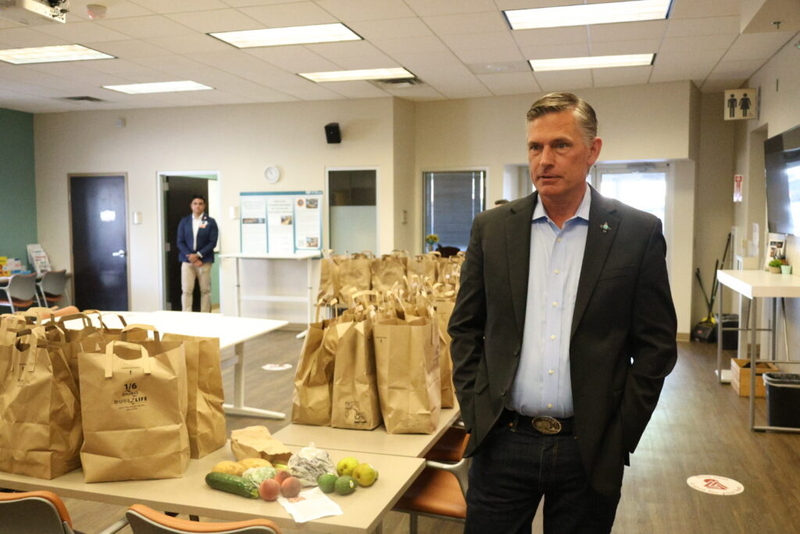
U.S. Sen. Martin Heinrich (D-N.M.) on Sept. 9, 2026, visited Presbyterian Healthcare Services’ Food Farmacy, which provides patients with bags of fresh produce. (Patrick Lohmann/Source NM)
U.S. Sen Martin Heinrich (D-N.M.) on Wednesday helped volunteers at an Albuquerque health clinic distribute bags of fresh produce to food-insecure patients, part of an effort to highlight a “food is medicine” bill he has co-sponsored in the Senate.
Presbyterian Healthcare Services distributes roughly 10-pound bags of fresh fruits and vegetables to approximately 1,000 of its patients each week. The program, which first launched in 2018, seeks to improve access to healthy food and nutrition education and thereby stave off chronic diseases linked to poor diet.
But the program relies almost entirely on funding from Presbyterian or donations, Leigh Caswell, Presbyterian’s vice president of community health and equity, told Source NM on Wednesday at the company’s Community Health Resource Center in Albuquerque.
Providing healthy food to patients “is a healthcare intervention, but it’s not a thing that’s billable,” she said. “You’re not able to charge Medicaid for it or Medicare. It’s just not part of how healthcare is financed.”
The “Accountable Produce is Medicine Act of 2026,” which Heinrich co-sponsored early last month, seeks to change that. The bill, which has Republican sponsors in both the U.S. House of Representatives and U.S. Senate, would require the federal Center for Medicare and Medicaid Innovation to conduct a five-year study on whether paying public funds for nutrition assistance programs like Presbyterian’s Food Farmacy improves outcomes for patients with chronic diseases.
The study will evaluate patients’ weights, blood pressure and blood glucose measurements, along with other factors, according to the bill text.
Versions of the bill in both legislative chambers currently await consideration in committees, Heinrich spokesperson Luis Soriano told Source NM.
Presbyterian’s program enrolls patients who describe being food insecure in patient screenings, Caswell said, including not having enough money to pay for groceries. At the Albuquerque clinic Heinrich visited, approximately 160 patients arrive in vehicles every Wednesday and accept brown bags full of fruits and vegetables from volunteers.
Heinrich — after handing a patient a bag with pears, okra, peaches and other items Wednesday — told Source NM that he visited Presbyterian’s Food Farmacy to see a model he says demonstrates a food system that supports both local farmers and public health more broadly.
“I think this program, from a healthcare point of view, just proves out how valuable a fresh fruit and vegetable kind of diet is for the population, and we should learn from that when we’re setting things like farm policy and writing a new Farm Bill,” he said.
Santa Fe, NM