NM smoke shop owner says food desert, not fraud, the reason for his high SNAP revenue
Jun 26, 2026 | 4:23 pm ET
Description
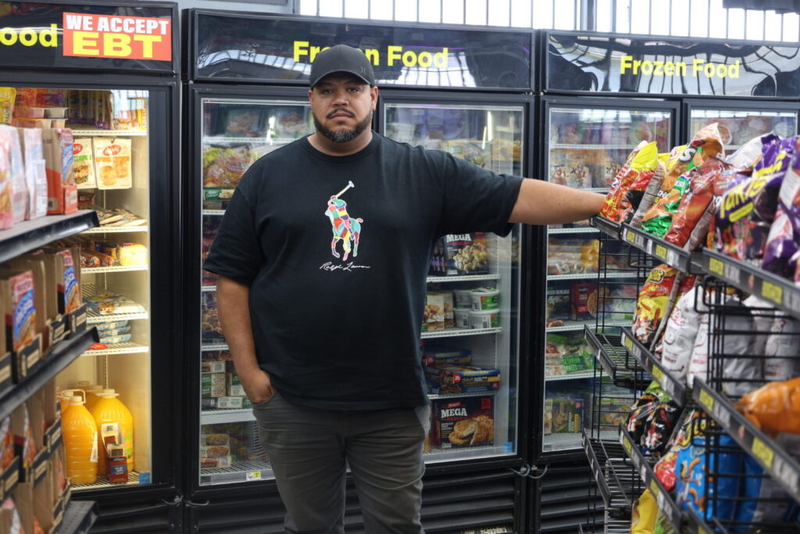
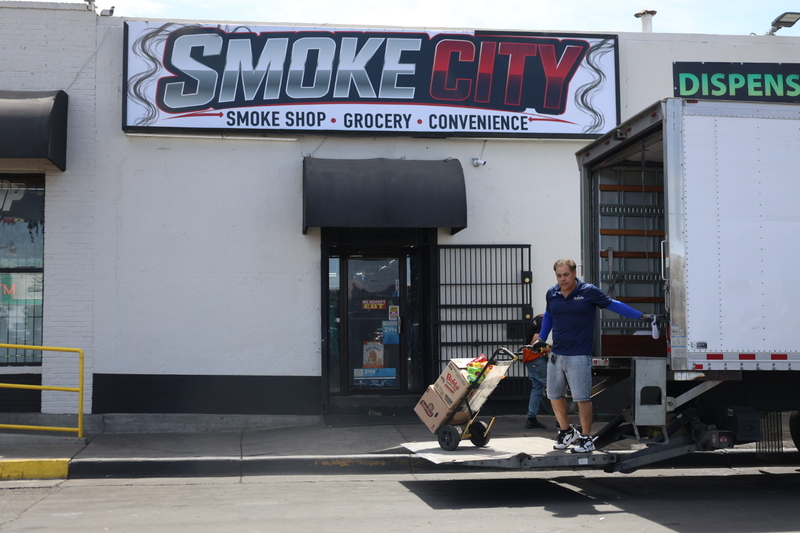
Aaron Sheridan, who owns the Smoke City convenience store in Albuquerque, said his shop serves as a vital grocery store in the International District, which is why his federal food assistance revenues are far higher than the statewide average. (Patrick Lohmann/Source NM)
An Albuquerque business owner whose smoke shop legislative analysts recently flagged for suspiciously high federal food assistance revenues told Source NM that his shop’s high sales don’t signal fraud. Rather, they reflect the few grocery options in a struggling neighborhood.
Last week, the New Mexico Legislative Finance Committee released the results of a long-awaited Supplemental Nutrition Assistance Program evaluation, which concluded that the New Mexico Health Care Authority could do more to investigate and analyze potential fraud in a state where roughly one in five residents receive federal food aid.
Among its findings, LFC analysts identified two stores — which they characterized as smoke shops — authorized by the United States Agriculture Department to accept SNAP that received more than $400,000 in SNAP revenue in 2025. That figure is approximately seven times more than the average revenues roughly 1,700 authorized retailers statewide generated that year.
The LFC report did not identify the two shops or their locations, but the report included images of the buildings’ exteriors with their names partially redacted. The LFC, in a statement to Source NM this week, described the stores as “anomalies” but did not conclude they committed wrongdoing.
New study finds New Mexico underestimates, fails to investigate federal food assistance fraud
Interviews Source NM conducted this week determined the shops the LFC highlighted are Smoke City and M&L, which sit within half a mile of each other along Central Avenue in Albuquerque’s International District, an area known for high transient populations and the recent closures of a neighborhood Walmart and CVS.
Both shops offer an array of tobacco and nicotine products, as well as a wide variety of pipes, but not cannabis. They also have multiple shelves dedicated to groceries and coolers full of drinks lining the walls. Both also have prominent advertisements pasted on the walls noting they accept SNAP and warning against SNAP fraud.
The LFC’s findings prompted New Mexico Sen. Pat Woods (R-Broadview) to request that the USDA investigate the shops. He told Source NM on Wednesday that his June 17 letter — which urged the USDA to “investigate the high SNAP activity in these NM establishments” — was “hand-delivered” to the chief-of-staff for USDA Secretary Brooke Rollins.
Owners of both shops told Source NM on Wednesday that USDA inspectors conducted surprise inspections within the last week.
According to a USDA spokesperson, M&L has been “permanently disqualified” from receiving SNAP benefits in exchange for products following its recent inspection, though the business owner can appeal. The agency did not respond to Source NM’s requests for details about whether that shop was found to be fraudulently using SNAP or whether it violated other rules.
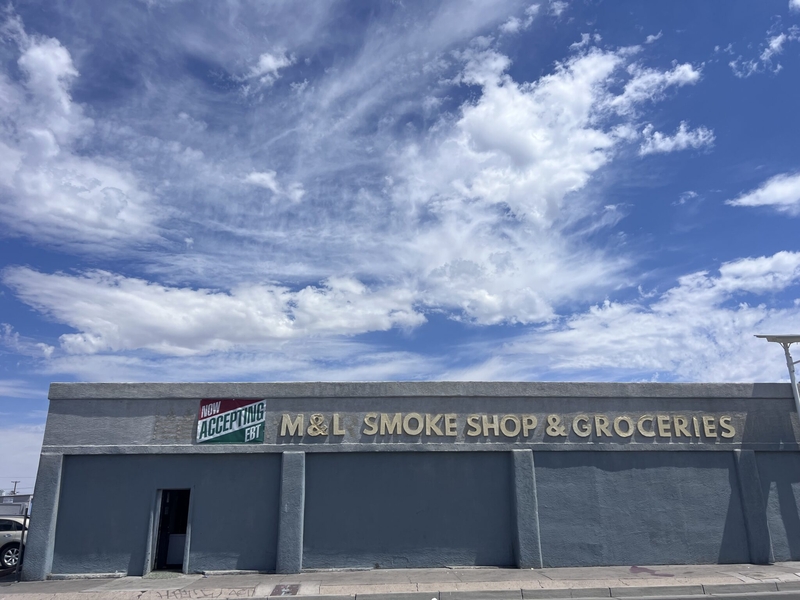
M&L owner Marcus Hill told Source NM that it’s possible the USDA cut him off from SNAP because he was re-selling store-bought meat to SNAP recipients.
“I don’t really know what the rules are,” he told Source NM in a brief phone interview, in which he also denied committing SNAP fraud.
The USDA can cut off SNAP access to retailers that commit fraud, which includes providing cash in exchange for SNAP benefits. The USDA also prohibits retailers from accepting SNAP funds for non-SNAP items like tobacco and liquor, as well as for hot food, though members of Congress are seeking an exception for hot rotisserie chicken.
Aaron Sheridan owns Smoke City, the other shop the LFC highlighted. He noted — and the USDA spokesperson confirmed — that he is still allowed to accept SNAP after the USDA’s surprise inspection Monday. He interprets that as vindication that he committed no wrongdoing.
By the #s: More than half of NM groceries, convenience stores at ‘high risk’ due to SNAP cuts
In an interview Wednesday at the shop, Sheridan provided a year’s worth of more than $230,000 in purchase orders to one of his three main food distributors and provided a tour of the shop, featuring roughly a dozen aisles full of chips, candy, canned beans, cookies and pasta, as well as freezers full of drinks and microwaveable meals. He also presented sales analytics showing he received a little more than $100,000 from food sales in May alone, with roughly half of that coming from customers using SNAP.
Sheridan said he decided to expand his offerings at his 24-hour smoke shop after being shut down during the COVID-19 pandemic. He wanted to ensure his business remained “essential” in the event of another shutdown, so he added a single cooler with soft drinks after being allowed to reopen.
He continued adding groceries to his aisles and received USDA authorization to accept SNAP in 2022, according to USDA data. Meanwhile, nearby large chain grocery stores closed.
“So that obviously helped me, but it didn’t help the area, so that’s when I expanded even more, and I started to get more groceries,” he said. “I mean, these people need to eat, they need food, they need this, they need that. So, I’m glad that I was honestly here to provide that.”
Woods told Source NM that he is glad the USDA investigated both shops and also to learn that no fraud was occurring at Smoke City. But he urged the Health Care Authority to implement the LFC’s recommendations to crack down on potential fraud throughout the SNAP ecosystem.
One LFC recommendation affecting SNAP retailers concerns the SNAP data the USDA and state collect. The USDA only collects the dollar amount for SNAP purchases. As a result, the LFC said, retailers can easily ring up non-SNAP items or exchange SNAP funds for cash.
The LFC recommended the HCA require product information data be collected through its electronic system.
Marina Piña, a spokesperson for HCA, said the authority has “begun discussions” with its vendor about improving SNAP retailer compliance, including “the feasibility of collecting item-level purchase data.”
But Sovereign Hager, the public benefits director for the New Mexico Center on Law and Poverty, said the focus on retailer or customer fraud is misplaced in a state with among the highest rates of nationwide food insecurity, and after the “One Big Beautiful Bill Act” stripped SNAP benefits from thousands of New Mexicans.
“It’s taking attention away from real problems that are causing children and families in New Mexico to not be able to put food on the table,” she said.
Santa Fe, NM