NJ strengthens enforcement over group homes for people with disabilities
Jul 03, 2026 | 6:00 am ET

Description
New Jersey has new tools to hold accountable group homes for people with disabilities, including $25,000 fines for injuries from abuse or neglect. (Photo by Hal Brown/New Jersey Monitor)
New Jersey officials now have much sharper tools to protect people with disabilities from abuse and neglect in group homes, thanks to a law that took effect July 1 allowing for state penalties of up to $25,000.
The law requires the state to issue a warning the first time a residential program for people with disabilities is caught causing abuse or institutional neglect, like failing to train and ensure staff is providing for residents’ needs. Additional offenses prompt a $10,000 fine, or $25,000 if it causes a resident an injury that can’t be treated with basic first aid.
Fines will be deposited in a revolving fund in the Department of Human Services, which oversees disability programs, and can be used for quality improvements initiatives, administrative costs, and regulatory actions related to the law. About 30,000 people with disabilities live in private or group homes, the department said.
Jonathan Seifried, an assistant commissioner at the department’s developmental disabilities division, said the law addresses accountability and, through the fund, fuels improvement.
“Our goal is a system that consistently delivers safe, high-quality services for the people who depend on them,” he said in a press release.
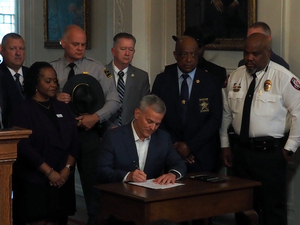
Signed by former Gov. Phil Murphy in January, the new law follows news reports that documented abuse and neglect at group homes for people with disabilities and found flaws in the state’s oversight process. Abuse has been an ongoing concern for the New Jersey ombudsman for individuals with intellectual or developmental disabilities and their families.
Abuse and neglect are “rampant,” according to the office’s most recent annual report from 2024, issued by then-ombudsman Paul Aronsohn. While some provider agencies do all they can to prevent harm, he said, other agencies “are not as vigilant or serious, and frankly, our State government does not do enough to prevent or stop the abuse and neglect.”
Under the new law, the state can also issue penalties of $10,000 to facilities that repeatedly fail to conduct criminal background checks on employees when required, don’t follow the protocol when staff members test positive for drugs, don’t properly investigate a reported incident, or don’t follow a state-mandated plan for reform. It also updates the list of employees who must report abuse or neglect.
Kaylee McGuire, the deputy human services commissioner who oversees disability programs, said the law allows the state to hold repeat offenders more accountable.
“It is one important component of our broader, comprehensive strategy to improve and sustain high‑quality services, combining strong consequences for violations with proven approaches that support continuous quality improvement,” she said.
In April the state announced appointments to an advisory committee whose 13 members will examine select cases involving deaths of adults with disabilities who suffered abuse or neglect and recommend improvements for the system.
“By combining stronger accountability with ongoing collaboration among individuals, families, advocates, experts, and providers, we are shaping a system that learns from experience, responds to challenges, and remains focused on ensuring every individual receives safe, high-quality supports with dignity and respect,” said Stephen Cha, the human services commissioner.
Trenton, NJ