NJ senator demands better public reporting on deaths in immigrant jails
Nov 19, 2026 | 1:08 pm ET
Description
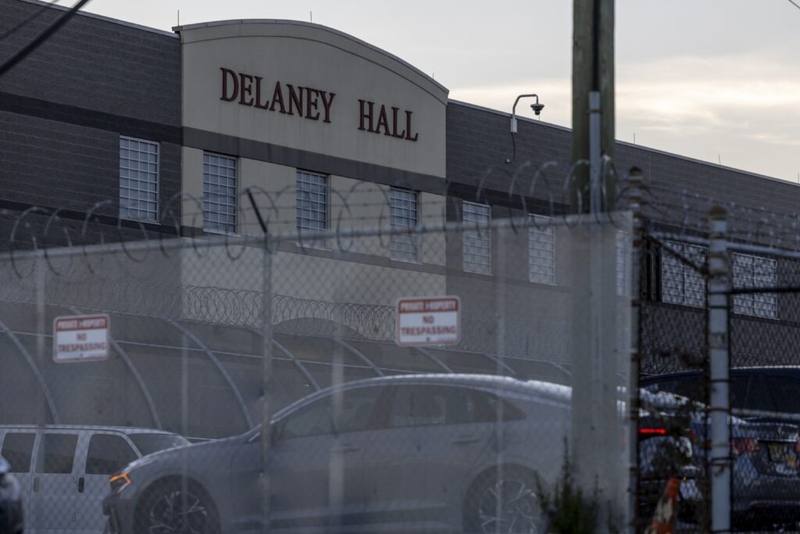
Three people who were detained at Delaney Hall have died in the past year. (Photo by Anne-Marie Caruso / New Jersey Monitor)
New Jersey Sen. Andy Kim introduced legislation Thursday to require federal immigration authorities to more quickly and comprehensively report to Congress and the public about the deaths of people held in migrant jails, as well as those who die during arrest, pursuits, transport, or any other encounters with enforcement agents.
The U.S. Department of Homeland Security and any contractors that provide medical services or other operational support would have to submit detailed incident reports on in-custody deaths to Congress within 72 hours and the public within 30 days under Kim’s bill.
Kim’s proposal, called the Death in Detention Custody Act, comes as detainees increasingly share horror stories of deficient medical care and inhumane conditions in detention centers.
The expanded reporting Kim seeks would require Homeland Security to report on the deaths of anyone still in custody who dies at a hospital or other healthcare facility as well as those who die within 30 days of being released from immigration authorities’ custody. That was standard procedure under a policy President Joe Biden’s administration adopted in 2021, but Immigration and Customs Enforcement stopped such reporting last summer, prompting accusations that the agency releases gravely ill detainees to avoid racking up a higher body count.
It also would capture people who die in any encounter anywhere with on-duty ICE and border-patrol agents. That would include U.S. citizens such as Alex Pretti and Renee Good, protesters shot to death by ICE agents in Minneapolis, and non-citizens such as Johan Sebastián Durán Guerrero, a Colombian immigrant fatally shot by an ICE agent as he drove near his home in Maine.
Agents from the ICE and U.S. Customs and Border Protection should not skirt accountability for abuse, Kim said.
“We cannot allow them to try to cover up how many people have died under their watch. People like Jean Wilson Brutus, Edwin Lopez-Cornejo, and Jose Chajon-Raxon who were detained at Delaney Hall in New Jersey and died,” Kim said in a statement. “I have spoken to families in New Jersey grieving their loved ones without the answers they deserve. While we continue to work to shut facilities like Delaney Hall down for good, this bill demands transparency and would help make sure no family is left in the dark about what is happening to their loved ones behind closed doors.”
Homeland Security spokespeople did not immediately respond to a request for comment.
Immigration authorities now are required to publicly report on in-custody deaths within 90 days, although critics contend they don’t always comply with the rule.
At least 32 people have died so far this year in ICE custody, including three detainees at Newark’s Delaney Hall, according to the National Immigration Project. Those figures don’t include people who died during community interactions with ICE agents, such as Pretti, Good, and Guerrero.
This year’s death toll is on pace to top last year’s, when detainee deaths hit a two-decade high with ICE reporting 33 deaths, according to the National Immigration Project.
ICE’s official tally is lower, with the agency reporting 24 in-custody deaths this year, as of Aug. 23. The U.S. Customs and Border Protection hasn’t released death data since 2023, when it reported 180 deaths.
Brutus, who was from Haiti, died of an unspecified medical emergency on Dec. 12, less than 24 hours after immigration agents detained him at Delaney Hall. The facility, which is managed by private prison operator Geo Group, opened in May 2025 and can hold more than 1,000 people.
Chajon-Raxon, of Guatemala, died in July, days after Delaney staff discharged him when he fell ill there. ICE did not disclose the death, saying it didn’t report the deaths of former detainees.
Relatives of Cornejo, an El Salvador man who died at Delaney in August, said he had diabetes and high blood pressure and had trouble getting needed medication while detained.

Under Kim’s legislation, authorities would have to certify that they notified next of kin.
They would have to report to Congress a late detainee’s name, nationality, and demographics; the time, location, circumstances, cause and manner of their death; their medical condition prior to death; and the agencies and contractors involved in their care and custody.
They would have to release to the public an incident report with many of those details, along with any independent autopsy results, body worn camera footage, records and justifications of any denied requests for medical care, and other details including whether a firearm was discharged and whether they’d filed any grievances or complaints.
Violators who don’t meet the bill’s reporting requirements could lose their contract and face unannounced inspections. Persistent offenders that fail to report three times would be barred from further contracts with Homeland Security for five years.
The bill stands no chance of passing in the lame-duck session, with Republicans still in control of all three branches of government.
But Democrats will control Congress in January, after voters flipped the House and Senate in the midterm election. Democratic Rep. Hakeem Jeffries of New York, who House Democrats picked this week to lead the next Congress, said a top priority would be reining in the Trump administration’s aggressive immigration crackdown.
President Donald Trump has said he’d be open to working with Democrats on tempering enforcement, even though he named Stephen Miller — the crackdown’s mastermind — as his new chief of staff earlier this month.
Kim’s bill has support from about 10 advocacy groups including the American Civil Liberties Union of New Jersey, the Vera Institute of Justice, and the National Immigration Law Center.
Several other Democrats have introduced legislation this session meant to expand oversight of Homeland Security activity and facilities, but none have passed with Republican majorities in the House and Senate.
Rep. Shri Thanedar of Michigan introduced a bill in September that’s similar to Kim’s proposal, seeking more robust reporting of in-custody deaths. A bill Rep. Derek Tran of California introduced in July would allow people to hold private companies that operate federal detention centers liable for the wrongful death of a detainee.
New Jersey Sen. Cory Booker introduced a bill in August that would close Delaney Hall. And Rep. Joe Neguse of Colorado introduced a bill in May to expand access to and oversight of immigrant jails.
Trenton, NJ