NJ lawmakers revive plan to keep some parole violators out of prison
Jul 07, 2026 | 7:05 am ET
Description
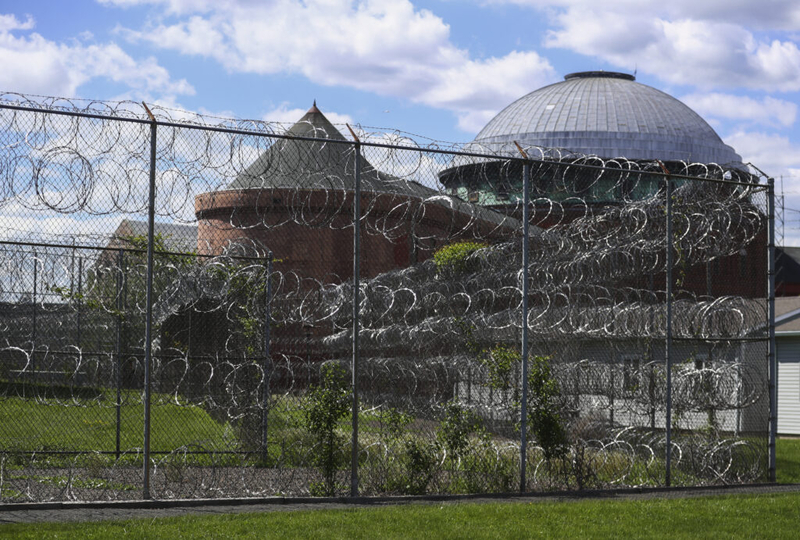
Two Democratic legislators want the state to stop returning parolees to prison for non-criminal violations of their parole conditions. About 1,200 people in state prisons on any given day are there for what's known as "technical parole violations," rather than committing a new crime. (Photo by Dana DiFilippo / New Jersey Monitor)
Several New Jersey legislators have resurrected an effort to stop the state from sending parolees back to prison for technical parole violations, which occur when they miss curfew, fail a drug test, miss a required check-in, or otherwise break the conditions of their release rather than commit a new crime.
Former Gov. Phil Murphy set that goal early last year, citing cost and fairness concerns. About 1,200 of the nearly 13,000 people in New Jersey’s state prisons on any given day are there for such violations, at a cost of about $90 million a year; keeping them in the community would allow the state to close a prison, Murphy has said.
But the proposal met resistance from police, prosecutors, and Republicans, with a bill introduced in December stalling amid concerns over victim notification, deterrence, and repeat and violent offenders, among other things.
Now, Sen. Andrew Zwicker (D-Middlesex) and Assemblywoman Shanique Speight (D-Essex) have introduced a new bill with tweaks meant to resolve critics’ concerns. Zwicker said the bill is among his top priorities when legislators return to Trenton this fall from their summer recess.
“This is trying to significantly curtail incarceration for non-criminal violations. That’s the bottom line,” Zwicker said. “For individuals out on parole who are reincarcerated for non-criminal activity, especially around substance abuse, incarcerating them again does not improve outcomes compared to treatment. It’s expensive, and it creates significant setbacks to the individual who gets reincarcerated. The goal has always been to provide support for those who are out on parole.”
Supporters, both in December and now, have referred to the bill as the “Substance Abuse Recovery and Accountability Act,” focusing on a common reason for reincarceration — failure to maintain sobriety. One key provision in the bill would expand supports for parolees with substance use disorders. More than 70% of people in New Jersey prisons struggle with addiction, according to the Reform Alliance, a national nonprofit that advocates for parole, probation, and sentencing changes.
Critics had objected to provisions in the old bill that would have ended parole supervision early through something called “compliance credits.”
Under current law, parolees can shave one day off their parole term for every six days they successfully comply with supervision conditions. People sentenced under the state’s No Early Release Act, a 1997 state law known as NERA that requires violent offenders to serve 85% of their sentence before becoming parole-eligible, are exempted.
The old bill would have accelerated the compliance credit rate, allowing parolees to cut a day off their parole term for every two days of compliance. It also would have extended compliance credits to NERA defendants. The County Prosecutors Association of New Jersey warned the plan was “overly broad and insufficiently tied to measurable rehabilitation.”
The new bill dumps compliance credits and instead tasks parole officers with recommending early discharge (and establishes a presumption in favor of it) for people who pose no public safety risk and have complied fully with parole conditions for two to five years, depending on their case particulars. Sex offenders and people sentenced under NERA would not be eligible. Of about 16,000 people now under parole supervision in New Jersey, close to 10,000 are sex offenders, according to the state Board of Parole.
Expedited early discharge is an approach now used in Pennsylvania and Virginia, according to the Reform Alliance. Such a model would create an incentive for people to stay on track, according to the American Civil Liberties Union of New Jersey.
“Under current laws, someone accused of a non-criminal violation is often forced to sit in a cell for weeks before even seeing the evidence against them. That undermines progress, and it isn’t keeping anyone safer,” said John Butler, the group’s political director. “This bill will modernize New Jersey’s parole system by creating a fairer process aligned with the latest standards already adopted by many other states, and even saves taxpayers money at the same time.”
The proposal also would cap reincarceration for technical parole violations to 364 days, allow people to serve that time in county jails closer to home instead of state prisons, require authorities to review arrest warrants for revocation within seven days, and notify victims within 10 days of receiving an early discharge recommendation, among other things.
“This bill really takes the most inefficient pieces of New Jersey’s parole revocation system and realigns them, so that we are much more focused on what I think average people in the community want us to be focused on, which is public safety and second chances,” said Erin Haney, chief policy officer at the Reform Alliance.
Sen. Douglas Steinhardt (R-Warren) had objected to the December legislation, accusing advocates of “whitewashing” the public safety implications of relaxing repercussions for parole violators.
He said he hadn’t yet examined the new bill in depth yet but will. He remained skeptical of its aims.
“I think some people forget that parole is already the reward, if you will,” Steinhardt said. “Everybody acts like there’s some punitive component to not letting people off parole early, but that’s grounded in the misconception that you aren’t still serving out part of a sentence that a court awarded for your underlying crime.”

Trenton, NJ