This Newport symposium is for the birds
Feb 01, 2024 | 6:10 pm ET
Description
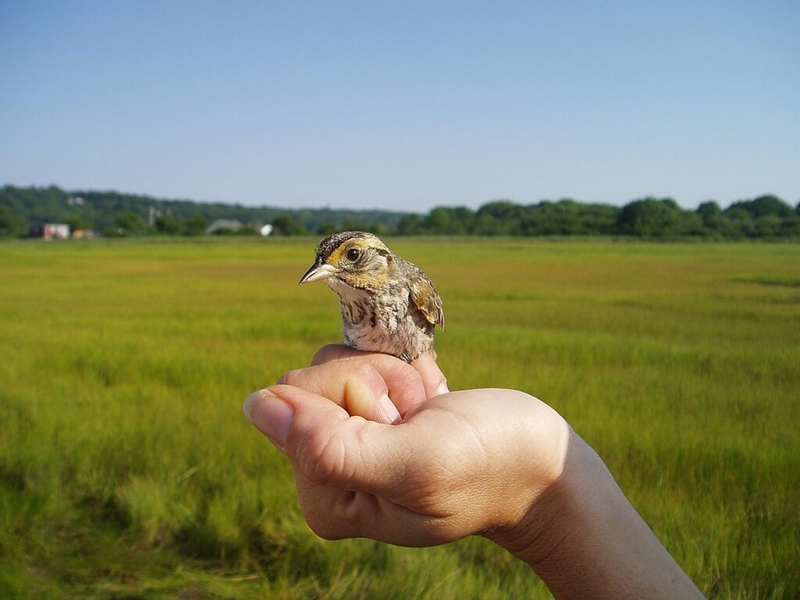
A U.S. Fish and Wildlife Service biologist holds a saltmarsh sparrow for a study on mercury levels at a Rhode Island National Wildlife Refuge. Bird handling should always be conducted by trained researchers with proper permitting. (USFWS photo)
Bird populations monitored on Audubon Society of Rhode Island refuges continue to decline, with more than one third of birds experiencing long term population losses, and only about a quarter of species growing in population.
The species that have shown the greatest declines are birds that eat insects as they fly, including barn and bank swallows and chimney swifts, which are facing habitat loss.
That’s the ominous news from the Audubon Society’s 2023 State of Our Birds report.
The good news though is that Rhode Islanders don’t have to be scientists to get involved in the effort to reverse this dismal trend. “Birds Across New England,” the Audubon Society’s second annual Regional Conservation Symposium happening Sunday, Feb. 4, at Salve Regina University in Newport, aims to communicate the latest research findings to the general public. (Registration for the symposium was scheduled to close Thursday.)
“The primary goal of this symposium is to get all of these scientists from the region into one room, filled with an audience of the general public with little to no scientific background, and communicate effectively to them what they’re doing, what the problems are, how they’re addressing those problems,” said Audubon’s Director of Research Charles Clarkson.
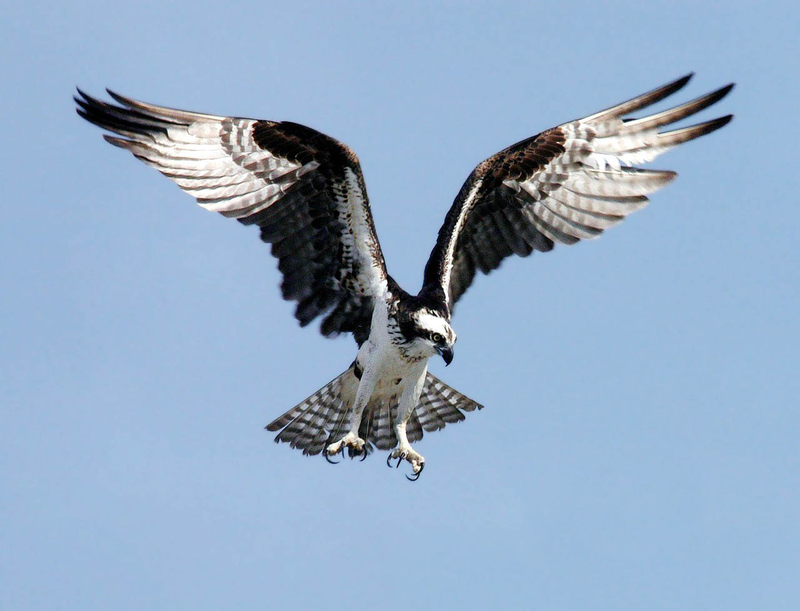
Bird conservation is also a global issue, because many birds migrate hundreds and even thousands of miles. Clarkson said some researchers are scheduled to present their findings from their work in other countries.
“The issues of habitat loss, climate change, predation, window strikes, all of these things that collectively act to depress bird populations are the same across all bird populations on a global scale, so we do have some researchers who do work on a much broader scale than just here in New England, and the goal was to kind of get them all together and get the creative juices flowing in terms of understanding how all of our work is connected,” he said.
Unfortunately, in Rhode Island, the conservation of birds and their habitats has not been a legislative priority. Clarkson noted little has been done to mitigate the impacts of climate change on bird populations.
“We’ve known about the issue for decades, we’ve talked about this issue for decades, but we’re so very slow to react,” Clarkson said. “A major concern is that we’re not going to be able to make change at a pace that’s fast enough to actually have a positive impact on these declining wildlife populations.”
Clarkson hopes that as more non-scientists understand the threats facing birds, more people will want to work on ways to protect them.
“We are in what I call an ‘all hands on deck’ period, where there’s really little to no time to drag our feet on some of the work that we do,” he said.
Audubon’s current advocacy efforts include further restricting pesticide use and prohibiting anticoagulant rodent baits that kill birds and mammals that eat poisoned rodents.
“We don’t have the capacity as a research community to do all the work ourselves,” Clarkson said. “We require public buy-in, so that when we go to the State House and when we say things like, ‘We need to stop the use of pesticides, and we need to stop the use of these rodenticides,’ we have the full weight of the community behind us.”
We are in what I call an ‘all hands on deck’ period, where there’s really little to no time to drag our feet on some of the work that we do.
The symposium is one way for the environmental advocacy group to raise awareness and cultivate relationships with the public to enlist support of its policy goals, he added.
More than 20 speakers, including several researchers from the University of Rhode Island, will present their findings at the daylong symposium. Keynote speaker will be Carl Safina, author of “Song for the Blue Ocean,” whose most recent book, “Alfie & Me: What Owls Know, What Humans Believe,” was published last October.
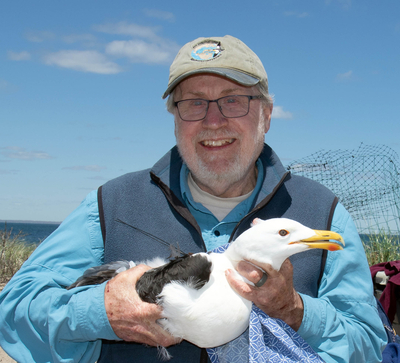
URI Department of Natural Resources Science Chair Peter Paton will talk about changes in migratory bird patterns, and graduate student Liam Corcoran will discuss the Eastern Whip-poor-will breeding season. Audubon researcher, Lincoln Dark, will talk about trends in the state’s osprey population.
Paton has been collecting data on bird populations at the Kingston Wildlife Monitoring Station since 1998, making it one of the longest-running bird banding stations in North America. The steep decline in bird species there has been particularly noticeable in warblers and thrushes, he said.
“It’s almost an 80% decline in the numbers of individuals that are captured now,” Paton said.
Despite the bleak news about bird populations, as more people become aware of what is at stake, grassroots conservation efforts can help slow the declines.
“I think that’s a very important focus of this symposium, getting the word out,” Paton said. “I mean, people are aware of the situation, but it makes them more aware of it.”
Clarkson said he hoped people would come away from the symposium with a new sense of purpose.
“I’m hopeful that folks will listen to the work and understand that despite the declines that we’re seeing on a global scale in our wildlife populations, there are a lot of really dedicated people out there working on the issue, because each of these individuals that presents represents an entire group of folks who are dedicated to doing this research,” he said.
“So, I hope that they understand that the problem is real, but the number of dedicated people working towards the solution is large and productive.”
Providence, RI