This New York Union Gives Millions to Its Bosses, Pennies to the Rank-and-File
Aug 19, 2026 | 5:00 am ET

Description
Last year, nine people — all of them men — made more than $1 million as labor union officers. Five of them ran unions that represent professional athletes and Hollywood actors, many of whom are millionaires themselves.
And then there were four officers of an obscure union based on Long Island whose 23,000 members include grocery store clerks, home health aides, paramedics, and other low-wage workers.
The union, called the International Brotherhood of Trade Unions, or IBOTU, is a family business. Three of its top officers married daughters of the union’s founding president, Peter Hasho, who died in 2021.
Last year, each of those sons-in-law made about $1 million. In the past decade, IBOTU has paid them and two other officers over $27 million — a sum equal to nearly half of the dues that union members paid in that time span.
Workers and other unions have repeatedly accused IBOTU of preying on the members whose dues pay their lavish salaries: forcing them into unions they didn’t ask for, signing contracts that hardly benefit them, and failing to fight back against firings and wage theft.
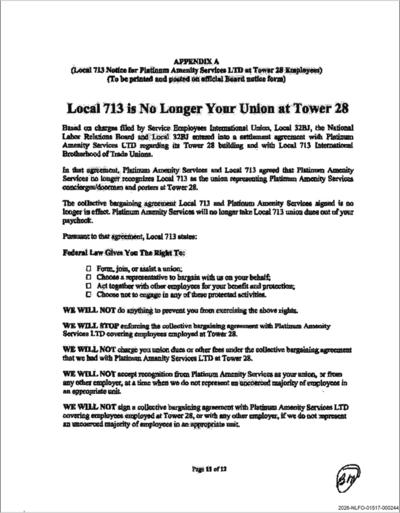
The National Labor Relations Board has ordered IBOTU to disband at workplaces on four separate occasions and accused it of plotting with employers to sign union contracts without workers’ consent. In a fifth case, the union agreed to disband in a settlement.
IBOTU leaders have been arrested or investigated on suspicion of bribery, theft, and fraud. Its organizing director, Robert Scalza, once conspired with the Genovese crime family to extort a rival union. A federal judge banned him from being a union officer for three years, but once the ban expired, he was welcomed back to IBOTU with a raise. Last year, his salary crossed $1 million.
Some of the union’s dealings remain mysterious. Since 2021, it has sent over $1.4 million to an entity that its paperwork describes as a union but that the US Department of Labor has no record of.
IBOTU did not respond to detailed questions from New York Focus and refused requests for comment by phone, email, letter, and in person.
Employers have often allied with IBOTU to block more worker-friendly unions, interviews and records obtained by New York Focus reveal.
Are you a current or former member of IBOTU Local 713 or Local 7, or do you have other knowledge about the union? We want to hear from you. Reach out to [email protected]. You can remain anonymous.
One example: the New York City-based company Caring Professionals, which employs home health aides to care for elderly and disabled New Yorkers. In the early 2010s, the company sought out a branch of IBOTU called Local 713 in order to prevent a union drive by the powerful New York health care union 1199SEIU, according to Julian Hagmann, chief operating officer of Caring Professionals.
“We knew we needed a union, but we didn’t want to be forced into 1199,” Hagmann told New York Focus. “So we shopped around.”
1199 frequently wins significant raises and benefits for its members. But when Local 713 unionized Caring Professionals, it didn’t rock the boat.
“My workers probably didn’t even feel anything different whatsoever, to be perfectly honest with you,” Hagmann said.
A similar pattern played out at a New York City hotel several years ago.
In June 2017, Arisnelda Rodriguez, a room cleaner at the then-non-union Cassa Hotel in Midtown Manhattan, was fired after mentioning potentially getting union benefits, according to allegations by the NLRB regional office and an interview with Rodriguez.
This led to the remaining workers getting a union — but not one that they had asked for.
A few days after Rodriguez was fired, management made employees sign union cards for Local 713, despite federal law barring employers from telling their workers to join a specific union.
The following week, Local 713 and the Cassa Hotel’s property manager inked a contract that allowed the hotel to begin deducting union dues and fees from workers’ paychecks. Employees got some modest benefits: a 50-cent-per-hour raise and a low-quality health plan that didn’t cover costs for family members.
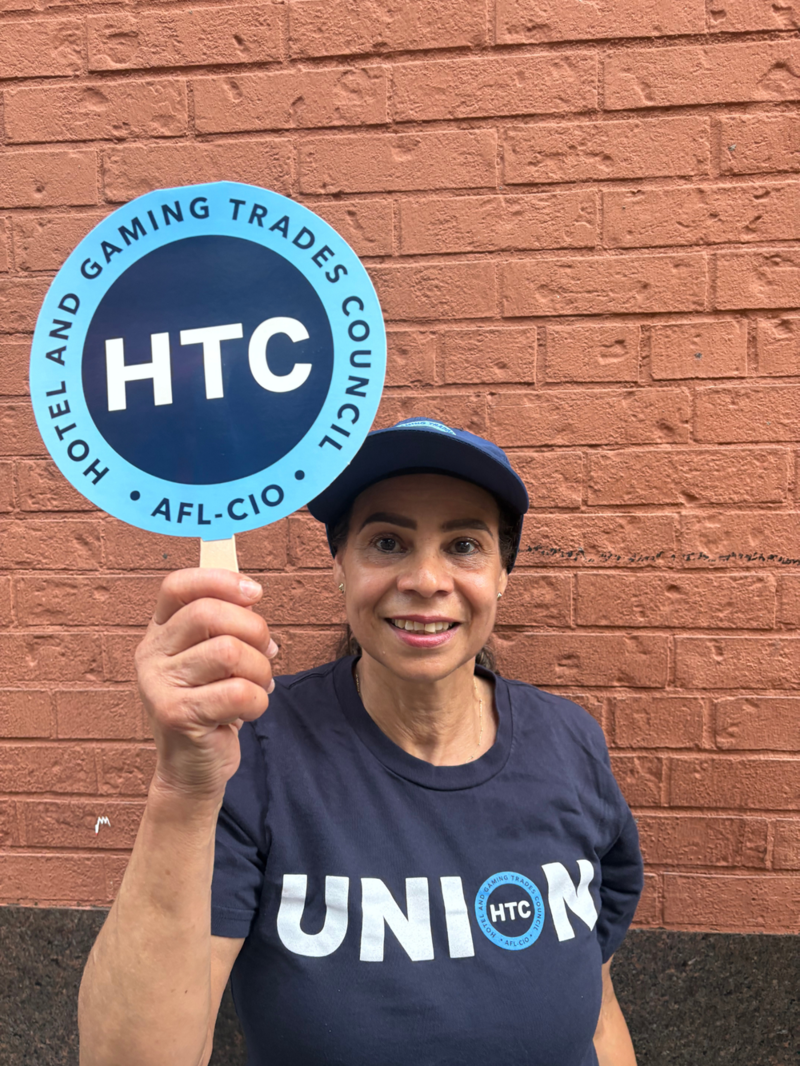
But the scheme quickly unwound. After hearing about the weak benefits, a former Cassa employee told the workers there about the Hotel and Gaming Trades Council, or HTC, New York’s influential hotel workers’ union.
When workers heard about HTC’s gold-standard contracts and the huge raises it often wins for members, they realized they’d been duped, Rodriguez told New York Focus.
Soon after, she and other Cassa workers met with HTC organizers in a Starbucks near the hotel. After hearing their stories, the union filed a complaint with the NLRB, alleging that Cassa and Local 713 had violated federal labor law.
Local 713 “was being used by the employer to prevent the workers from signing up with a legitimate union,” said Rich Maroko, president of HTC, who was the union’s general counsel at the time. “I thought it was disgusting.”
HTC won the case: The NLRB ordered the hotel to cease dealing with Local 713 and void the union contract, rehire Rodriguez and give her $16,000 in back pay, and reimburse employees for all union dues and fees that had been deducted from their paychecks.
Then, in June 2018, workers at the Cassa Hotel voted to join HTC, and in 2019, the hotel agreed to the union’s top-quality contract. Every worker got at least a $5-per-hour raise and became eligible for a pension, severance pay, and a free, premium health plan that covered their whole families. Rodriguez’s hourly pay nearly doubled, from $12.50 when she was fired to about $24.
Rodriguez still cleans rooms at the hotel, which is now called the Truss. As an HTC member, she makes over $42 per hour. She told New York Focus that she and her family have “the best benefits in the world.”
She’s still angry at Local 713, though.
“It’s a union for bosses, for management only,” she said. “Not for workers.”
The contract that Local 713 signed in this case wasn’t unusual. Other IBOTU contracts cap annual raises at 25 cents per hour or give workers just days to file grievances. After reviewing several examples, labor lawyer Daniel Bright said that the agreements “give management a lot of unfettered powers” and “seem to be mostly about protecting management’s rights.”
A few years before it unionized Cassa, Local 713 tried something similar a few miles to the north, according to NLRB findings.
In 2012, Sprain Brook Manor, a Scarsdale nursing home, fired its entire staff, which was unionized with 1199, and then rehired them through nonunion contractors.
“It’s a union for bosses, for management only. Not for workers.”
—Arisnelda Rodriguez, about Local 713
1199 attempted to negotiate with the new management, but the home instead struck a deal with Local 713 that lowered wages and benefits for many workers. Workers were told they had to sign Local 713 cards to keep their jobs, and several pro-1199 workers were fired.
1199 filed unfair labor practice charges against its rival union and the nursing home. In 2017, after four years of litigation, the NLRB reinstated 1199 and ordered Local 713 to dissolve its union at the nursing home. Representatives of Sprain Brook and 1199 declined to comment.
In three other cases in the 2010s, rival unions filed charges with the NLRB accusing Local 713 of illegally collaborating with management or accepting management’s help to promote the union. At one home care company in Brooklyn, according to NLRB records, Local 713 agents were invited to solicit union cards during a mandatory staff meeting. The company threatened to withhold health and retirement benefits if employees did not sign. Like the Sprain Brook and Cassa Hotel cases, all three ended with Local 713 disbanding its chapters at those workplaces.
Workers are still complaining about IBOTU. In multiple lawsuits, former IBOTU members have said that Local 713 did nothing to help them keep their jobs when they were fired.
Last November, Joseph Franqui was fired from his job as the food service director of a Staten Island assisted living facility, where he was a Local 713 member, according to allegations in an ongoing lawsuit. His colleague, union representative Jeff Elkins, was present at the meeting where Franqui was fired. Elkins didn’t do anything to defend him and instead “aligned with management’s position,” Franqui claimed. Reached by phone, Elkins declined to comment and referred New York Focus to the home’s administrator, Patrice Ficco, who also declined to comment. None of the defendants have yet responded to Franqui’s claims in court.
In the suit, Franqui says he was never given a reason for his termination. A month earlier, he claims, the nursing home’s management had warned him to stop raising concerns about workplace conditions and said that he could lose his job if he continued.
After being fired, Franqui, who declined to speak with New York Focus for this story, sent a written complaint to Local 713’s leaders, alleging that the union had failed to represent him. The union replied to say that Franqui was not a union member — even though Franqui claims his employment papers stated that he was a member and he had been paying union dues throughout his tenure.
The union promised to refund his dues and other payments, but never did, Franqui claims. Local 713 did not respond to questions from New York Focus about the suit.
Founded in 1995, IBOTU is currently led by union presidents Richard Dombrowski and Robert Vella Jr. It’s headquartered in a small, one-story building in Carle Place, Long Island, an inner suburb of New York City.

For several years in the 2000s, it allied with another notorious management-friendly union, the International Union of Journeymen and Allied Trades, which was the subject of a 2024 investigation by The City Reporter. But IBOTU went too far even for that union: in 2011, IBOTU was expelled after violating a labor peace agreement by attempting to poach members from a rival. Since 2017, IBOTU’s financial disclosures have claimed an association with the powerful International Longshoremen’s Association, but it is not clear what that relationship entails. ILA did not respond to a request for comment.
Local 713 most recently attracted attention in 2022, when it quickly abandoned an effort to unionize an Amazon warehouse in New Jersey amid negative reporting on the union by the New York Post. The following year, the union’s former bookkeeper pleaded guilty to stealing over $120,000 from the union in a case that made Long Island news.
Several of its leaders have checkered pasts.
After Robert Scalza, the union’s organizing director, pleaded guilty to mob-related extortion in 2014, his lawyer submitted a batch of letters asking the judge for a lenient sentence. Three came from the heads of companies unionized by Local 713, and three more came from Scalza’s subordinates in the union’s administration. Not one came from a rank-and-file union member.
Peter Hasho, IBOTU’s founder and former president, was arrested and indicted in 1975 in connection with a union bribery scheme, and indicted again in 2003 in connection with a scheme to steal $350,000 from a union welfare fund. Hasho was cleared in the second case. Records don’t indicate what happened in the first.

Hasho’s salary peaked in 2018, when he made just over $1 million as the union’s “president emeritus.” A memorial plaque on the wall of IBOTU’s Carle Place office praises his “exemplary leadership” and “dedication and tireless devotion,” which “provided the foundation upon which this organization now stands.”
Former Vice President Perry Scalza, Robert’s brother, was ejected from the Teamsters in 1994 after enrolling friends and family in a union health plan while denying insurance claims from actual union members.
Besides Local 713, IBOTU’s other sub-union is known as Local 7. There is little information available about its activities, what workers it represents, or what benefits it has won for them.
It has collected $18 million in dues since it was founded in 2018, and paid two-thirds of that money, taken straight from workers’ paychecks, to its leaders. All six are also on the payroll of Local 713. Beyond those salaries, Local 7 has spent nothing on typical union activities like contract negotiations and political organizing.
Two other IBOTU officers — Alfred Napolitano and Robert P. Vella — join Dombrowski, Vella Jr., and Scalza among the best-paid union officials in the country, each earning about $1 million in 2025, according to data from the US Department of Labor.
Other major New York unions spend far less on leadership salaries.
New York Focus’s attempts to interview union leadership were unsuccessful. A man who answered the phone at IBOTU offices declined to comment. When asked his name, he said, “That’s irrelevant,” and hung up the call shortly afterward.
When New York Focus visited the Carle Place office on a recent Thursday, a receptionist initially said that no union representatives were available because they only come to the office on Mondays. Eventually, a man who introduced himself as Robert Vella Jr., who made over $1 million last year as president of Local 7 and Secretary/Treasurer of Local 713, came to the front desk. He declined to answer any questions.
IBOTU also refused to answer questions about the large cash sums it has sent to a “union” that appears not to exist. Since 2021, Local 713 has sent over $1.4 million to an entity called IFWU Local 345, according to financial disclosures. The documents refer to IFWU as an “Independent Union,” but a US Department of Labor spokesperson said that the department “could not identify” any union with that name. New York Focus was unable to find any record of IFWU’s existence other than the cash it has received from Local 713.

The address listed for IFWU on Local 713’s financial disclosure forms points to a single-family house in Far Rockaway.
Amit Angel, a real estate investor who owns the house, told New York Focus by phone that he has “no idea” what IFWU is, and that he has rented the house for several years to a “regular family” who are “very quiet, nice people.” He declined to share the tenants’ contact information. On a recent Friday, no one responded when this reporter rang the doorbell several times, and an inquiry letter mailed to the house did not receive a reply. IBOTU did not answer questions about why it has sent over $1.4 million to IFWU.
Meanwhile, unionized home health aides at Caring Professionals — the company that invited IBOTU to block a more aggressive rival union — make “up to” $21 per hour, according to the company’s website, just above the legal minimum for New York City home care workers.
Local 713 and Caring Professionals have renewed the union’s contract several times. This is a contentious process in many workplaces, as unions seek raises and working conditions that management doesn’t want to grant. But for Caring Professionals and Local 713, it’s easy.
“It’s the template of the previous [contract], and you’re just updating it,” said Hagmann, the company’s COO. “It’s not a strenuous activity.”
As for the union making demands like big raises or benefit sweeteners, “that doesn’t happen here,” he said.
Hagmann doesn’t think Local 713’s leaders would ask for anything he’s unwilling to grant.
“They don’t strike me as the shakedown kind of people,” he said.

Albany