New Mexico U.S. Rep. Leger Fernández calls for investigation into toxic metals in fire retardants
Aug 21, 2026 | 4:30 pm ET
Description
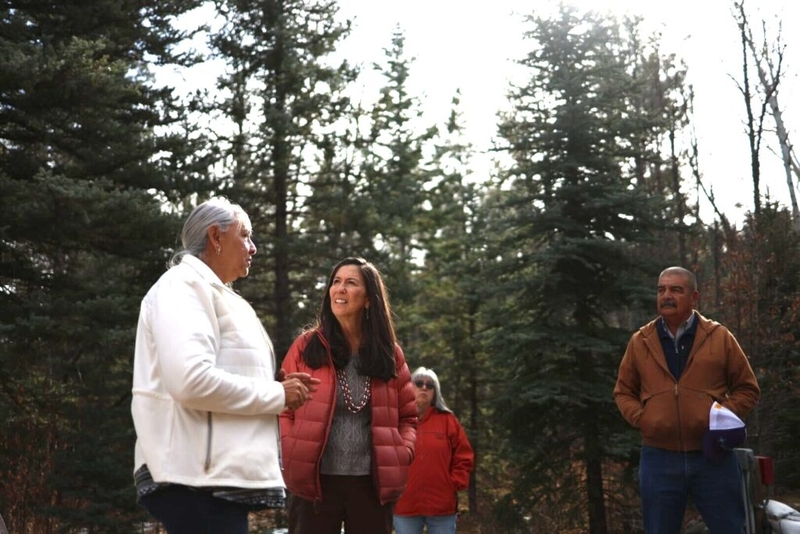
U.S. Rep. Teresa Leger Fernández on Aug. 21, 2026, announced she and other members of Congress are seeking an investigation into the environmental and health impacts of fire retardants. Above: Leger Fernández and other officials tour a Mora County acequia Nov. 25, 2025, after elevated levels of toxic metals were detected in dozens of private wells. (Patrick Lohmann/Source NM)
U.S. Rep. Teresa Leger Fernández (D-N.M.) on Friday announced she and fellow members of Congress are urging a federal government watchdog agency to examine the prevalence and potential impacts of hazardous metals that may be present in retardants firefighters use in battling wildfires.
Leger Fernández’s request to the U.S. Government Accountability Office cites unsafe levels of antimony, arsenic and uranium detected in dozens of Mora County private wells last November. The discovery prompted the New Mexico Health Department to issue a health alert.
While the cause of the spike in contaminants remains unknown, health officials noted at the time that the metals are regularly found in fire suppressants used to battle wildfires, including the 2022 Hermits Peak-Calf Canyon fire.
Subsequent tests from the New Mexico Environment Department have found that levels of the heavy metals are within the limits of the U.S. Environmental Protection Agency’s safe drinking water standards.
Still, Leger Fernández, in a letter Aug. 4 to the GAO, noted that the United States Forest Service and federal Interior Department have continued to rely on dropping millions of gallons of fire retardant each year. According to her letter, federal agencies dropped nearly 50 million gallons of the material on landscapes in 2024.
“This mass deployment of fire retardants has raised concerns about whether their use introduces risks to the environment and human health,” Leger Fernández and seven other members of Congress wrote.
Her letter also cited a November 2024 academic study that estimated aerial retardant drops introduced nearly 840,000 pounds of toxic metals into the environment between 2009 and 2021.
Hermits Peak-Calf Canyon Fire victims grapple with latest crisis
GAO spokesperson Sarah Kaczmarek told Source NM in an email Friday that the office had received the request and is currently evaluating whether and when to conduct the investigation lawmakers requested.
The letter asks the office to examine and provide recommendations related to how prevalent the metals are in fire retardants and the potential impacts of retardants on watersheds and human health, including firefighters. It also asks the office to identify alternative, less-harmful fire retardants and other best practices for firefighters.
“When families finally return home to communities destroyed by wildfires, they should not have to worry if the water coming out of their tap is safe to drink,” the letter says. “This will be a question that more families ask as wildfires continue to threaten communities across the West.”
Santa Fe, NM