New Mexico tribe and pueblos wrap up case that Kalshi sports betting hurts their sovereignty
Sep 08, 2026 | 2:09 pm ET

Description
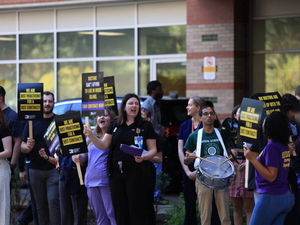
New Mexico tribal governments on Sept. 4, 2026, made their final arguments in federal court urging a judge to ban the prediction market Kalshi from operating within tribal boundaries in New Mexico. (Photo by Anne-Marie Caruso/New Jersey Monitor)
Three New Mexico pueblos and one tribe on Friday wrapped up their closing arguments that a federal judge should step in to prohibit the online prediction market Kalshi from enabling what the plaintiffs allege amounts to illegal sports gambling on sovereign tribal land.
In May, the plaintiffs — the Mescalero Apache Tribe, as well as the Pojoaque, Sandia and Isleta Pueblos — alleged in federal court that Kalshi violates tribal gaming compacts and federal law by providing anyone over age 18 access to sports gambling in New Mexico.
Under existing state gaming compacts and federal law, only people aged 21 and over in New Mexico can place bets on sports in person at tribally owned casinos. The plaintiffs argue that Kalshi is causing irreparable harm to tribal governments, which rely on gambling revenues to fund schools and other services.
Tribes and state attorneys general have filed similar lawsuits against Kalshi across the country. New Mexico Attorney General Raúl Torrez also sued the company in state court in June, alleging the company is breaking state laws and creating a “public nuisance” by contributing to compulsive and addictive betting in a state that already has nearly four times the national rate of problem gambling.
The Friday filing marks the plaintiffs’ final written arguments seeking a preliminary injunction from U.S. District Court Judge Margaret Strickland. The 19-page argument contends that the plaintiffs meet all the criteria to justify an order forcing Kalshi to immediately stop operating within tribal boundaries.
To avoid a ban, the company is relying on a “rash of red herrings via many material misstatements about this case and the law,” the plaintiffs wrote Friday. “None of that improves Kalshi’s odds.”
Kalshi’s lawyers have countered that the federal Commodities Exchange Act trumps the federal Indian Gaming Regulatory Act, as well as state gaming compacts, and that regulating the platform is under the sole discretion of the Commodities Futures Trading Commission, the federal agency that oversees prediction markets.
In a response in late August, the company also said that a law forcing the app not to operate on tribal lands would “cause significant operational and commercial harm.”
Officials from Kalshi did not respond to Source NM’s request for additional comment Tuesday.
The New Mexico plaintiffs’ filing also cites an Aug. 28 9th U.S. Circuit Court of Appeals ruling in a similar case that upheld a lower court’s decision allowing Nevada regulators to bar Kalshi from offering trades — known as “swaps” — on sporting events.
A coalition of 24 federally recognized tribes — including Mescalero, as well as the Sandia Pueblo and the Acoma Pueblo in New Mexico — filed a brief urging the federal appeals court to allow Nevada officials to regulate Kalshi.
Federal court records do not specify when Strickland may rule on the tribal plaintiffs’ request for a preliminary injunction.
Santa Fe, NM