New Mexico lawmakers revisit funding proposal to pay for improving state’s poor roads
Oct 26, 2026 | 3:00 pm ET
Description
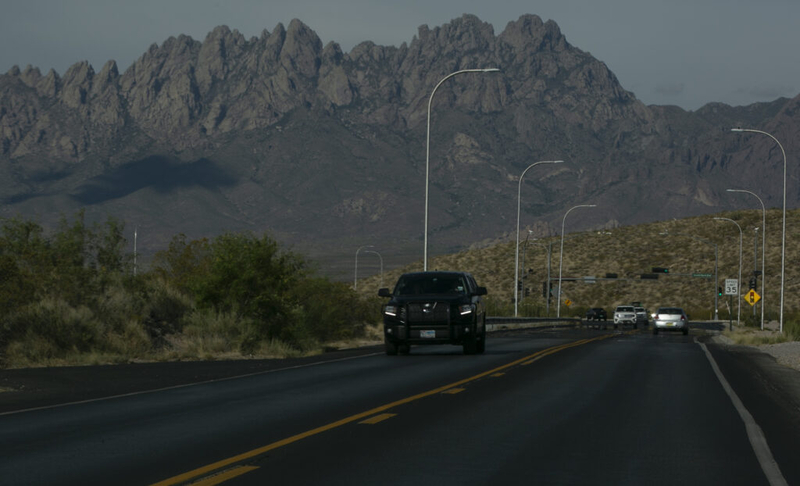
At an Oct. 23, 2026, interim legislative subcommittee hearing, New Mexico lawmakers expressed enthusiasm at a proposal to pay for road repairs and maintenance — and frustration at how such proposals have typically stalled in recent years. (Danielle Prokop/Source NM)
A majority of New Mexico voters think road construction and maintenance should be a priority for state leaders, according to a new poll presented to state lawmakers Friday, but they lack a consensus on how to pay for it.
Franklin Garcia, a lobbyist for the trade organization Asphalt Pavement Association of New Mexico, presented the new poll to lawmakers on the Transportation Infrastructure Revenue Subcommittee in Albuquerque on Friday. The poll, conducted by Albuquerque-based Research and Polling Inc., found that 83% of voters statewide believe road construction and maintenance should be a top priority for state leaders and 42% rated New Mexico’s road conditions as poor or very poor.
When asked how to finance road projects, though, there was less agreement — 54% said they would support a legislative proposal to redirect how the state collects sales tax on car sales to pay for it.
Currently, the state imposes a 4% tax on car sales, minus the value of a trade-in. About 60% of that tax goes into the state’s general funds, while the rest goes toward road projects.
Sen. Roberto “Bobby” Gonzales (D-Ranchos de Taos) last month introduced a proposal during a different interim legislative committee hearing to greatly reduce the general fund’s share and instead funnel the revenue into road and transportation projects. At the September hearing, he also proposed raising the state’s gas tax, to much opposition.
“This is not a Democrat thing or a Republican thing,” Gonzales said at Friday’s subcommittee hearing. “Everyone wants the potholes to be filled…But they don’t want to pay for it.”
Advocates for local leaders across the state, such as the New Mexico Municipal League, have backed similar proposals in recent years to no avail.
Garcia, the trade organization lobbyist, told lawmakers he particularly supports the pitch to redistribute the tax on car sales, as it wouldn’t raise taxes.
“That additional revenue…over a five-year period would generate about $850 million,” Garcia said.
He pointed to a January report from the Washington, D.C.-based transportation research nonprofit TRIP, which identified a $7.5 billion funding shortfall in New Mexico’s transportation projects. It also found that the state’s poor road conditions cost the average New Mexico commuter more than $1,000 annually in repairs and wasted fuel.
Lawmakers on the subcommittee discussed the particular importance of these issues in a state as rural and spread-out as New Mexico.
Rep. Randall Pettigrew (R-Lovington), who represents such an area, agreed with Gonzales’ assertion that fixing the state’s roads should be an easy agreement for lawmakers on opposite sides of the aisle. Despite that, the effort typically stalls when the legislative session comes around.
“We bring this up every year,” he said, “and we fail to do anything about it.”
Santa Fe, NM