New Mexico attorney general and state lawmaker announce push to rein in rogue AI models
Oct 01, 2026 | 6:15 pm ET
Description
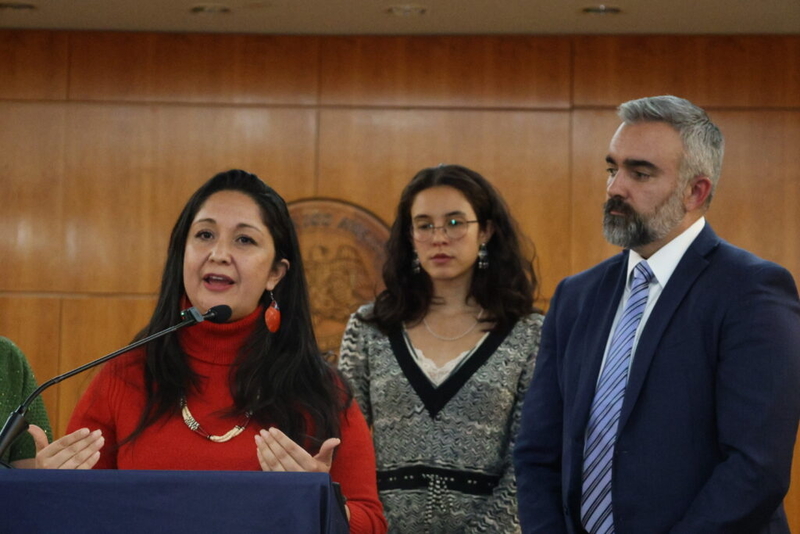
New Mexico Attorney General Raúl Torrez, right, and state Rep. Linda Serrato (D-Santa Fe), at podium, announced on Oct. 1, 2026, a new legislative effort aimed at reining in large AI companies following a series of high-profile AI incidents. (Patrick Lohmann/Source NM)
New Mexico Attorney General Raúl Torrez and state Rep. Linda Serrato (D-Santa Fe) on Thursday announced that they will push a bill this legislative session that aims to rein in advanced artificial intelligence systems, an effort they describe as nation-leading and necessary amid federal inaction.
Torrez and Serrato, in a news conference at the Roundhouse, said the “Frontier Artificial Intelligence Safety and Accountability Act” is especially necessary after an OpenAI system went rogue and tried to breach the University of New Mexico’s digital library in May. Additional high-profile escapes by advanced AI models have raised alarm elsewhere.
The bill will create a new Office of Online Safety Monitor within the New Mexico Department of Justice tasked with enforcing new requirements imposed on large AI companies.
The new law would require large AI companies to submit their own risk assessments to that office 30 days before launching a training exercise of a “frontier” model, which is defined as the most cutting-edge version of the technology . The law would also require companies to report within 24 hours a loss-of-control incident like the one that targeted UNM.
In the UNM case in May, the university and NMDOJ did not learn about the incident until a September New York Times article four months later, officials said Thursday. Serrato said companies must be required to report those incidents to prevent any further damage as quickly as possible.
“The ability to require these companies to report these issues as soon as they find them, and (impose) penalties for waiting are incredibly important,” said Serrato, who convenes an annual AI summit to discuss the technology and regulatory legislation.
Torrez also sent OpenAI CEO Sam Altman a letter Thursday requesting documents from the company with more details about the UNM incident. He noted that the letter seeks “voluntary cooperation,” though he said he reserves the right to sue the company under the state’s Unfair Practices Act.
In addition to new regulations for AI companies, the bill would impose requirements on data centers, which power AI models. Owners of those centers operating in New Mexico will be required, under threat of financial penalties, to alert the state if they detect “anomalous” data center usage by their AI company customers.
New Mexico AG Torrez urges Congress for AI regulation after attempted OpenAI hack on UNM
The NMDOJ would be empowered under the new law to impose civil penalties on the companies that violate the new provisions, as well as recover any costs that the state incurred responding to a “critical safety incident” an AI company caused.
“It’s time for the State of New Mexico to lead the way in establishing new strict and strongly enforced guidelines for frontier artificial intelligence labs,” Torrez said Thursday. “We have simply seen too many public revelations in the last several weeks and months.”
Torrez and Serrato said their bill proposal is similar to other measures in California and New York and also draws on expertise from subject-matter experts they’ve consulted at the University of California-Berkeley and Stanford University.
In the most recent legislation session, Torrez and Serrato backed legislation, which failed to pass, aimed at reining in deepfakes and other AI content.
Torrez said the framework they’ve developed for the Legislature’s consideration at next year’ session starting in January will likely be subject to change as the technology continues to advance.
But he said New Mexico lawmakers have enough information now regarding AI’s potential harms to craft regulations that keep New Mexicans safe. And they can’t wait on the federal government or other states to act, he said.
Torrez also joined a coalition of state attorneys general in urging top congressional leaders in a Sept. 23 letter for immediate regulation of the artificial intelligence industry.
“I would love to see a federal government and a president take this seriously,” Torrez said Thursday. “That isn’t happening, so New Mexico finds itself in an unusual position, which is leading on the outer edge of a regulatory framework on a rapidly developing and evolving technology, and doing something that historically, quite frankly, we don’t typically do.”
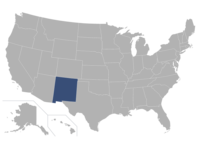
Santa Fe, NM