New law on youth charging welcomed, but it’s not the end of the fight, advocates say
Oct 02, 2026 | 3:57 am ET
Description
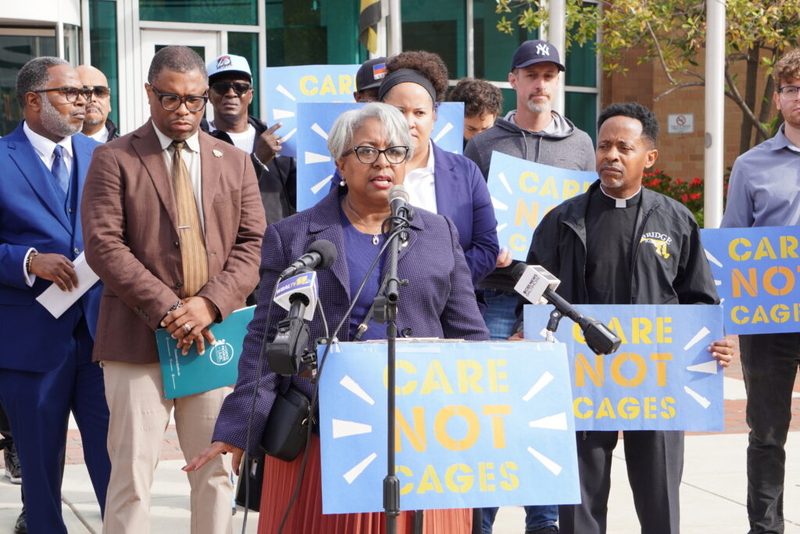
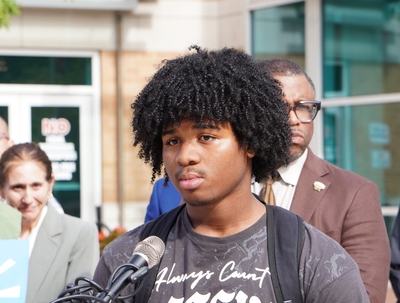
Del. J. Sandy Bartlett (D-Anne Arundel) speaks at a press conference Thursday outside the Baltimore City Juvenile Justice Center. Bartlett was a House sponsor of the Youth Charging Reform Act, which took effect Thursday after years of fighting for it. (Photo by William J. Ford/Maryland Matters)
It took more than a decade to get this far, but lawmakers and advocates who gathered Thursday at the Baltimore City Juvenile Justice Center to celebrate the new youth sentencing act were reminded that they are not finished yet.
“The law that takes effect today is a step in the right direction and is progress,” said former state Sen. Jill P. Carter, who advocated for the law for years. “But it doesn’t end auto charge, which is the goal and which we should all want. All of us should actually seek to end automatic charging children as adults.”
She was speaking at a news conference alongside members of the Maryland Public Defender’s Office, criminal justice advocates and other supporters.
The Youth Charging Reform Act that took effect Thursday makes it more difficult to charge juveniles as adult and try them in adult court. But serious charges, such as first-degree murder or rape, still go directly to adult court for some youth; and prosecutors can still request the court that a youth charged with a certain crime can still have the case heard in adult court.
“We’ve had the data and the evidence that the majority of children that are automatically charged as adults have their cases adjudicated ultimately in the juvenile system, or are ultimately dismissed in the adult system,” said Carter, who said she believes it took 15 years or more to get the current law passed.
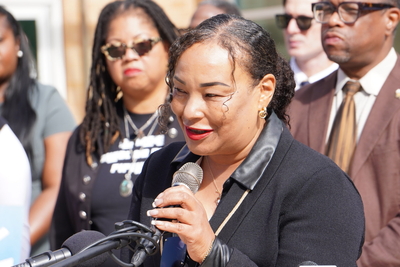
The law raises the age from 14 to 16 when a youth can be tried as an adult for most crimes. It would still send 14- and 15-year-olds to adult court for first-degree murder or rape charges, but specifies that 16-year-olds charged with offenses such as first-degree assault and some firearms offenses would start in juvenile court.
The bill also prohibits youth charged as adults from being “detained or confined” in an adult prison, except when no “secure juvenile detention area” is immediately available, in which case a youth could be processed in an adult jail, but not be held for more than six hours.
Maryland’s system of automatically charging youth as adults in some cases was an outlier among states, with only Alabama sending more 14- to 17-year-olds to adult court.
The measure that passed this year, sponsored by Sen. William C. Smith Jr. (D-Montgomery), also requires annual reports, beginning Oct. 1, 2027, by the Governor’s Office of Crime Prevention and Policy to the General Assembly and the Commission on Juvenile Justice and Emerging and Best Practices. The reports will include the number of youths charges as adults, the charges they faced, and the number of federal violations that prohibit youth “from having sight and sound contact with adult offenders.”
Smith wasn’t in attendance Thursday, but he did release a statement.
“The savings we achieve by reducing the wasteful practice of automatic charging in cases that rarely result in conviction will be reinvested in treatment, prevention and community-based services,” said Smith, who chairs the Senate Judicial Proceedings Committee. “Long-term community safety is achieved by giving young people the support they need, and reducing the likelihood they will reoffend.”
But advocates such as Jordan Ross, 18, said more work must be done by making sure all youth get the services needed and are not housed among adults.
“The Youth Charging Reform Act protects 55% of Maryland youth, but I say, protect us all,” said Ross, a freshman at Morgan State University in Baltimore. “We all deserve a chance at a future. A chance to make decisions, to learn from them. But do your job, adults.”
The adult state legislators will hear and see criminal justice advocacy as the 2027 legislation session approaches Jan. 13.
Del. J. Sandy Bartlett (D-Anne Arundel), who sponsored the House version of the Youth Charging Reform Act, said one focus she will have in the next session is to ensure funding is provided for youth services.
Bartlett, on hand for Thursday’s news conference, said some of those services would include cognitive behavioral therapy, mentoring services and continued investment in the Thrive Academy. Thrive, which is managed by the state Department of Juvenile Services, is a gun-violence prevention program that offers wraparound services and uses mentors who are “credible messengers” to help youth steer away from gun violence.
A major challenge to maintain or fund new programs will be the state’s financial situation: The fiscal 2028 budget is projected to have a structural budget gap of about $3 billion, with wider gaps projected in the coming years.
“A budget is a reflection of your ideals and your morals,” Bartlett, chair of the House Judiciary Committee, said after the nearly 40-minute press conference. “So, our budget should reflect that.”
Annapolis, MD