New law limiting utilities’ liability approved as wildfires break out in Black Hills
Mar 12, 2026 | 7:31 pm ET
Description
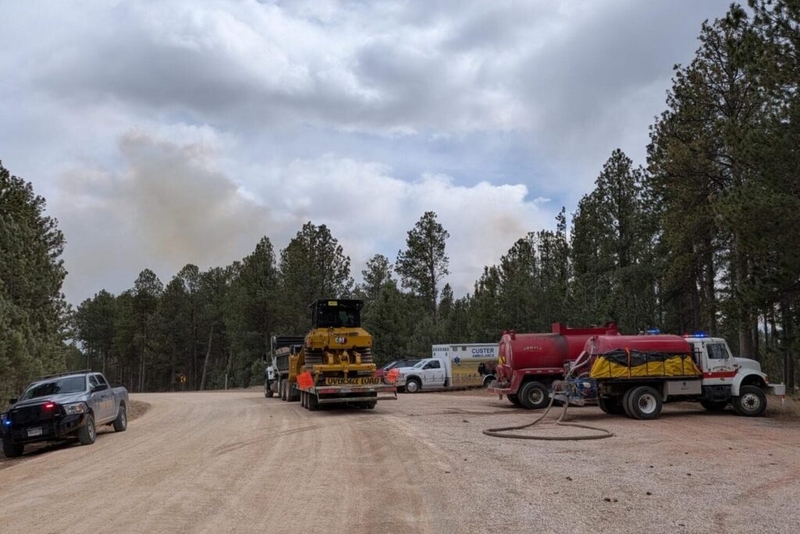
Authorities respond to the scene of wildfires near the city of Custer in South Dakota's Black Hills on March 12, 2026.
(Photo courtesy of Custer County Sheriff's Office)
As wind-driven wildfires flared up Thursday in the Black Hills and an electrical provider proactively shut off power to some customers, South Dakota’s governor signed a bill into law that will give utilities greater protection from wildfire lawsuits.
The new law will change the legal playing field after a wildfire by barring the application of “strict liability” to utilities in wildfire-damage lawsuits. That is a legal standard that makes entities responsible for harm they cause, regardless of whether they were negligent or intended to cause it.
Once the law takes effect July 1, people who sue will only be able to recover damages from utilities that either fail to file fire mitigation plans with state or local authorities and follow them, or act with criminal intent or exhibit “willful and wanton” misconduct.
No claims will be valid four years after a fire, and plaintiffs will be limited in the types of damages they can recover. Utilities would need to identify higher-risk areas, establish inspection and operating standards, implement vegetation management strategies, and coordinate with the appropriate wildfire agencies as part of their mitigation plans.
The bill was sponsored by Sen. Steve Kolbeck, R-Brandon, who works as a director of business affairs at Xcel Energy, an investor-owned utility with over 100,000 customers in the state.
“We want to make people whole. We just don’t want to make them rich,” Kolbeck said during testimony on the legislation.
The bill was signed as wildfires broke out near the city of Custer and other areas of the Black Hills, where dry vegetation from a historically warm and dry winter ignited and spread with gusting winds. Black Hills Energy shut off power to hundreds of residents in the southern Black Hills as a precaution against live power lines falling and sparking more fires.
Other bills signed
Separately, Gov. Larry Rhoden signed other bills including Senate Bill 228, which tightens rules for tax increment financing districts. Cities and counties use TIF districts to finance infrastructure that aids development, and the new and higher property taxes from the development are used to pay off the financing.
TIFs came under scrutiny this winter when, in Rapid City, a TIF included millions of dollars in discretionary funds for the developer. About 70% of voters in Rapid City rejected that TIF after the city council had approved it.
The new law bars the use of a county “discretionary formula” tax break inside a TIF, requires districts to be in a contiguous area, lowers the TIF value cap for large cities from 10% to 7.5% of total assessed value, and more. The bill was a compromise meant to add guardrails while keeping TIFs available.
Additionally, Rhoden signed Senate Bill 240. The bill appropriates $5 million to the state Department of Revenue to deposit into existing rural access infrastructure funds, which help local governments cover costs of repairing and replacing critical small structures.
Thursday was the last day of the annual legislative session, except for a day on March 30 to consider vetoes from the governor. Rhoden has signed 161 bills into law and vetoed one so far this session.
- March 13, 20264:46 pmThis story has been updated with corrections to the description of the legal language in the new law.

Pierre, SD