New complaint challenges inequitable Wilmington reassessments
Sep 24, 2026 | 7:00 am ET
Description
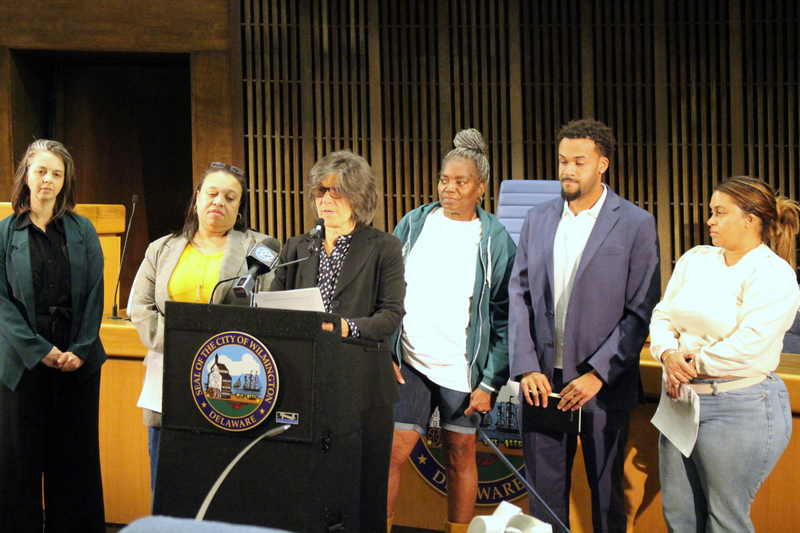
Photo courtesy of Spotlight Delaware
Why Should Delaware Care?
The first comprehensive property reassessment in decades reset how Delaware’s tax burden is divided among property owners. While many expected that it would bring new relief to some of the state’s lowest income residents, it has actually raised their tax burdens. A new complaint seeks to rectify the property assessments that underpin those tax bills.
A city councilwoman who represents one of the most economically disadvantaged areas of Wilmington has filed a complaint with New Castle County, challenging the property valuations reached during the recent reassessments and seeking actions to rectify documented inequalities.
Christian Willauer, who represents the city’s Hilltop communities that were disproportionately impacted by rising property assessments, is eyeing a novel legislative strategy to force the county to recognize alleged errors in the work completed by contractor Tyler Technologies and to fix assessments in five different election districts.
Her complaint, which builds upon an expansive project on the statewide reassessment published by Spotlight Delaware earlier this year, is based upon reviews of more than 400 property sales that were completed during Tyler Technologies’ assessment period in 2023 and 2024.
That review found that properties in three western city election districts were commonly assessed for more than their sale values during the reassessment study period, while properties in two Greenville-area districts were commonly assessed for less.
A property’s assessed value should meet “fair market value,” or roughly what an owner should have been able to sell the property for at the time of the assessment. The examples identified by Willauer bring into question whether the assessment data would meet that standard.
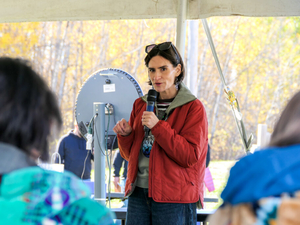
“We’re here to make sure that people can hold on to their homes, people can hold on to their businesses and people continue to be part of Wilmington and New Castle County,” the councilwoman said during a Wednesday press conference announcing the complaint. “We’re calling on New Castle County to make sure that these property tax assessments in the City of Wilmington are fair and correct.”
What did the report find?
The questionable nature of assessments in communities like Hilltop has not been a secret.
Tyler Technologies, the assessment company hired by each of the three counties to complete reassessments statewide, wrote in its final report that the results in several Wilmington communities did not meet industry standards.
It blamed two potential reasons for those shortcomings: that it did not have enough sample sales data for unimproved properties, and it could not see inside homes to judge the condition of the properties.
Therefore, the homes in Hilltop and other impacted communities were assessed against comparable sales that primarily featured renovated homes being sold by flippers.
Spotlight Delaware’s statewide analysis found the median assessment in Hilltop sits north of $180,000, but recent sales of unimproved properties have fallen far under their assessed values.
Willauer, who cited Spotlight’s database as the impetus for her deeper dive research, pulled assessment data for all homes sold in Wilmington’s Hilltop, Tilton and West Center City election districts and compared them to two districts near Greenville: Hoopes Reservoir and Barley Mill.
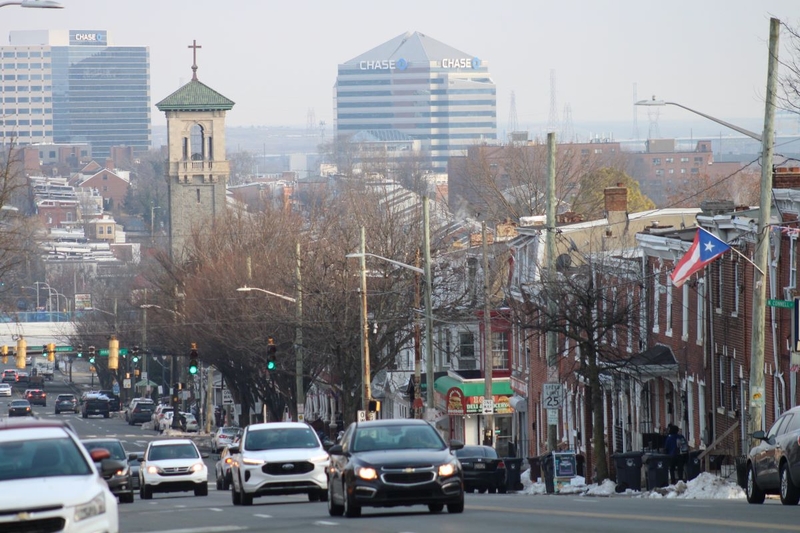
The review found that of the properties sold in Hilltop, 71% of assessed values were more than 110% of their sale values — essentially inflating the tax bills owed by the property owners.
In the nearby Tilton and West Center City communities, more than 60% of properties were above that threshold.
But the Greenville-area districts saw just 23% and 9% of properties exceed 110% of their sale values.
Conversely, those same Greenville-area districts saw 29% and 55% of properties assessed for less than 90% of their sale values. In the city districts, none saw more than 18% of homes assessed at that lower level.
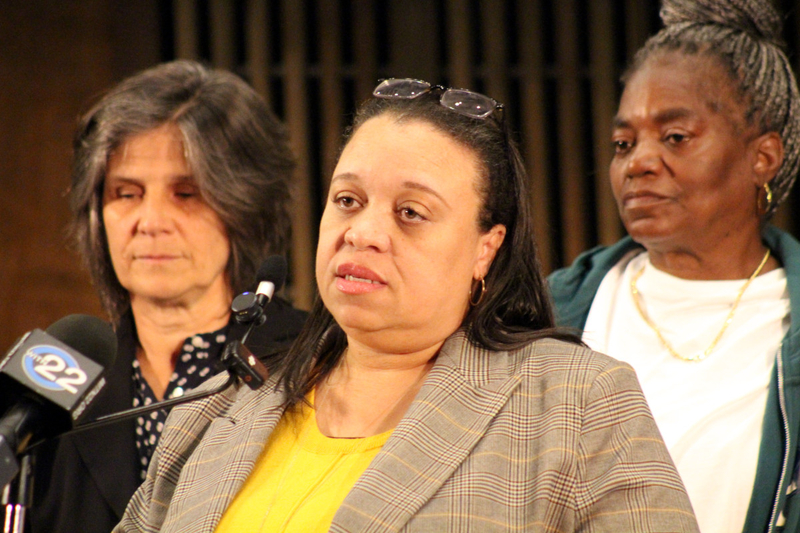
Alethea Smith-Tucker, a West Center City resident who was among a handful of residents in the affected districts who spoke Wednesday about the impact of the reassessments, said that the higher assessments have overburdened her and her neighbors.
“This is an opportunity to get the process right,” she said.
How is the complaint lodged?
Willauer has cited a century-old administrative statute in state code that allows for any tax-paying property owner to “make a complaint to a board of assessment that the real estate in any election or representative district, as compared with other such districts, is not assessed in a fair and equitable manner.”
It directs the board to send out a representative to the affected district to reinspect properties “to equalize and make perfect the assessments.”
Whether that statute — whose origin is unclear but dates back to at least 1919 — still carries the full weight of law or has been amended over the intervening generations is not immediately clear.
For one, the county no longer uses a “board of assessment,” but has transferred the year-to-year work of assessments to the New Castle County Office of Finance, which has an assessment office.
After Willauer submitted her report and a letter lodging the complaint to New Castle County, a county spokesperson told Spotlight Delaware that, “We take concerns about the fairness and accuracy of property assessment seriously. We will review the letter with our county law department and determine the legal framework that may apply.”
Should the complaint not lead to a reassessment of the communities, Willauer said that she would work with residents to explore any further actions.
“My hope is that the county is going to step up to the plate and get this done … I’m working on this because I got calls from residents about their concerns. This is money that people do not have and should not owe,” she added.
How could reassessment work?
Willauer’s report also refutes the claim by Tyler Technologies that it could not differentiate between renovated and unrenovated properties in the Wilmington districts.
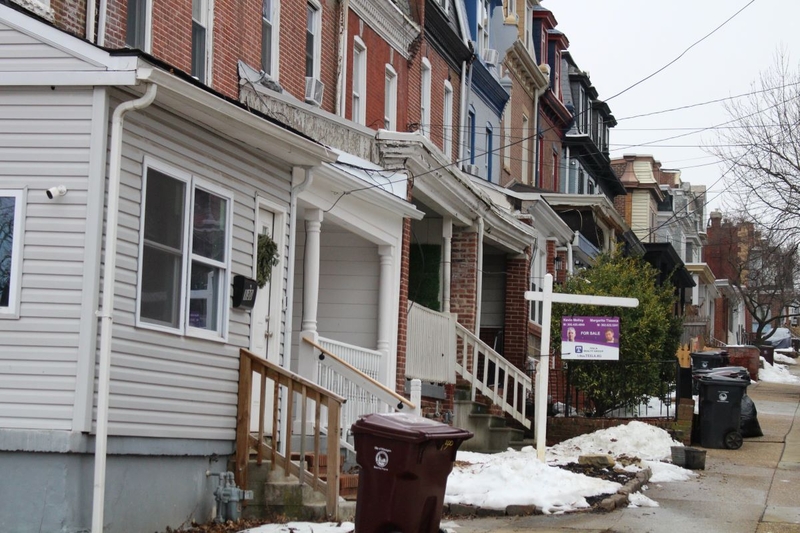
By using real estate listings and their associated photos, she divided properties between renovated and unrenovated, the latter of which ranged in median sale prices from $55,000 to $110,000, depending on the number of bedrooms and bathrooms. Median renovated home prices ranged from $112,000 to $260,000.
“It makes sense that homes that have $20,000, $40,000 or even $100,000 worth of renovations sell for a higher price than an unrenovated house, but it makes no sense to assess a home that has not been renovated for the same value as a home that has been renovated,” she said.
With relevant property characteristics, such as bedroom and bathroom counts, along with access to the city’s permitting database, where information on structural, electrical and plumbing work would be held, Willauer argued that assessors have all the information they need to improve property assessments.
“I think they could do it by the end of next week, but we might have to wait a little bit longer,” she opined. “We’re going to keep pushing them and encouraging them, and I think that’s where we’re going to have to work together to make sure that New Castle County has that sense of urgency that I know every taxpayer in these neighborhoods has.”
Dover