Nebraska Supreme Court upholds validity of state medical cannabis laws
Sep 04, 2026 | 9:12 am ET
Description
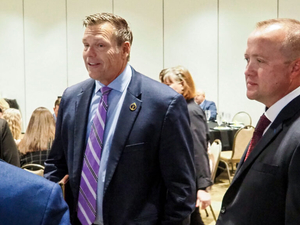
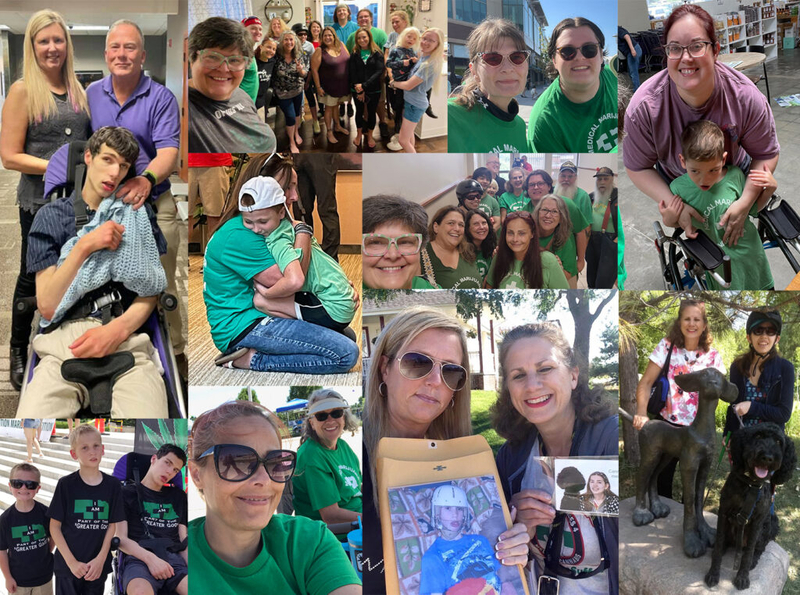
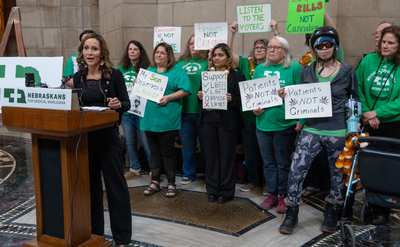
Nebraska advocates for medical cannabis have worked for more than 12 years, and continue to wait, for a safe, regulated system in Nebraska, after winning voter approval in November. Pictured are many longtime advocates for the effort. (Photos courtesy of Nebraskans for Medical Marijuana)
LINCOLN — The Nebraska Supreme Court on Friday unanimously upheld Nebraska’s two voter-approved medical cannabis laws following a legal challenge to the 2024 petition effort.
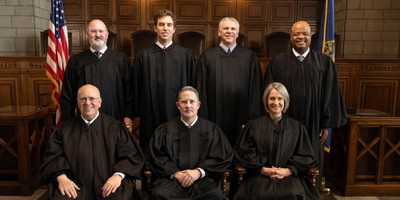
Chief Justice Jeffrey Funke, in a 7-0, 49-page opinion, ruled against the lawsuit from former state Sen. John Kuehn of Heartwell, a longtime opponent of medical marijuana, as well as similar arguments from Nebraska Secretary of State Bob Evnen and Attorney General Mike Hilgers. The duo had alleged widespread fraud and “notarial malfeasance” in the petition process.
Kuehn’s appeal sought to get around a Lancaster County District Court judge who affirmed that medical cannabis supporters had enough valid signatures to reach voters in 2024.
“This was never about protecting Nebraska law,” Crista Eggers, the executive director of Nebraskans for Medical Marijuana, said in a Friday statement. “It was about whether a handful of elected officials could use the court to override the will of the people.
“Today, our state’s highest court stated the obvious: they cannot.”
Hilgers, in a statement, said it is a “sad day for election integrity in Nebraska” and repeated his assertions that the campaign used fraud to get on the ballot and “abused the notary process and the laws of the state.” Those arguments have now been rejected twice.
“We disagree with the court’s ruling but will follow the law as it stands,” Hilgers said.
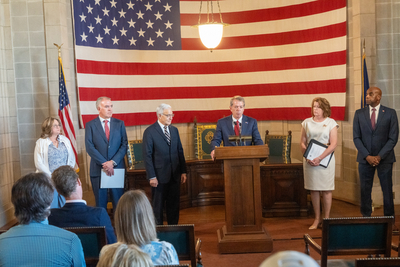
A spokesperson for Nebraska Gov. Jim Pillen noted he signed off on regulations from the voter-created Medical Cannabis Commission, as did Hilgers. She said the commission “will continue to carry out its work in accordance with the will of the people who voted to support legalizing medical marijuana in Nebraska.”
‘Walking stamps of approval’
Kuehn initially sued Evnen. But in the end, the AG’s Office defending Evnen largely joined forces with Kuehn against the Nebraskans for Medical Marijuana campaign. Had the challenge succeeded, the campaign could have sought to rehabilitate challenged signatures in a second trial phase.
“Notaries are, in effect, walking stamps of approval,” Zach Pohlman, state deputy solicitor general, told the high court in December. “They are professional truth tellers. And so when they lie, that presumption of truth … gets pierced, and they become just like every other witness.”
Evnen’s office declined to comment. Attorneys for Kuehn did not respond to a request for comment on the ruling.
In addition to the civil trial, Hilgers’ office secured misdemeanor convictions against a circulator from Grand Island and a notary public from York. The circulator pleaded guilty, and a jury convicted the notary in February. The notary is appealing his convictions.
Kuehn, Evnen and Hilgers named other circulators and notaries who they alleged committed wrongdoing, including Eggers. Yet no other charges came in the past two years, and judges at the Supreme Court and Lancaster County District Court disagreed with allegations of pervasive wrongdoing.
‘District court did not err’
Funke wrote in his opinion that circulators and notaries serve different roles. The court decided that Lancaster County District Judge Susan Strong did not err in deciding not to extend the standard in a 1919 Supreme Court case from circulators to notaries.
In that case — Barkley v. Pool — the justices had said a circulator’s fraudulent behavior could be extended to other actions, invalidating more signatures they collected. In that case, three men against women’s suffrage forged signatures in a petition campaign seeking to force a vote to overturn a 1917 state law giving women some voting rights.
Justices at the time had offered a process by which, if enough signatures were invalidated, supporters could rehabilitate and prove that enough were still collected legitimately.
Funke pointed, in part, to the same North Dakota Supreme Court case that attorneys for Nebraskans for Medical Marijuana have cited for almost two years, that few courts nationwide, if any, have extended wrongdoing in one notarization to others.
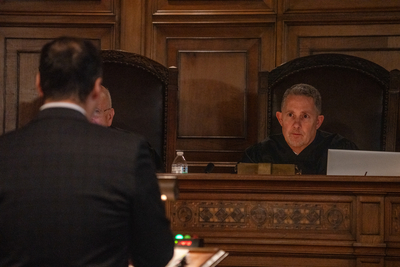
Nebraska Supreme Court hears appeal in medical cannabis, election notary case
“Having considered the differing roles of circulators and notaries and the comparative evidentiary value of a circulator’s affidavit and a notarization, as well as the extent of the decision in Barkley v. Pool, we determine that the district court did not err as a matter of law when it did not find that signatures on all petition pages notarized by a notary lost the presumption of validity based solely on improper notarization of one or more petition pages,” Funke wrote.
If the justices had reversed, the 2024 ballot sponsors would have needed to rehabilitate enough signatures to show at least 86,499 valid signatures on two petitions apiece for the voter-approved laws — to legalize and regulate the new medicine — to stand, or 172,998 total.
The campaign had 6,822 more signatures validated than needed when Evnen certified the measures in September 2024.
Two concurring opinions
Strong, who presided over the trial in Lancaster County just days before the 2024 election, ruled that about 1,500 signatures lost a “presumption of validity” across the two petitions, but she said those challenges still fell “well short” of affecting ballot access.
District judge sides with Nebraska medical cannabis ballot sponsors in legal challenge
During oral arguments, Funke and Justice Jonathan Papik also appeared skeptical of the potential need for many petition signers to recertify that they signed the petitions.
“So does that mean they’d call 86,000 signatories to testify that the petition was read to them, they understood what they were signing and they actually signed it?” Funke asked at the time.
“And do that quickly?” Papik added.
Papik pressed whether arguments from Kuehn and Hilgers’ office had ever been used. Papik was one of two justices who dissented from a 2020 Supreme Court decision that tossed the first petition effort from Nebraskans for Medical Marijuana from the ballot, arguing it was too broad. Supporters divided the legalization and regulation efforts in 2022 and, finally, in 2024.
Justices William Cassel and Stephanie Stacy had also both hinted the case might be “moot” because of the result of the 2024 election or because signatures had already been verified.
Cassel, in a concurring opinion, said if proof demonstrates a notary is invested in the success of a petition drive, mistakes could be more likely. If sufficient proof establishes pervasive notarial failure, “or, worse yet, participation in a scheme to defraud,” he said, a court should require proof of signature validity. Justice John Freudenberg joined Cassel’s reasoning.
“Here, however, the majority correctly gives weight to the district court’s findings that the notarial failure did not reach that level,” Cassel said.
Stacy, in another concurring opinion, suggested that the Supreme Court might need to reconsider rulings from the 1990s on whether courts should even take up preelection challenges to the legal validity of initiative petitions, clarify who can bring such challenges or decide whether such challenges remain eligible for a court’s review after an election.
‘Voters won’
The voter-created Medical Cannabis Commission has been rewriting its regulations to allow fees for new applications before granting any new licenses. That process is still in the early stages. The next commission meeting is scheduled for Sept. 14.
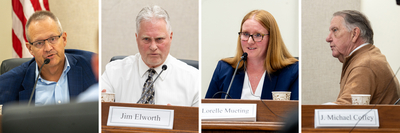
State lawmakers granted the commission the authority to collect fees during the 2026 legislative session, but the commission had already been working to finalize a previous set of regulations.
Friday’s decision comes amid an ongoing criminal investigation into significant allegations of fraud on at least eight different petitions in the 2026 election cycle. That consists of three proposed amendments to the Lincoln City Charter, four statewide ballot measures and one nonpartisan petition bid for Nebraska governor.
The Lancaster County Sheriff’s Office and Lancaster County Attorney’s Office are leading the latest investigation. As of Aug. 19, six out-of-state circulators who assisted the Lincoln petition effort had been arrested, and law enforcement was searching for a seventh suspect.
Pillen, Evnen and election commissioners for Lancaster and Hall counties are also calling for changes to how signature gathering is operated in Nebraska.
Hilgers has called the 2026 situation a “sad period in Nebraska history,” but he repeated his assertion last week that the medical cannabis campaign was “top to bottom the most corrupt, the worst run, poorly executed, most disrespectful to voters in the State of Nebraska petition I’ve ever seen.”
Eggers said while the two-year-long court “battle” ends, the fight for patient access, as voters demanded, remains. She said “state leaders have run out of excuses” and “voters won.”
“It is time for the political attacks and obstruction to end,” Eggers said. “Nebraska officials need to get out of the way and implement what the people of this state already demanded.”
- 11:50 amEditor's note: This story has been updated with comment from Nebraska Gov. Jim Pillen.
- 10:43 amEditor's note: This story has been updated with comment from Nebraska Attorney General Mike Hilgers.
- 9:12 amEditor’s note: This story has been updated with additional context from the Supreme Court’s ruling and comment from Nebraskans for Medical Marijuana.
Lincoln, NE