Nebraska AG’s Office seeks $19,000 in attorneys’ fees from City of Lincoln after charter fight
Oct 12, 2026 | 1:24 pm ET
Description
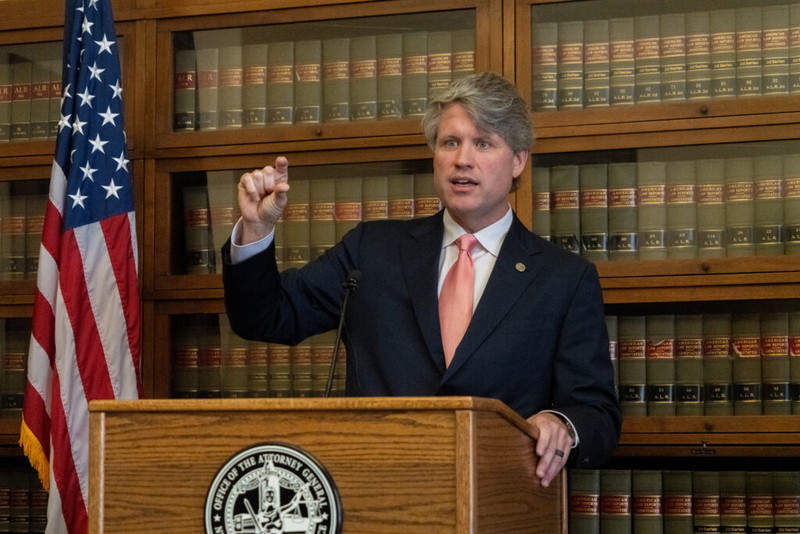
Nebraska Attorney General Mike Hilgers hosts a news conference in his office in the Nebraska State Capitol in Lincoln on Aug. 26, 2026. (Photo by Zach Wendling/Nebraska Examiner)
LINCOLN — The Nebraska Attorney General’s Office is asking the Nebraska Supreme Court to require the city of Lincoln to reimburse about $19,000 in state attorneys’ fees after the state prevailed in its position on three citizen-led Lincoln City Charter amendments.
Attorney General Mike Hilgers sued city officials in late August just before officials confirmed they did not intend to place three petitioned charter amendments from the Good Government Lincoln campaign on the Nov. 3 ballot. City officials argued that the measures qualified for voter review but that they would instead appear on city ballots in May.
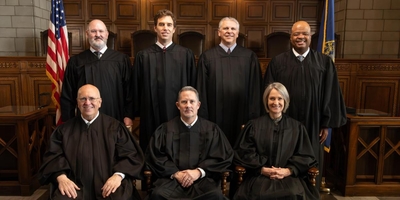
The high court, in a 5-2 opinion on Sept. 9, agreed with Hilgers’ office.
‘Ignoring the Constitution’s requirements’
Solicitor General Cody Barnett, Principal Deputy Solicitor General Zachary Pohlman and Deputy Solicitor General Lincoln Korell said in a Sept. 18 filing that they spent a combined 61 hours on the case — 42 hours for Korell, 10 hours for Pohlman and nine hours for Barnett.
Hilgers’ office estimated pay rates per hour at $300 for Korell and Pohlman, $375 for Barnett. In total, that’s just shy of $19,000 in attorneys’ fees.
The state is also seeking $132, the cost to file the original lawsuit. The total request is $19,107.
“The costs and attorney time spent prosecuting this action are resources the Attorney General’s Office was required to spend to protect the constitutional rights of Nebraskans to participate in their municipal government at the ballot box this fall,” Hilgers’ office wrote. “These resources would have been devoted to other important state matters had respondents obeyed their constitutional duty before relator had to file this lawsuit.”
Hilgers said on social media Monday that without his office’s work, “the city would have been able to get away with ignoring the Constitution’s requirements.”
City attorney: Officials acted in ‘good faith’
Lincoln City Attorney Yohance Christie and his team, in a Sept. 25 filing, said he agrees that attorneys’ fees can legally be awarded, but that doing so is discretionary. He told justices they should not greenlight costs and fees in this case.
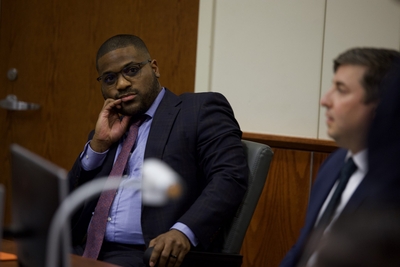
Christie said the matter was a “case of first impression,” a novel matter where state and local officials were dealing with proper constitutional construction and interplay of the state Election Act with conflicting requirements in the Nebraska Constitution and Lincoln City Charter.
Part of the concern, Christie said, was that city officials couldn’t presume signature verification would be met so close to a state-imposed Sept. 1 deadline to certify issues for the Nov. 3 ballot.
“While respondents’ construction of Neb. Const. Art. XI, § 4 was ultimately unpersuasive to a majority of the court, the arguments presented were made in good faith based on a colorable theory,” Christie’s office wrote.
“To award attorney fees would discourage similarly situated public bodies acting in good faith based on a reasonable interpretation of the law on a case of first impression to seek review of their own constitutionally granted rights.”
The three measures seek to limit Lincoln City Council members to two consecutive four-year terms, move the dates of city elections from odd to even years and let certain residents within a 3-mile buffer around Lincoln city limits vote in municipal elections, excluding bond votes.
Proposed alternatives?
City officials argued it was too late for them to review the amendments and suggest any potential alternatives, an option also under the Nebraska Constitution.
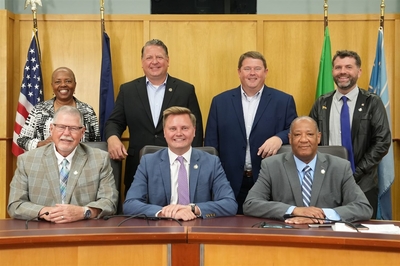
After the Supreme Court required the Good Government Lincoln measures to go on the Nov. 3 ballot, the city offered two alternatives, related to term limits and the timing of city elections. The same night, the Lincoln City Council voted unanimously to place all five on the November ballot.
The term-limit alternative would allow three consecutive four-year terms, similar to the mayor.
The alternative dealing with the timing of elections would not move city elections until 2030 and would limit newly elected officials to 3½-year terms. Under Good Government Lincoln’s version, city officials elected in 2025 would instead serve through 2030. But officials elected in 2027, such as the next mayor, would instead serve only through 2028. Those terms would also count for purposes of term limits.
The Supreme Court has not yet ruled on the request for attorney fees and costs.
Campaign finance, ads
Through Sept. 29, according to the latest campaign disclosure reports, Good Government Lincoln raised $431,5000 toward its effort. All of that is from the conservative nonprofit Restore the Good Life Inc. The group’s full list of donors has not been disclosed. In 2022, the group funded opposition to Republican competitors of future Gov. Jim Pillen.
The campaign has spent more than $431,000, most of it to Vanguard Field Strategies and its subcontractor, On The Ballot, for signature gathering. Vanguard was paid $390,000 in total.
Lancaster County Commissioner Matt Schulte, a Republican seeking reelection, has since helped boost Good Government Lincoln by paying for a comedic, musical ad propping up Good Government Lincoln’s versions of the charter amendments.
Lincoln Mayor Leirion Gaylor Baird’s campaign last week also sent a text to city residents encouraging support for the Lincoln alternatives, urging residents to “vote ODD, not EVEN.”
No ads paid for by Good Government Lincoln yet appear on Google’s Ad Transparency Center.
Political ads can often be purchased at cheaper rates by political candidates than by ballot question committees. This gained prominence in 2024 around competing abortion ballot measures. A legislative effort this spring to stop future intermingling failed 8-24.
The general election is Nov. 3.
Lincoln, NE