NC Supreme Court hasn’t ruled on Voter ID yet. House Republicans budgeted for it anyway.
Apr 03, 2023 | 2:33 pm ET
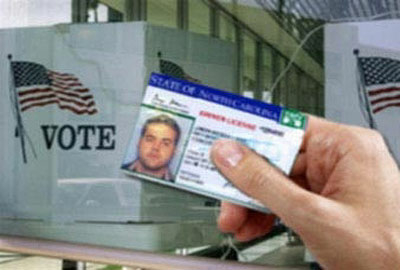
The North Carolina Supreme Court hasn’t yet ruled on whether a voter ID law was intended to discriminate against prospective voters of color, but that didn’t stop House Republicans from funding it.
Legislators released a budget proposal last week that would give $3.5 million to the State Board of Elections to implement voter ID requirements. The board also would be required to report to the legislature how they used the money on Feb. 1 and May 1, 2024.
The status of the Voter ID law, passed by the state legislature in 2018, is uncertain. The NC Supreme Court declared it unconstitutional last year, with the court’s Democratic justices finding the statute “was enacted with discriminatory intent to disproportionately disenfranchise and burden African-American voters in North Carolina.”
But then the Democrats lost control of the Supreme Court in last year’s elections, giving Republicans a 5-2 majority. The new majority then agreed to re-consider the case.
The justices heard oral arguments last month. Pete Patterson, an attorney for Republican lawmakers, said the previous court had erred in its ruling, that the opinion had been decided “hastily,” since the case skipped the Court of Appeals and oral arguments before the state Supreme Court were expedited.
Patterson said legislators hadn’t meant to discriminate against African American voters because everyone could cast a ballot under the law — as long as they presented a photo ID. He also noted there were provisions in the law allowing for free IDs at early voting locations, and that even those who don’t vote with an ID have 10 days to go to a county board of elections, get their photograph taken and have their ballot counted.
In short, Patterson argued lawmakers had enacted the “narrowest possible racial disparity in terms of a voter ID law.”
The Supreme Court has yet to issue its ruling on the law’s constitutionality.
The House budget bill says that if the money is “unused or unencumbered” on June 30, 2o24, the cash reverts to the General Fund.
NC Newsline Investigative Reporter Lynn Bonner contributed to this story.
Raleigh, NC