NC film grants get $31M boost in controversial spending bill
Nov 17, 2026 | 6:30 pm ET
Description
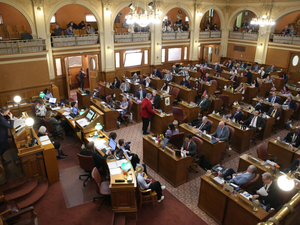
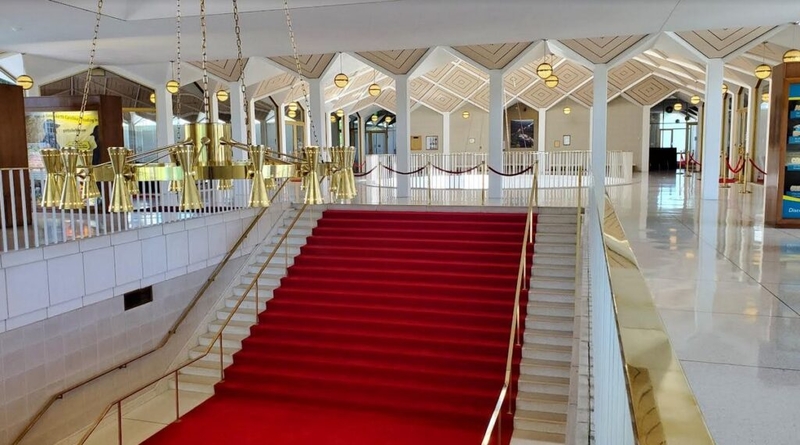
The grand staircase at the NC Legislative Building (Photo: Clayton Henkel/NC Newsline)
North Carolina lawmakers voted Tuesday to set aside $31 million for film grants, boosting the state’s entertainment industry.
The grants support movies and television shows in the state. Many are filmed along the coast, like R.J. Decker, a crime television show shot in Wilmington. Grants are agreed upon at the beginning of a project but aren’t paid out until after post-production, leading to multiple years of future financial commitment.
Managed by the Department of Commerce, the grant program underspent its $31 million annual budget for four years, leaving a reserve fund. But program officials said this summer the reserve had been fully committed, leaving them unable to make additional grants until 2028 at the earliest.
Some Republican lawmakers initially accused Commerce officials of mismanaging the funds and declined to add more money for the program to the state budget. But on the campaign trail this fall, Sen. Michael Lee, R-New Hanover, promised to secure $31 million more to keep the grants going.
“This is a statewide effort,” chief Senate budget writer Brent Jackson, R-Sampson, said Tuesday.
Gov. Josh Stein told reporters Tuesday morning that North Carolina needs to stabilize the film grants program.
“It’s a growing dynamic industry all across the state,” Stein said. “We have to make sure that we have enough resources to replenish the programs to keep it going, because thousands of people work in the industry.”
North Carolina seeks $40 million to help schools cover rising fuel costs
The bill also includes $40 million in extra money for fuel for school buses, and another million for fuel for drivers’ education vehicles. School districts’ fuel budgets for the year were busted by the high gas and diesel prices caused by the Iran war.
The grants are part of a 62-page omnibus spending package, Senate Bill 177, that wasn’t made public until moments before it was debated Tuesday afternoon.
The measure appropriates or redirects over $100 million to various entities across the state, and also includes many special provisions making changes to state programs, from SNAP to water policy.
The Senate voted 26-19 in favor, and the House approved it 66-49, with most Democrats opposed.
Democrats criticized Republican leaders for not allowing more time for lawmakers and constituents to read and understand the bill. They also said the spending and policy parts of the measure should have been broken down into separate proposals, instead of lumped into one. Sen. Jonah Garson, D-Orange, said there are good provisions in the bill, but they’re outweighed by the negatives.
“Unfortunately, those good things like fuel relief for our school systems are held hostage to a number of bad provisions,” Garson said. “I would hope that this body can come back in December and address some of these emergency relief items in a responsible and appropriate way, but for the reason that the good is held hostage to the bad, I’ll be voting no.”
House Democrats argued that the measure was too rushed, saying there should have been some opportunity for the public to weigh in on it in committee hearings.
“You’re asking us to vote on this now, to spend well over $100 million of the people’s money without any public involvement, without any notice, without any chance for even the members responsible for voting on behalf of their districts to have a say in it, let alone to read it,” Rep. Phil Rubin, D-Wake, said. “This is just not the way that this body should be run. It’s completely inappropriate.”
House Speaker Destin Hall, R-Caldwell, told reporters that members had been working on the bill “for some time,” but that last-minute changes delayed its public release.
“There’s tweaks here and there that you’ve got to fix,” Hall said. “You don’t always have all this stuff, you know, days and weeks ahead of time.”
The bill now goes to Gov. Josh Stein for his signature.
Raleigh, NC