NC Auditor: $111 million spent on Hurricane Helene emergency camps
Jul 28, 2026 | 5:00 pm ET
Description
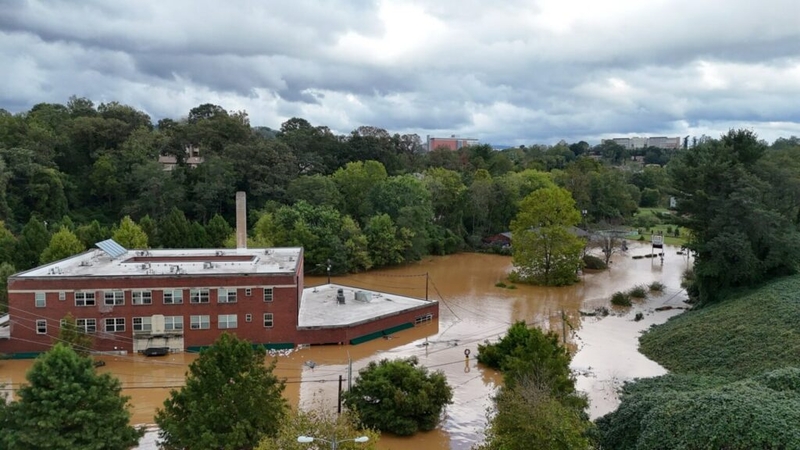
Depot Street in Asheville flooded during Hurricane Helene. Extensive flooding and storm damage required the state to establish camps and comfort stations for rescue crews and storm survivors. (Photo: Courtesy of Carly Brown)
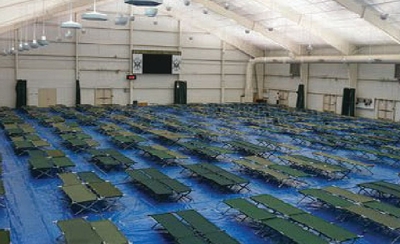
A new rapid response report from the North Carolina auditor found that more than $111 million was spent on 55 camps set up in the aftermath of Hurricane Helene to help victims and storm responders.
The 1,100 page report released Tuesday focuses on services provided by the disaster response contractor SLSCO (SLS).
The audit notes that North Carolina Emergency Management spent more than $516,500 per day over the seven-month period that the camps were operational.
“A one-night stay in a single bed cost roughly $800,” the auditor’s report highlighted.
The audit also examined the costs of food over the seven-month period, amounting to $6.5 million.
Did the prices amount to price gouging?
The audit doesn’t say.
What the audit does detail is that the rates charged by SLS for disaster response services were set by pre-existing contracts executed between SLS and NCEM in 2023, before Hurricane Helene was ever in the forecast.
The Texas-based company told the state in its May 2022 proposal it could provide ready-to-use camps and additional services within 72 hours of an emergency. Virginia, Louisiana, and Florida have also used the company for disaster response.
In the aftermath of Helene, SLS submitted invoices to the state totaling more than $111 million between September 27, 2024, and April 30, 2025. Almost half of that was spent for base camps in western North Carolina.
An endless list of emergency needs
Twenty-two months removed from the storm, it’s easy to forget how much damage Helene caused. Landslides and flooding interrupted power and internet service, leaving thousands of roads and bridges impassable. Asheville was without drinking water for 53 days.
The base camps were configured to serve as community care stations, staging areas, points of supply distribution, medical support facilities, and shelters for the thousands of emergency responders.
Study: Hurricane Helene caused spike in homelessness in North Carolina
State emergency management leaders coordinated with local governments and recovery organizations to determine the best location for each camp. Access to running water was a key factor in determining whether laundry, shower, or restroom services could be provided. The price per camp varied based on the size of the set-up, with a discount provided in the pre-existing contract for larger set-ups.
One high-priority invoice from October 2024 from the N.C. Department of Public Safety to SLS requested a base camp to be established at Burnville Elementary School. The $2.3 million camp was needed so 100 linemen would have a place to stay while they worked for months restoring power to the county.
Another invoice requested SLS to provide toilet trailers and handwashing stations for Mitchell County Schools because Spruce Pine’s water and wastewater was not expected to be fixed for weeks.
DPS responds
In a July 8, 2026, response to the draft audit, state Public Safety Secretary Jeffrey Smythe acknowledged that “disaster contracts by their nature can be expensive but are necessary actions to take when life safety is concerned.”

FEMA viewed each of the invoices and deemed the associated costs “necessary and appropriately procured.” The costs have been fully reimbursed to the state, according to DPS.
The lengthy audit concludes by recommending that N.C. Emergency Management consider tracking the usage rates and per-use cost of showers, restrooms, laundry facilities, and meals.
“Such tracking could give the State valuable data that could be used to negotiate improved costs for disaster-related support services in vendor contracts,” the auditor’s office wrote.
Smythe said the department will continue to make disaster purchases in line with FEMA and national best practices.
“While capturing the specific number of meals, showers, or beds used may be helpful in day-to-day commodity procurement, disaster procurement is based on supporting the needs of local communities, of [state] partners, and of emergency responders in a time of significant stress and when life safety and sustainment is the priority,” Smythe concluded.
Click here to read the full audit.
Raleigh, NC