NC AG Jackson, DEQ reach $590M settlement with chemical firms over PFAS
Sep 10, 2026 | 1:33 pm ET
Description
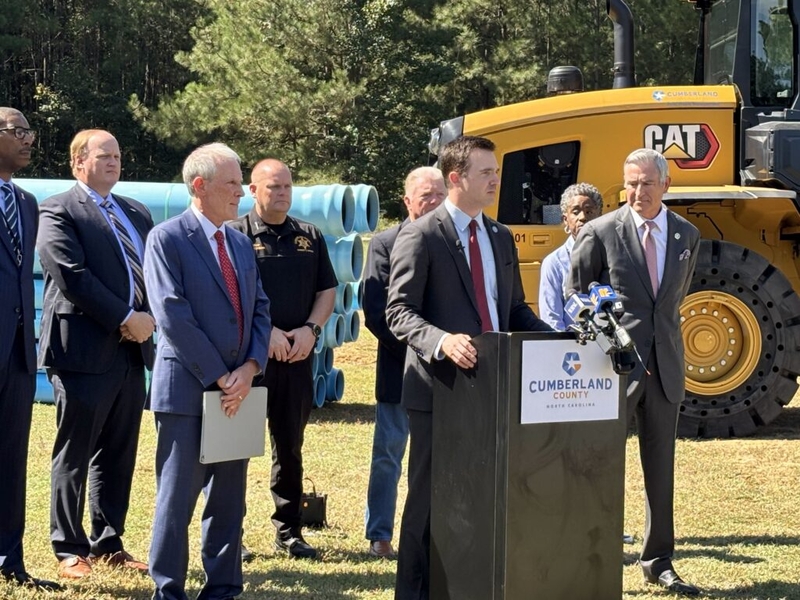
North Carolina Department of Environmental Quality Secretary Reid Wilson, Attorney General Jeff Jackson (center), and Cumberland County Board of Commissioners Chairman Kirk deViere discuss the nearly $600M settlement with DuPont/Chemours during a September 10, 2026 news conference.(Photo: Christine Zhu/NC Newsline)
The state of North Carolina has reached a $590 million settlement with three chemical manufacturing companies to resolve lawsuits over dumping forever chemicals into rivers.
The deal, announced Thursday, is the largest total environmental damages recovery in state history, according to Attorney General Jeff Jackson’s office. It comes just days before Jackson and his staff were scheduled to argue in the state Supreme Court against chemical manufacturers Chemours, DuPont, and Corteva.
Chemours, formerly part of DuPont, has been manufacturing chemicals on the Cape Fear River near Fayetteville for decades. In 2017, scientists discovered that the toxic chemical GenX and other PFAS — sometimes known as “forever chemicals” because of their persistence in the environment — were being released from the plant into the river. Studies have linked PFAS to higher rates of certain types of cancer, thyroid disorders, and reproductive problems.
More than 500,000 residents of southeastern North Carolina receive their drinking water from the Cape Fear River.
In late June, the U.S. Environmental Protection Agency announced a proposed $450 million settlement agreement with Chemours to resolve environmental violations related to PFAS at plants in West Virginia and New Jersey, and at Fayetteville Works in North Carolina.
Jackson criticized that proposal, calling it a “backroom deal.” He said negotiations took place behind closed doors without consulting the North Carolina Department of Environmental Quality or the attorney general’s office.
The EPA plan promised only $90 million towards environmental projects across three states, with no guarantee of any of that money allocated to North Carolina.
On Thursday, Jackson said Chemours and DuPont have devastated North Carolina’s water and natural resources for decades.
“This deal forces them to pay for the harm they caused the people of southeastern North Carolina, and gives our local governments more resources to help ensure clean drinking water for families,” Jackson said. “It is a massive step forward in giving our state more dollars to help fund clean water programs.”
The agreement guarantees $455 million to the state and 11 local governments that joined the settlement, to be paid over the next 10 to 15 years. Of that amount, $75 million will go towards the state, with about $55 million earmarked for a PFAS fund to help with cleanup.
The remaining $380 million will be divided among local governments that were affected by Fayetteville Works’ pollution and previously sued Chemours and DuPont. These are Bladen, Brunswick, Columbus, Cumberland, New Hanover, Robeson, and Sampson counties; the town of Wrightsville Beach, the city of Lumberton, the village of Bald Head Island, and Lower Cape Fear Water and Sewer Authority.
Under the settlement, DuPont and sister company Corteva must establish a $135 million reserve fund. This guarantees Chemours must continue to provide clean drinking water to families whose well water is polluted with PFAS from Fayetteville Works regardless of the company’s financial future.
A key ‘forever chemicals’ lawsuit settles out of court in North Carolina
“We know that there is a real risk of bankruptcy by Chemours, and this is why we now, with this deal, have put DuPont on the hook to make sure that they will have to continue the cleanup in the event that Chemours goes bankrupt and can’t afford to keep paying,” Jackson said.
DEQ Secretary Reid Wilson called the deal a “huge victory” for the state.
“These companies are finally paying for the damage they caused to North Carolina’s land and waters,” he said.
Cumberland County Board of Commissioners chair Kirk deViere said residents have lived with the consequences of contamination for years.
“Families who did nothing wrong have worried about what comes out of their tap,” he said. “The lawsuit was about accountability. The settlement provides resources. The work ahead is about solutions.”
Raleigh, NC