Native American tribes wanted to join the Chesapeake Bay partnership. Not anymore.
Sep 21, 2026 | 5:36 pm ET
Description
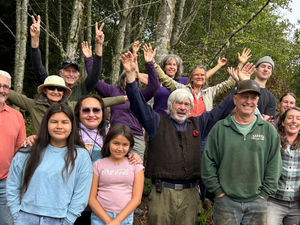
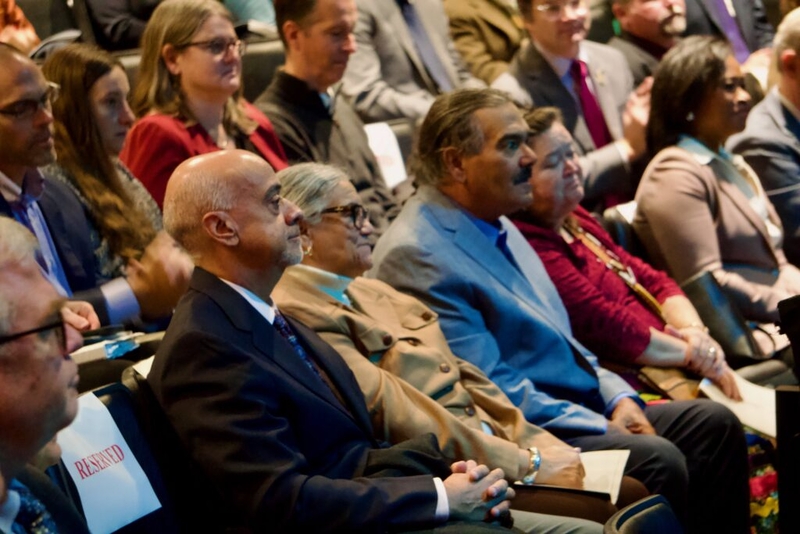
Virginia Indigenous tribe chiefs observe the Dec. 2, 2025, meeting of the Chesapeake Executive Council, where the Chesapeake Bay partnership agreed to study how to formally include the tribes in bay cleanup planning. It was supposed to issue recommendations by July, but tribal leaders say they have been stonewalled. (Photo by Christine Condon/ Maryland Matters)
Seven federally recognized Native American tribes are ending their bid to formally join the Chesapeake Bay cleanup, saying they have been disappointed by the response from Bay Program leaders.
The Virginia-based tribes began their quest last January, hoping to be added as a single signatory — the status awarded to each of the state governments surrounding the bay — when elected officials in the Chesapeake Bay region approved a new agreement for restoring the bay in December.
Their effort fell short, but the state governors in the bay region commissioned a Chesapeake Bay Program committee to study the idea, approving a document that called Indigenous knowledge “vital to the health of the Chesapeake Bay.” Several chiefs were in the front row of the crowd as the governors approved the directive during a December convening at the National Aquarium in Baltimore.
But discussions reached an impasse earlier this month, according to a statement shared on Monday by the Indigenous Conservation Council of the Chesapeake Bay, a consortium of all seven tribes, at a Bay Program committee meeting.
Tribal leaders say the bay partnership proved unwilling to offer signatory status, a failure to recognize tribal sovereignty, said Melissa Ann Ehrenreich, executive director of the council.
“If people are not willing to create a seat at the table, why should you sit under the table?” Ehrenreich asked in an interview. “That was what they were suggesting: For tribes to sit under the table and catch crumbs.”
In its statement, the council said that it voted “to withdraw from all discussions and formal engagement with the Chesapeake Bay Program,” until tribal sovereignty is respected.
The Chesapeake Bay Program said in a statement Monday that it “remains committed to working with Tribes, to the extent that they would want to engage.”
“While the partnership did not extend an option for adding signatories, we remain committed to working together on the foundational elements of advancing and respecting Indigenous guardianship and Indigenous knowledge within watershed restoration planning and implementation,” read the statement.
Chief Anne Richardson of the Rappahannock Tribe said she walked out of a September meeting with Bay Program officials before its conclusion because of her frustrations.
That meeting was convened to prepare a formal resolution that the Bay Program could approve in December. Richardson said she and other tribal leaders believed the resolution would set the tribes on a path to signatory status.
But more than an hour into the meeting at the Upper Mattaponi Tribal Center in Virginia, Bay Program officials broke the bad news, Richardson said. To her, it felt like tribal leaders had been “led down a primrose path,” only for the door to be slammed in their faces more than a year later.
“It was insulting, and I thought it was very disrespectful to the tribal leaders,” Richardson said.
But the tribes got support Monday from organizations including the Chesapeake Bay Foundation, among the largest bay-focused nonprofit groups, along with the Choose Clean Water Coalition and the Nature Conservancy.
“It’s unacceptable that the Chesapeake Bay Partnership is not following through on promises to engage in good faith and meaningfully include tribes in the partnership,” Chesapeake Bay Foundation senior policy director Keisha Sedlacek said in a statement. “Enough delays. We urge decision-makers to make things right.”
If people are not willing to create a seat at the table, why should you sit under the table? That was what they were suggesting: For tribes to sit under the table and catch crumbs.
During the Bay Program meeting Monday, the tribes also received support from Bill Dennison, provost and vice president for academic affairs at the University of Maryland Center for Environmental Science. Dennison, a longtime bay scientist, is an executive board member on the Chesapeake Bay Program’s Scientific and Technical Advisory Committee.
“To move forward, we’ve got to engage with all knowledge that we can integrate to restore this magnificent bay and watershed,” Dennison said during the public meeting.
In its statement, the Indigenous council wrote that tribal leaders were “stonewalled” when they tried to discern why the other states had decided not to allow the council to become a signatory, on a level playing field with the governors of Maryland, Delaware, Pennsylvania, New York, Virginia and West Virginia, and the mayor of Washington, D.C.
As a signatory, the council would be able to cast a vote in decisions about the bay clean-up effort. In addition to each of the states and Washington, D.C., the federal government and the Chesapeake Bay Commission —which represents legislators in the region — are also signatories with voting power.
The seven tribes, which all earned recognition from the federal government between 2015 and 2018, formed the Indigenous Conservation Council of the Chesapeake Bay in 2022. The council includes the Upper Mattaponi Indian Tribe, Rappahannock Tribe, Pamunkey Indian Tribe, Nansemond Indian Nation, Monacan Indian Nation, Chickahominy Indian Tribe and the Chickahominy Indian Tribe – Eastern Division.
Maryland officials grapple with ‘bizarre’ Trump executive order on Chesapeake Bay
The Chesapeake Bay Program decision is particularly “ironic,” Ehrenreich said, given that President Donald Trump (R) last week signed an executive order signaling a possible retreat from federal agencies involved in the bay cleanup, and railing against “rain taxes” collected by some bay jurisdictions in order to fund stormwater management programs.
“These are tough times for the Bay Program when it needs leadership,” Ehrenreich said. “And tribes are willing and ready to step up, when their tribal sovereignty is acknowledged and respected.”
If it changed course, the Chesapeake Bay partnership would not be the first clean water partnership to add Indigenous leadership. The Puget Sound Partnership, for example, includes several tribal representatives on its leadership board.
“When the Chesapeake Executive Council decides it is ready to uphold tribal sovereignty and provide space at the leadership table for us, then we will be happy to renew our conversations,” read Monday’s statement from the council.
But in the meantime, the tribes plan to continue their environmental projects in their homelands, Richardson said, including efforts to rebuild oyster and herring populations and restore shorelines and wetlands — projects that employ indigenous knowledge and focus on adding to, rather than extracting from, the land.
“Western science didn’t need what we had,” Richardson said. “And so we’ll just keep doing what we’re doing.”
Annapolis, MD