MUSC opens emergency-urgent care hybrid in Lower Richland, a first of its kind for SC
Jun 22, 2026 | 8:30 am ET
Description
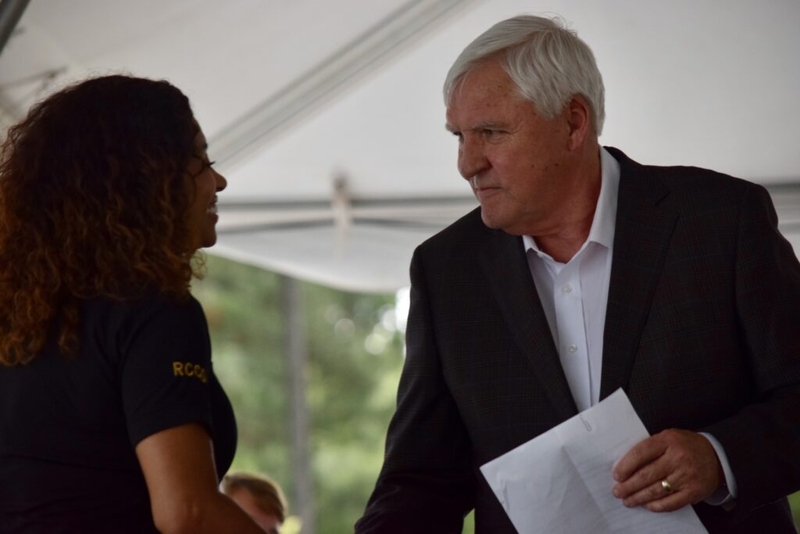
Medical University of South Carolina's president, Dr. David Cole, right, shakes hands Thursday, June 18, 2026, with Richland County Coroner Naida Rutherford at MUSC Health's new hybrid emergency-urgent care clinic in Lower Richland. (Photo by Jessica Holdman/SC Daily Gazette)
COLUMBIA — Residents of rural Richland County now have access to emergency healthcare close to home, thanks to South Carolina’s state-owned hospital system.
The Medical University of South Carolina Health system partnered with a Texas-based company to build a 12,484-square-foot hybrid emergency room and urgent care for the region southeast of Columbia known as Lower Richland.
The center’s opening Monday answers pleas that began more than three decades ago from state Sen. Darrell Jackson and the late Rep. Joe Neal, both Hopkins Democrats and pastors first elected to the Statehouse in 1992. Neal, a beloved champion of the needy, died unexpectedly in 2017 at a Columbia hospital.
Richland County legislators’ ask, Jackson said, was for some kind of emergency healthcare for the community, if not a full-fledged hospital.
“If someone is having a health emergency, they should not have to go all the way into Columbia to do that,” Jackson said during a ceremony last Thursday.
Officials with MUSC and its partner believe the Lower Richland facility is the first of its kind in the state, but it won’t be the only one they build. Plans are underway for combined centers in Florence, Summerville and West Ashley.
Intuitive Health, the Texas company, also is working with Tidelands Health to build three sites in Horry County and with Beaufort Memorial to bring one to the southern end of Hilton Head Island.
In addition to expanding access, it can also save people money, the partners say. If someone comes in unsure whether they need emergency level care, they’re only billed for the level of care they actually receive.
“It solves a common patient problem: Where should I go?” said Dr. David Cole, president of the MUSC medical school. “If you go to the wrong place, you’ll get significant charge differentials. When you come here, you don’t worry about that.”
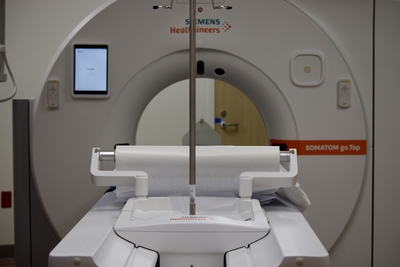
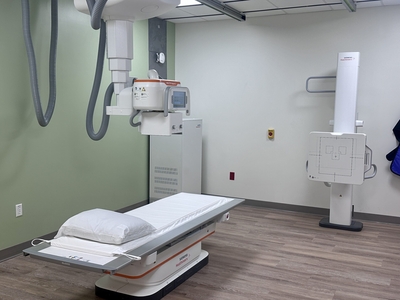
Unlike a typical urgent care, the new center is equipped with high-tech medical imaging, including computed tomography (commonly called a CT scan) that combines X-rays with computer technology to create detailed images, as well as ultrasounds and electrocardiogram machines.
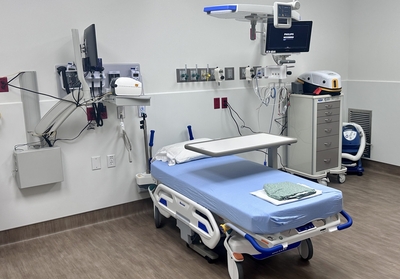
It also has a fully equipped trauma bay. So, if someone gets in a car wreck, is having a baby, a stroke or a heart attack, the center’s physicians can at least get them stabilized until they’re well enough to be transported to one of the area’s larger hospitals for admission.
Founded by an emergency room doctor, it’s a model Intuitive has been following since 2008.
With the addition of South Carolina, the company will have more than 35 centers across 11 states. Arizona, Delaware, Florida, Kentucky, Indiana, Ohio, Oklahoma, Texas, Virginia and Washington are the others.
“It takes the guesswork out of the hands of the patients,” said Marshall Leslie, the chief growth officer for Intuitive. “If they don’t need emergency level services, they go home with a simple urgent care bill.”
Cindy Little, the new center’s nurse manager, said she’s seen it in her personal life. She’s been dehydrated, suspecting a saline drip at an urgent care would probably be enough but not knowing for sure. And she’s had a family member go to the urgent care expecting the nurses to patch up a cut that actually ended up requiring a trip to the emergency room for stitches.
There are three other urgent care centers — one operated by Prisma Health, one by Novant Health and one by HCA Healthcare — within one square mile of the new MUSC building.
“We appreciate some of the urgent care facilities, but no one was willing to do a 24-hour, seven-days-a-week facility,” Sen. Jackson said. “That is what makes this a game changer.”
Richland County Coroner Naida Rutherford provided details explaining the community’s great need.
If you live around the towns of Hopkins or Eastover, she said, “you have a higher likelihood of death because you could not access emergency care services in a timely manner.”
Since she took office in 2021 through the end of 2023, Rutherford counted the deaths she responded to in those town’s zip codes: 28 in total “from a child who was having an asthma attack to a woman who died on a day that should have been the happiest day of her life, her due date.”
“If you live in rural South Carolina, you should not die because you don’t have access to emergency services,” Rutherford said.
MUSC Health has been considering opening this type of facility in the state since before the COVID-19 pandemic in 2020, said Dr. Patrick Cawley, the state hospital system’s CEO. But when the virus hit South Carolina, overwhelming nursing rooms and blowing hospitals’ budgets, it put those plans on pause.
When the hospital system finally recovered and could restart those discussions, it turned to Intuitive for its know-how in developing and operating these complicated centers. Intuitive will take care of day-to-day operations. The two will equally split ownership.
And though MUSC is state-owned, Jackson said no taxpayer dollars went into building the center. It was financed by the partners and will be paid for by the revenue it generates.
Cawley also said MUSC knew it wanted a location in the Columbia area as part of the effort.
To sell the hospital system on Lower Richland, Rep. Jermaine Johnson took Cawley and other administrators on a tour.
“I got them to come to my house, and I put them in my car, and I drove them around,” said the Hopkins Democrat who’s represented parts of Lower Richland since 2020. “I showed them the community. I showed them the development. I showed them the things that were happening here.”
“I was surprised,” Cawley said. “You look at the numbers on a spreadsheet, and you think, well, there’s some healthcare here within a certain distance. But when you start driving around, you realize there’s not as much as there needs to be.”
“This is a growing area,” Cawley added. “So, we think it’s the perfect community for this kind of access.”
In addition to the Lower Richland center, MUSC has been investing in its other Columbia-area facilities, too.
Since the state-owned hospital purchased the former Providence Health, Cawley said it has gone from having a lot of empty beds to jammed full, to the point they’re building a new emergency room and considering adding another tower of rooms to the downtown Columbia hospital.

Columbia