The mountain elite: Jackson Hole’s Catherine Cullinane hung with the Stonemasters, pioneered diabetes education
Oct 07, 2026 | 6:22 am ET
Description
Photo courtesy of WyoFile
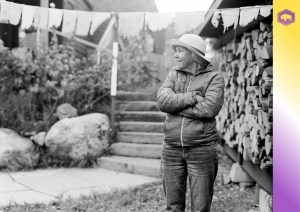
Catherine Cullinane had climbed with the Stonemasters in Yosemite Valley, a loose-knit group of hard men that pushed the limits of rock climbing, and was working in the Tetons for Exum Mountain Guides when she got the news.
“I had been guiding the Grand all year, and I got really skinny,” she said. A nurse, she understood that she exhibited “all the classic symptoms of having Type 1 diabetes.”
But because the disease didn’t run in her family, the ailment wasn’t on her radar.
“It was quite shocking,” she said of her diagnosis. “If someone knew you had diabetes, they always wanted to tell you about their great uncle that had their leg amputated or lost their vision — a lot of negativity.
“I became obsessed,” she said, thinking “that’s not going to happen to me.”
She had big goals as an outdoors woman and wanted to ensure she could continue to follow her calling.
“I must have been born to be outside most of my life,” she said.
Goal one was to climb Denali, North America’s highest peak, ice-clad and soaring to 20,310 feet in the Alaska Range.
“Climbing Denali helped me think that I could do pretty much anything,” she said after her successful climb. The “anything” she next wanted was a baby.
“You have to have your blood sugars in perfect control, in total normal range, the whole time you’re pregnant,” Cullinane said. “I was already 34, 35 [years old] at that point, so I was sort of anxious [to] try to be in perfect control.”
Daughter Jane Jackson was born in 1991. Earlier this year, Jackson climbed Cerro Fitz Roy, a giant granite spire in Argentina’s Patagonia region, one of the toughest summits on the planet.
Cullinane never considered herself an athlete. The daughter of a banker and special ed teacher, she grew up backpacking with her family in the Sierra Nevada mountains.
“My mother would pack breakfast, lunch and dinner for six or seven days, and then my dad would pack it up on the burros, and we would all start walking with our little Sierra Club cups on our belts.”
The mountain bug bit her. “I became quite obsessed with the whole [American] Everest 1963 expedition,” devouring National Geographic’s coverage, she said.
After high school, she took a gap year and moved to Yosemite Valley where she got a job in a cafeteria and began climbing “with some of the famous old rock climbers.
“My parents were horrified.”
“People would take me out climbing, and I was good at it, for whatever reason. Crack climbing kind of came natural to me. All the Stonemasters and the other men climbers, most of them were totally psyched if they took us climbing and we could do the route. Really good crack climbers definitely showed me the technique.”
Her forte was climbing hand and fist cracks — vertical fissures common in rock walls and on many peaks. To grip a two-inch wide vertical crack, a climber reaches up as if to shake, then slots her hand vertically into the gap. Then, “you bring your thumb down and you kind of flex your whole thumb and palm area.”
A hand jam isn’t as secure as an open-palm grip on a feature like a pull-up bar, but works when properly applied. A similar technique allows a climber to twist her toes into the fissure to ascend.
Cullinane climbed The Nose on El Capitan, the sheer Northwest Face of Half Dome and other big walls.
“Leading was the hard part back in the day.” To protect herself with a running belay as she ascended, she used artificial chockstones called Hexcentrics, which took some art, to place correctly in the crack.
“It was terrifying compared to now,” Cullinane said, comparing old-school gear fumbling to the ease of placing today’s spring-loaded camming devices.
She met a test one summer on the West Face of Yosemite’s Sentinel Rock. Cullinane drew the lead for the last pitch, a hand crack then rated 5.10, the most difficult.
“I think now it’s 5.11a or something,” she said. “At that time, you couldn’t hang on anything,” she said of the free-climbing ethos that shunned grabbing only the rock. “You wanted it to be perfect, pure — just climbing.”
She made a runout — “way above my protection,” and got to the anchor at the top of the pitch.
“I was so pumped that I couldn’t even clip in,” she said. “So I took a big whipper. I went about 30-35 feet.”
She wasn’t wearing a helmet and was tied in with a three-inch waistband only — no leg loops.
That fall “kind of limited my leading,” she said.
Cullinane worked through her climbing fears and also pursued her education in nursing school. Her father, “pretty set in his ways,” had never encouraged her to be a doctor, proposing she become a nurse or teacher.
One summer she came to the Tetons and was hired by Exum to help on easy climbs where guides would take perhaps 15 kids at a time. “I would be sort of the helper, checking knots, encouraging the kids.”
She began carrying loads up to the Lower Saddle of the 13,775-foot-high Grand Teton, then tied on to Exum parties as a junior guide. After a few years, she was the leader of her own team with her own set of clients.
After graduating from nursing school in 1983, Cullinane was tapped for a 1986 expedition to the north side of Everest. No American woman had yet been on top.
It was not to be. Weather set in. “The jet stream lowered and we lost a Sherpa in an avalanche, which was horrible.” She reached about 24,500 feet on the 29,031-foot-high Sagarmāthā or Jomolangma.
Cullinane became a diabetes educator, started an entire program at St. John’s Medical in Jackson, and worked at San Francisco General Hospital. She melded her medical and Himalayan interests through a neighbor in Kelly, Dr. David Shlim, and the Canadian International Water and Energy Consultants Travel Center Hospital in Nepal. Asked to review the staff in Kathmandu, she found nurses up to snuff on medical protocol, but unfamiliar with insulin pumps, which Cullinane explained.
These days Cullinane spends some months in Utah where rock climbing diehards, even the older set, keep up their craft. Two years ago, a handhold broke on a climb and she fell 10 feet and hit a ledge before her rope caught her. She broke five bones.
“It was ugly,” she said.
“I was in a wheelchair for two months, and then I had a boot on my right leg for 16 weeks, and on my left leg for 12 weeks.”
At 71, her latest transition is “learning to age gracefully while still trying to climb.
“I love climbing and I don’t want to give it up. So I have to learn how to push back, bring the level down, the bar down a little bit, so I can still do it and not get too frustrated with my injuries.
“I didn’t think I was an athlete,” she said of her pioneering days. “I didn’t think I was particularly strong. I feel like I’ve had an ordinary but extraordinary life. I just go about my day.”
Cullinane said she’s amazed at the young women athletes in her valley. “What they’re doing in the Tetons [is] kind of crazy.”
All sorts of Equality State women stand out too, whether they’re on a ranch, in the saddle or even in court “fighting for healthcare freedom for women in Wyoming,” she said.
“I think there’s roadblocks that are intrinsic in our society, which is a total bummer,” she said of the state of equality. “But I think in Wyoming there’s a lot of potential for women to do what they want to.”
Cheyenne, WY