Morrisey announces water filtration program for Southern West Virginia coalfields
Nov 04, 2026 | 3:19 pm ET
Description
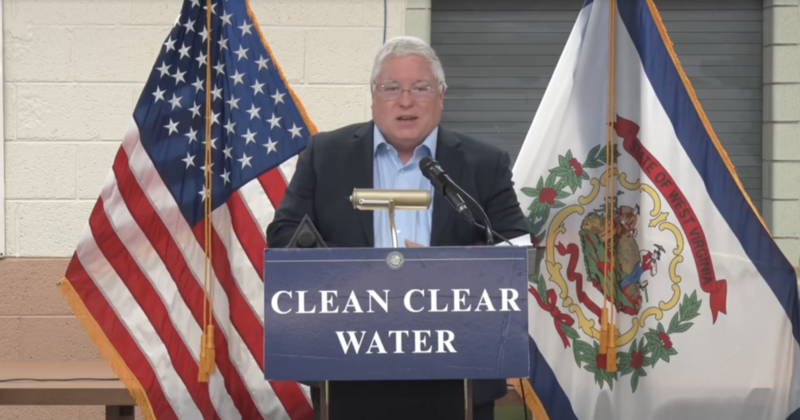
Gov. Patrick Morrisey announces a $3.2 million water filtration initiative to deliver clean, dependable drinking water to 5,000 households in McDowell and Mingo counties, in Welch, West Virginia on Nov. 4, 2026. (West Virginia Office of Gov. Patrick Morrisey video screenshot)
Gov. Patrick Morrisey announced Wednesday the state will be investing $3.2 million into home water filtration systems in Mingo and McDowell counties.
The initiative will cover 5,000 homes that rely on well-water or have no running water at all and consist of distributions of “countertop water purification systems,” testing for bacteria and other hygiene measures.
The Morrisey administration will target $1.2 million of the federal Rural Health Transformation fund to 1,000 high priority households, which include homes with no running water, elevated amounts of bacteria in the water and homes with infants and seniors.
The remaining $2 million will go to 4,000 additional homes.
Morrisey said the initiative was born out of the listening tour he took in the coalfields in August and is just a step in solving the southern coalfield’s water crisis. He said he doesn’t want to see videos of dirty water coming out of faucets.
“Like you, I get tired of it. I see some of the videos,” he told a crowd in Welch. “I don’t want to see those videos anymore. I want to know that I can look you in the eye and say 10,000 people are going to benefit from what we’re doing to address those very issues.”
Residents in the southern coalfields have spent decades dealing with dirty and contaminated water. During the last legislative session, activists and lawmakers from the area pushed several funding packages for new water systems, but the Republican supermajority shot it down.
Rep. Riley Moore, R-W.Va., who doesn’t even represent that part of the state, tried and failed to get more funding in the annual budget bill on the federal level.
The Rev. Caitlin Ware is an organizer with From Below: Rising Together for Coalfield Justice, a group that has focused on advocating for clean water in the region. She said the announcement is a good step to immediately addressing the problem, but in her experience filters can be eaten up by water in the region within months of installation.
“I’m curious to see how much it will cost the state extra beyond what’s announced, but it’s a start,” she said. “I can’t complain.”
Distribution is expected to begin in February 2027. The state will be coordinating with the McDowell County Commission on Aging, food banks, churches, and volunteer fire departments.
Charleston, WV