The Montana hunter’s new ‘BFF’
Oct 22, 2026 | 7:34 pm ET
Description
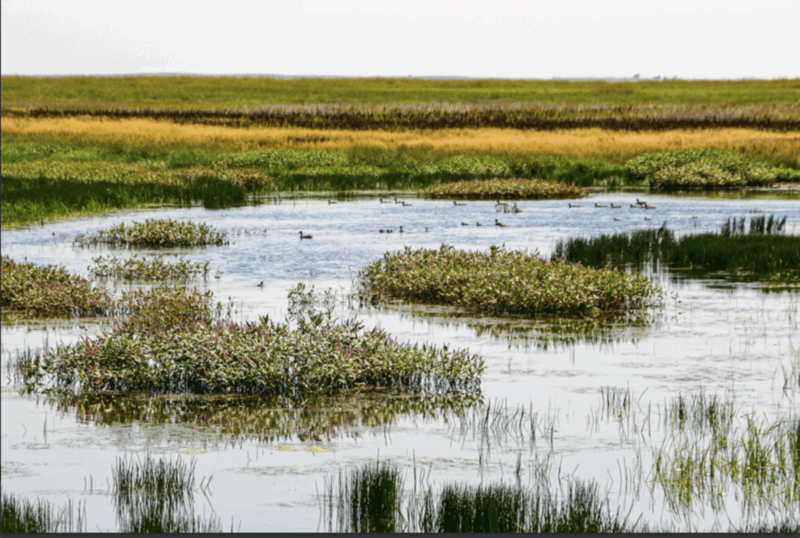
This is an area recently acquired by American Prairie called "Pintail Flats' (Photo courtesy of American Prairie).
It’s the time of “the hunt.” In Montana, it has been big deal for a very long time, a time of year when friends greeting friends no longer say, “How you doing?”
Instead it’s, “Get your elk yet?”
The enthusiasm for the hunt hasn’t changed for decades.
What has changed is the hunter’s landscape. For most hunters, I should say. It hasn’t changed much for wealthy hunters who can afford pricey guided hunts on private land controlled by outfitters. It might even be better than ever for them. For hunters who depend on public land or on permission from private landowners, however, it’s tougher nowadays. More competition, less access, more regulation, less success. Every hunter knows the problems.
That’s why Montana hunters and their nonprofit organizations should be embracing their new “BFF,” American Prairie, a Montana-based nonprofit organization.
American Prairie opened its doors in 2004 and has been making great progress toward its goal of creating one of the largest nature reserves in the United States, upwards of 3.2 million acres, to serve as a refuge for people and wildlife forever. To date, American Prairie has acquired more than 600,000 acres of north-central Montana with, undoubtedly, more acquisitions to come.
Before American Prairie came to Montana, almost all of these 600,000 acres were closed to hunting. Now, big game and upland game bird hunters have free access to all of it with the exception of small parcels around residential areas.
Bison have been reintroduced to portions of the reserve with the herd growing to about 1,000 animals. American Prairie holds an annual bison hunt, the only opportunity in the entire state for hunters to have a real hunt for a wild bison in a prairie environment similar to how it was when Lewis and Clark struggled up the Missouri.
There lies the rub: American Prairie’s long-term plans envision a larger bison herd roaming free over a restored, unfenced landscape. Some –not all – local ranchers hate the idea of free-roaming bison and therefore oppose American Prairie. Even though these ranchers likely represent a very small slice of Montana’s population, they have the ear of the governor, attorney general and all four of Montana’s congressional representatives.
This has led to political retribution. The State of Montana has paused permits to graze bison on state land leased by American Prairie, even though bison are officially classified as livestock, not wildlife, in Montana. The same politicians have convinced the U.S. Bureau of Land Management to disallow bison grazing on public land within the reserve. These two politically driven decisions combined are a devastating blow to American Prairie’s long-term goals. Consequently, the nonprofit has pursued its only remaining option, legal action, and both decisions are currently being contested in state and federal courts.
This is why Montana hunters need to step up to the plate. Our politicians need to know that Montana hunters support American Prairie. Take a little time away from hunting to write letters or make calls to our political leaders expressing your support for American Prairie and urge them to start helping the Montana nonprofit group accomplish its goals instead of fighting it every step of the way.
Hunters should know that American Prairie’s efforts have received endorsements and support from notable Montana hunting organizations such as the Montana Wildlife Federation, Theodore Roosevelt Conservation Partnership, Montana Sportsman Alliance, Montana Backcountry Hunters and Anglers and Randy Newberg’s “Hunt Talk.”
But only silence from the big dog, the Rocky Mountain Elk Foundation, even though, American Prairie has opened up hundreds of thousands of acres of some the best elk country to the public and protected all that prime habitat from future development. Even when the American Prairie acquired the Anchor Ranch in the Missouri River Breaks, nearly 70,000 acres (including 45,000 acres of leased public land), and opened it to public hunting and then opened a 3.8-mile section of the Bullwhacker Road which, in turn, opened free access to another 50,000 acres of public land that had been closed to public access for many years, not a word of praise from the Rocky Mountain Elk Foundation.
Yes, there has been support from hunters, but it has been soft and not very vocal. We need to turn up the volume.
In addition to the obvious benefits for hunters, letters could mention that American Prairie has been a major economic boost to an economically depressed section of Montana—hiring people (40+ employees), buying goods and services locally, bringing in tourists to camp and enjoy the prairie experience, and leasing much of the acquired land back to local ranchers for cattle grazing.
In fact, about nine cows graze the reserve for every bison. American Prairie also opened a fantastic visitor center in Lewistown, the American Prairie Discovery Center, which attracts many more of tourists.
Basically, the political panic over American Prairie seems irrational and overdone. Has American Prairie caused culture change? If so, what change? Cattle still graze there. Bison graze there, too, but for every bison nine cows graze on American Prairie land. And other Montana ranchers raise bison with no pushback to what they’ve decided to do with their private land. In fact, everything American Prairie does fits with the sacred cow of conservatism – private property rights. All acquisitions are with willing sellers who are only exercising their private property rights.
So, what’s the problem?
One thing I’ve always liked about the sport of hunting is its politics. It has none. I’ve never seen a poll of the political preferences of Montana hunters, but I would bet my moose permit that all political parties are equally represented. In Montana, however, Republicans hold every major elected office, so clearly, it’s especially critical that our political leaders hear from their conservative-leaning constituents who enjoy hunting and worry about its future.
Bill Schneider is a retired publisher and outdoor writer living in Helena. He has no connection with American Prairie.
Helena, MT