Missouri made it easier to address school boards. Raytown residents say they’re shut out.
Nov 17, 2026 | 7:14 am ET

Description
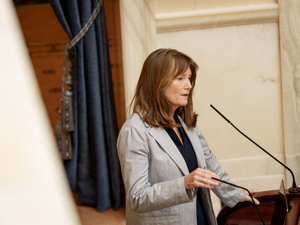
Brittanye Rimpson, whose children formerly attended Raytown public schools, wants to address the school board about bullying in the district and the public comment policy at board meetings (Vaughn Wheat/The Beacon)
Katty Henry said she’d like to speak to the Raytown school board about her concerns with the district, things like bullying and school safety, “if they’d let me.”
But after hearing about other residents’ struggles to be heard at recent board meetings, she has felt like it wouldn’t even be worth it to try to sign up for public comment.
Henry is raising her grandchildren, who attend Raytown schools.
Last month, she attended a small protest outside the district’s administrative building as a school board meeting took place inside. The protesters were objecting not only to bullying in district schools, but also to the fact that they haven’t been allowed to publicly address the board about it.
“I know they’re probably not going to let too many people speak,” Henry said, “but they should let some people speak.”
When school boards offer members of the public the opportunity to speak at their meetings, they generally impose limits on time, subject matter and the number of speakers who can participate in a given meeting. Many districts, including Raytown, require that public comments be related to items already on the board meeting agenda.
So if residents want to comment on bullying in schools, that would first need to be included as an item on the school board’s agenda.
But for several years now, state law has required school boards to offer residents a pathway to add items to their agendas. The process isn’t necessarily fast, but the law doesn’t list many reasons boards can refuse the requests after the resident jumps through a few procedural hoops — primarily meeting with the superintendent “to attempt a resolution of the issue.”
In Raytown, though, the board has recently denied two residents’ requests without directly citing any of the reasons specified in law — and in its own policy on adding agenda items. Another resident had a request that was denied in 2024 after she pressed the board for a response and accused it of ignoring her request entirely, according to public records that The Beacon requested and reviewed.
The records cover the period from when the district most recently updated its policy in 2023, after the law change, to the present. They show no successful requests to add agenda items.
Raytown school board President Alonzo Burton told The Beacon in an interview that he didn’t believe the board was limited to only denying requests based on the specific reasons listed in its policy. The board has consulted legal counsel about its interpretation, he said.
In a statement, the board argued that it has the discretion to also reject items that are unclear or that district leaders think should be handled another way.
Burton told The Beacon that the board always wants to hear from residents, but that sometimes concerns are best handled through another process, such as various committees. Issues also may not be priorities for discussion at board meetings based on the superintendent’s or board members’ recommendations.
“We want the public to speak. We want the public to be involved,” he said. “We also feel that we are the public’s voice. We are the elected officials.”
But some residents — like Brittanye Rimpson, a parent whose requests were denied — insist the policy is meant to give them an opportunity to address their elected officials in a public forum, regardless of what the board would prefer.
“This is a public-funded space,” Rimpson said, “and in that space, we have the right to address the board of folks that we are electing… to represent the community interests.”
Setting the Raytown school board agenda
A group of residents, including Rimpson, gathered outside the Raytown school district administrative building on the evening of the October board meeting, holding protest signs about bullying and censorship.
Meanwhile, inside the meeting, Burton acknowledged National Bullying Prevention Month. But he wasn’t introducing a public discussion of the topic. Instead, he seemed to suggest the board was a victim of bullying — from residents and families.
“It is not the intention of the board to bully anyone, nor should this board be bullied into making decisions or bypassing established procedures,” he said. “Disagreement is not bullying… However, attempting to pressure the board into disregarding its established process does not serve the best interests of our students or our district.”
Burton told The Beacon that he didn’t mean that the public was bullying the board, but rather that the board “would not bully or be bullied because we’re trying to set the example.”
He said the board has limited time and has to set its agenda based on superintendent recommendations and its understanding of district priorities.
District schools already address bullying when it happens, Burton said.
“It’s not that it’s not a priority of the district, but it’s not an issue that we believe that we have that’s above all the other items on the agenda,” he said. “And it’s not something that the board can do anything about other than deal with our superintendent,” who “has a good grasp in that area.”
How much discretion does the school board have?
The board’s interpretation of Missouri’s law — and the policy based on it — puts nearly all of the power in board members’ hands by giving them the discretion to determine which residents’ concerns are sufficiently clear or appropriate for board discussion.
“The spirit of it is to maintain order and to focus on the priorities of the district,” Burton said.
But that wasn’t the original intention.
Reports from 2022 described earlier proposed versions of the law as giving the public more power over board agendas, letting constituents overrule boards’ decisions to exclude items as a way to draw attention to residents’ concerns in the face of elected officials who are sometimes unresponsive.
Chuck Basye, then a Republican state representative from Boone County, sponsored the initial legislation and negotiated the version that became law as part of an omnibus education bill.
Basye, who is no longer a public official, told The Beacon that the idea for the law came about when people were upset with school district decisions during the COVID-19 era. He didn’t like the way his local board responded to concerns, such as limiting public comment at meetings.
“A lot of parents are very frustrated because they just feel like they’re not being heard by anybody,” he said. If school boards won’t listen to problems, “I think that’s a problem in itself,” Basye said.
Residents getting turned away
Rimpson and former Raytown Alderman Joe Creamer have had little success leveraging the existing law and policy in their favor.
Rimpson has three children who used to attend the district, but now learn from home through the Missouri Virtual Academy, a statewide program of the Grandview R-2 School District in the St. Louis area. The family pulled the children from Raytown schools over concerns including bullying and special education, and by the children’s own choice, Rimpson said.
Creamer, who has previously run to serve on the Raytown school board and lost, said he doesn’t have kids or grandkids in the district but is concerned as a community member and taxpayer about bullying and classroom decorum, which he thinks are having detrimental effects on the district’s ability to provide students with a quality education.
Both Rimpson and Creamer attempted to add an agenda item about bullying and classroom decorum and an item about the public comment policy.
State law says the board can decline agenda items if the topics have been included in a meeting within the past three months, or if the person offering it has a history of violating rules during board meetings or on school property. It can also postpone items in certain cases.
The law doesn’t give other reasons for a board to reject an item directly relevant to district governance or operations if the resident has already met with the superintendent. Requests can also go forward if the superintendent waives the meeting or if 20 business days have elapsed without the superintendent meeting with the resident.
After the meeting requirements have been met, “the resident may submit a written request to the board secretary” to have the agenda item added, the law says, “and it shall be placed as an item on the agenda.”
Burton said that no such request was made.
But public records show the district notifying both Rimpson and Creamer that their requests have been sent to the board. They also include emails from both residents to board secretary Rachel Johnston that make it clear they were seeking for their requests to move forward after meeting with the superintendent.
The Raytown school district’s board policy BDDH-1, which echoes state law on residents adding agenda items but with additional details, specifies that the board president should make the decision whether to refuse or delay an item.
Rimpson said she thinks the board may be misinterpreting the policy to mean that it can affirm or deny requests at will instead of nearly automatically adding items after the resident meets with the superintendent and asks for the board to move forward with the request.
Not the first time
A resident who submitted a request to add an agenda item in late 2023 also objected to the way the board followed its policy, records show. She wanted to ask board member Michael Watson to resign after an incident with a teacher.
She submitted the initial request on Dec. 14, 2023, met with the superintendent on Jan. 11, 2024, and notified Johnston the same day that she still wanted to add an agenda item. Nearly a month later, on Feb. 8, she followed up with the board to say that she didn’t see her item on the posted agenda, but hadn’t received a denial either.
“This seems like a clear lack of response and adherence to board policy, and it disappoints me as a very invested stakeholder that even when we went through proper channels, our request is ignored,” she wrote. “I don’t know how else to be heard.”
Emails show then-board members Natalie Johnson-Berry and Rick Moore asked for answers on her behalf. Moore told the resident he was angry and dismayed and said he would ask Burton why the board wasn’t following policy.
“We have to listen to our patrons even if we disagree,” he wrote.
Late Feb. 9, 2024, Johnston sent the resident and her husband an email with an attached letter from Burton. It said her request was denied because the board had already taken action by censuring Watson at a Dec. 19 special meeting. Watson is still a board member.
“The item was not added to the agenda and it had been communicated to the patron,” Burton wrote to his fellow board members Feb. 10, 2024. “All done according to policy.”
What recourse do residents have?
It’s not clear what the board’s deadline for responding to the resident should have been.
And short of a court battle, it’s also not clear who would intervene if residents and the district disagree about how to interpret the law or district policy on adding agenda items.
If residents believe the board violated the Sunshine Law, which governs which meetings and records must be public, they can submit a complaint to the Missouri Attorney General’s Office.
The section on adding agenda items isn’t part of the Sunshine Law, but the “law (is) complex so I still would encourage them to file a complaint,” Colbey Stosberg, a spokesperson for the attorney general’s office, wrote in an email.
“Otherwise, we would encourage them to contact a private attorney,” Stosbergwrote. “Our office is unable to offer legal advice or interpret the law for private citizens.”
The Missouri Department of Elementary and Secondary Education also has no “direct oversight for enforcement” over the section of the law about adding agenda items, chief communications officer Lucas Bond said in an emailed statement.
“With Missouri being a local controlled state, I would encourage you to reach out directly to the district,” Bond wrote.
Rimpson thought February 2024 guidance on public comment from the Missouri School Boards’ Association supported her interpretation. But the association told The Beacon that the guidance is not current and could not say when it would be updated.
Basye, the former state representative, suggested that if residents are concerned that their board isn’t following the law correctly, they could reach out to their state senator or representative for help or to consider enhancing the law.
‘A community involvement problem’?
In rejecting Rimpson’s and Creamer’s requests, Burton offered a lengthy explanation of why the board thought the concerns were too general or better raised elsewhere.
The email to Rimpson said that instead of providing specific details of bullying incidents, she referenced concerns that parents shared with her on social media. Bullying is best addressed at the school level before speaking with the board, it said, calling a board discussion “premature.”
Rimpson told The Beacon that she has questions about how the district’s bullying policies are followed in practice after her daughter experienced bullying as a Raytown fifth grader.
As she heard from other parents, including on social media, she came to believe there was a widespread problem in the district and that public conversation about bullying could help expose issues and provide a venue to brainstorm solutions and ways to improve district practices.
During her conversation with the superintendent, Rimpson said, she used her daughter’s experience as an example and emphasized that she had reason to believe issues were broader than just one school. But she said she omitted details about other families’ issues to protect their privacy and because she wasn’t seeking resolution of a specific case of bullying.
“My overall goal was to make sure that the policy is consistent,” she said, so some families don’t get more protections than others because they know what to ask for or how to ask.
Rimpson also wanted to address how difficult it is to speak to the board publicly.
Burton’s email said criticisms of the public comment policy were best addressed through the district’s existing policy review process.
At a policy committee meeting Nov. 9, board members opted not to change the policy that covers public participation at board meetings, including public comment or adding agenda items. They announced the decision during the regular board meeting the same day.
During that meeting, Morris Melloy, an administrator of a local Facebook group, spoke during public comment about an outpouring of messages he received after posting about the district.
“A lot of people have concerns,” he said. “I’m not here to criticize anyone because I try to stay out of educational issues… but when I hear community members saying they’re afraid to come talk, or teachers say they’re afraid to talk, I think we have a communication problem, and we have a community involvement problem.”
This article first appeared on Beacon: Kansas City and is republished here under a Creative Commons Attribution-NoDerivatives 4.0 International License.

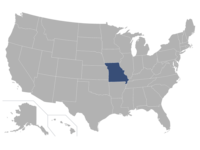
Jefferson City, MO