Missouri among 3 states declining hardship exceptions to Medicaid work requirements
Nov 10, 2026 | 9:00 am ET
Description
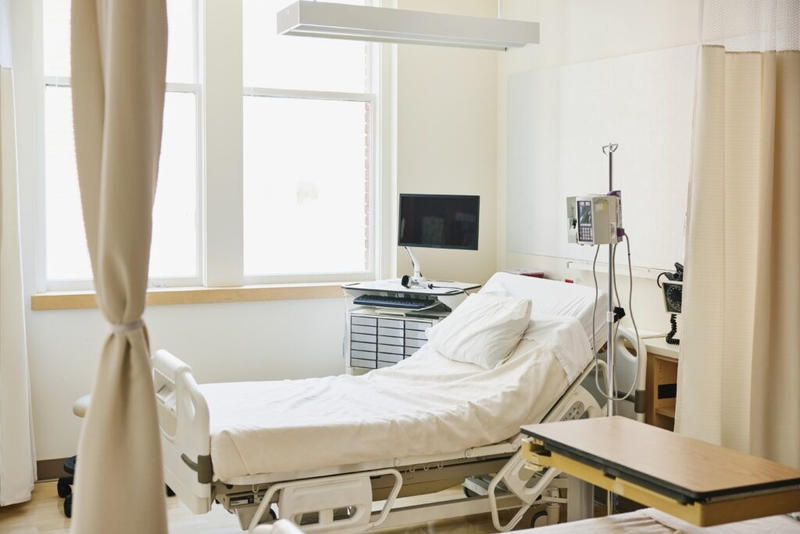
While the Missouri Department of Social Services initially signaled it would adopt optional hardship exceptions for hospitalizations, medical travel and residence in disaster areas, it indicated last month that it believes it can accommodate many people in those categories through other provisions in federal law (Thomas Barwick/Getty Images).
After a Tyson Foods meatpacking plant closed in Nebraska in January, eliminating about 3,000 jobs, the state secured a temporary reprieve from new Medicaid work requirements for residents of the surrounding county.
Nebraska began enforcing work requirements in May, requiring most adults ages 19 to 64 covered through Medicaid expansion to work, attend school or volunteer 80 hours a month to get or maintain health coverage. A month later, the state sought federal approval to exempt residents of Dawson County, where unemployment had surged following the plant’s closure.
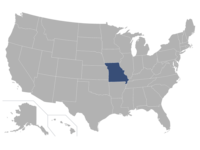
Missouri is one of just three states that have decided not to offer similar protections when the federal requirements take effect nationwide Jan. 1.
The Missouri Department of Social Services said last month that it will not adopt optional short-term hardship exceptions allowed in the One Big Beautiful Bill Act — including one that temporarily suspends work requirements in counties with unemployment rates at or above 8%, or 1.5 times the national average.
Six of the eight states bordering Missouri — Nebraska, Oklahoma, Arkansas, Tennessee, Kentucky and Illinois — plan to offer short-term hardship exceptions.
Kansas is not subject to the new requirements because it has not expanded Medicaid or adopted comparable coverage through a federal waiver.
Iowa and Indiana are the other two states declining all four exceptions.
In addition to areas with high unemployment, the short-term hardship exceptions cover extended travel for medical treatment for oneself or a dependent, areas with a federally declared emergency or disaster an inpatient or acute outpatient care in a hospital, nursing facility or intermediate care facility for people with intellectual disabilities.
States can adopt either all or none of the short-term exceptions, but the county-level exceptions for unemployment or disasters only go into effect after additional state action.
In an email to The Independent in October, Baylee Watts, media director for the department, said Missouri plans to accommodate “situations such as acute medical events and travel for specialized medical care” through mandatory exemptions for “medical frailty” and caregivers.
Federal law requires states to exempt people who are medically frail, including those who are blind or disabled, have substance use disorders, disabling mental disorders, serious or complex medical conditions, or physical, intellectual or developmental disabilities that significantly impair daily activities.
Missouri’s caregiver exemption will apply to parents or people caring for a child age 13 or younger and people who “regularly care for” someone with a disability and live with that person, are related to them or provide 80 hours of care in a month.
Watts said the department’s approach is intended to “limit the number of separate processes participants must navigate” and avoid “an additional, burdensome bureaucratic layer for participants.”
But national experts said that while the state can likely use the mandatory exemptions to accommodate medical travel and some people who experience medical crises, the medical frailty exemption may not cover everyone hospitalized for short-term conditions.
The mandatory exemptions also provide no comparable protection based solely on where someone lives, even when a natural disaster or major employer closure disrupts the local economy.
Watts reiterated to The Independent that “unemployment rates will not be a consideration for the requirement to participate in community engagement activities.”
Watts said the department believes its plan to verify compliance with work requirements based on one month within each six-month eligibility period “appropriately addresses employment interruptions that are caused by a natural disaster.”
Overlapping exemptions
Whether the mandatory exemptions in the federal law can be used to cover optional exceptions for hospitalization and medical travel is “definitely worth a conversation,” said Jennifer Wagner, director of Medicaid eligibility and enrollment at the Center on Budget and Policy Priorities.
Wagner said many states have interpreted guidance released in June by the Centers for Medicare & Medicaid Services to mean an individual must be medically frail in order to be eligible for the medical travel exception because the rule cross-references the section of federal law on “serious or complex medical conditions” — one of the ways someone can qualify as medically frail.
Each exception requires changes to state computer systems and procedures for determining eligibility.
“So there are a number of states that are not investing heavily in (questions of), ‘How long do you have to travel?’” Wagner said. “‘By minutes? By hours? Staying overnight?’ Because it is largely overlapping with the medically frail and caregivers (exemptions).”
But that’s “not necessarily” the case with the temporary exception for people who have received inpatient treatment, Wagner said.
“You could imagine a very acute but short-term condition that would lead you to be hospitalized, but certainly would not leave you medically frail,” Wagner said, like a broken ankle or a serious bout of the flu.
Watts said that in 2027, when states can accept self-attestation of medical frailty, the department will allow people to check a box and provide details on the medical condition or travel that prevents them from meeting work requirements.
Jeremy Bowman, deputy director of the department’s Family Support Division, said during a public webinar Oct. 28 that the self-attestation period will give the department time to develop a list of diagnostic codes that will help automate medical frailty determinations starting in 2028, when states must verify people’s eligibility for the exemption.
Watts said the department plans to “analyze data from individuals self-attesting to medical frailty in 2027” to prepare to verify exemptions on an ex parte basis — without asking individuals for additional information — when possible.
While there’s no formal duration requirement for a condition to qualify someone as medically frail, Wagner said, the medical frailty exemption “is not built to capture a sprained ankle.”
“I have not heard of any state going in that direction to make their medical frailty that broad,” Wagner said. “And it would be simpler to just go with hospitalization because you wouldn’t need to know the condition.”
Bowman said the department’s definition of medical frailty is “a physical, mental or behavioral health condition that significantly impairs ability to comply with the community engagement requirement.”
Even for people who qualify, verifying their eligibility could present another obstacle.
States’ ability to verify exemptions without asking for additional documentation depends on their access to outside sources of information such as medical records and insurance claims.
Jennifer Tolbert, deputy director of KFF’s Program on Medicaid and the Uninsured, told The Independent that’s especially true for people applying for Medicaid for the first time.
While hospitalizations or care in a nursing or rehabilitation facility would show up in current enrollees’ claims data, Tolbert said, states wouldn’t necessarily have access to private insurance claims or hospital records if the person was uninsured.
“That claim will not be anywhere for the state to check unless the state is accessing a broader set of electronic medical records or a health information exchange,” Tolbert said.
Watts said the department “is actively working to obtain additional electronic sources of information to determine eligibility.”
Disasters and unemployment
Unlike the exceptions for inpatient treatment and medical travel, which require individuals to submit a request, the county-based exceptions for disasters and high unemployment are automatically applied to eligible Medicaid applicants and enrollees once the necessary state and federal approvals are in place..
While states have to program these exceptions into their eligibility systems, Wagner said, “it’s not over the top compared to all the other very complicated provisions of this law.”
There have been three federally declared disasters in Missouri in 2026: severe storms, tornadoes and flooding in 10 counties in April; severe storms, straight-line winds, tornadoes and flooding in 34 counties in June; and severe storms, straight-line winds and flooding in 9 counties in July.
No Missouri counties would qualify for the unemployment exemption based on their average unemployment rates over the past 12 months or the most recent rates reported by the U.S. Bureau of Labor Statistics, Tolbert said.
But the Nebraska example illustrates how quickly that can change when a major employer closes.
While the department can decide to adopt short-term hardship exceptions in the future, that would require amending the state’s Medicaid plan through the Centers for Medicare & Medicaid Services — which Tolbert said could prevent the state from quickly responding to an emergency.
Wagner described the state’s rejection of the short-term exceptions as a missed opportunity.
“I’m curious what the pressure will be when there is a disaster, when there is a major plant closure in a rural area,” Wagner said, “where the state clearly had an opportunity to protect those individuals and chose not to.”
Jefferson City, MO