Michigan wins coal plant case, but Indiana’s plants still remain open under federal order
Sep 14, 2026 | 12:00 pm ET

Description
A new federal court ruling threw out a federal order keeping a Michigan coal plant open. (Stock photo by Monty Rakusen via Getty Images)
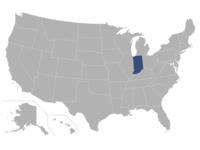
Two Indiana coal-burning power plants remain open under an order from the Trump administration. But a federal appeals court ruling could change that in the future.
The U.S. Department of Energy has repeatedly extended the lifespan of coal plants in five states, arguing the electricity generated at the facilities is needed to help address a national energy emergency.
However, a three-judge panel at the U.S. Court of Appeals for the District of Columbia, in a ruling issued Friday, said it was unpersuaded by the department’s justifications for keeping the J.H. Campbell Coal Plant online in Michigan, determining that the department had exceeded the emergency authority granted by the Federal Power Act.
“There is no dispute that for almost a century states have exercised authority, preserved by the Federal Power Act, to regulate in-state power plants for the economic and environmental benefit of their citizens,” Judge Cornelia Pillard wrote for the panel. “It is the states — informed by federal, regional, and load-serving entities’ assessments of available supply and reliability needs — that bear the responsibility to plan for and avert reliability risks on an ongoing basis. To that end, states decide which generation resources must be built, expanded, reduced, or shut down.”
Trump administration renews order keeping Indiana coal plants open for the third time
The panel ultimately vacated the order.
The Campbell plant’s owner, Consumers Energy, announced a plan to retire the facility in 2021. The Michigan Public Service Commission, which oversees energy companies within the state, and the Midcontinent Independent System Operator, the energy grid operator for the central United States, each signed off on the plant’s retirement, with MISO determining the move would not violate its reliability criteria.
In addition to the Campbell plant, the Trump Administration extended the operation of five other plants in Indiana, Pennsylvania, Colorado and Washington.
The U.S. Department of Energy first issued the orders in December — days before CenterPoint Energy and the Northern Indiana Public Service Co., or NIPSCO, were set to retire the coal-powered F.B. Culley and R.M. Schahfer generating stations in Indiana.
The latest renewal runs through Sept. 19
CenterPoint Energy released a statement saying it is committed to prioritizing affordability and reliability for its southwestern Indiana customers.
“We are reviewing the U.S. Court of Appeals for the D.C. Circuit’s decision involving Consumers Energy’s J.H. Campbell plant and evaluating its potential implications for Culley 2 generating unit in Warrick County,” CenterPoint said. “This decision does not change the U.S. Department of Energy’s direction for Culley 2, and we will continue to comply with that direction.”
CenterPoint said there are no direct bill impacts to customers — “Going forward, we will continue to work collaboratively with federal, state and local stakeholders and remain focused on delivering reliable electric service to our southwestern Indiana customers and their families.”
The company has filed requests with the Federal Energy Regulatory Commission and the Indiana Utility Regulatory Commission regarding compliance with the DOE’s order and subsequent cost recovery.
NIPSCO said “We are reviewing the U.S. Court of Appeals for the D.C. Circuit’s decision regarding the Department of Energy’s Section 202(c) order for Consumers Energy. Our focus remains on serving customers safely and reliably while continuing to comply with applicable legal and regulatory requirements.”
In a February letter urging the administration not to renew the order, CenterPoint Indiana Region President Michael Roeder described the coal-fired Culley plant as an “inefficient and increasingly unreliable asset,” accounting for less than 1% of the region’s installed electric capacity.
The following month, NIPSCO and CenterPoint executives told the Indiana Utility Regulatory Commission that the fuel, chemicals, staffing and upgrades needed to keep the units operational are costly.
The Federal Energy Regulatory Commission authorized MISO to adopt tariffs so NIPSCO and CenterPoint can recover those costs.
The Michigan ruling was the result of the attorney general there challenging the federal order.
An analysis from the Sierra Club, which filed a lawsuit challenging the emergency orders, estimates it could cost consumers a net of $174,000 a day to keep NIPSCO’s Schahfer plant online, while CenterPoint’s Culley plant could cost consumers $21,000 a day.
Michigan Advance reporter Kyle Davidson contributed to this report.
Indianapolis, IN