Michigan legislators challenge prison officials over inmate’s medical care and mold claims
Nov 25, 2026 | 2:30 pm ET
Description
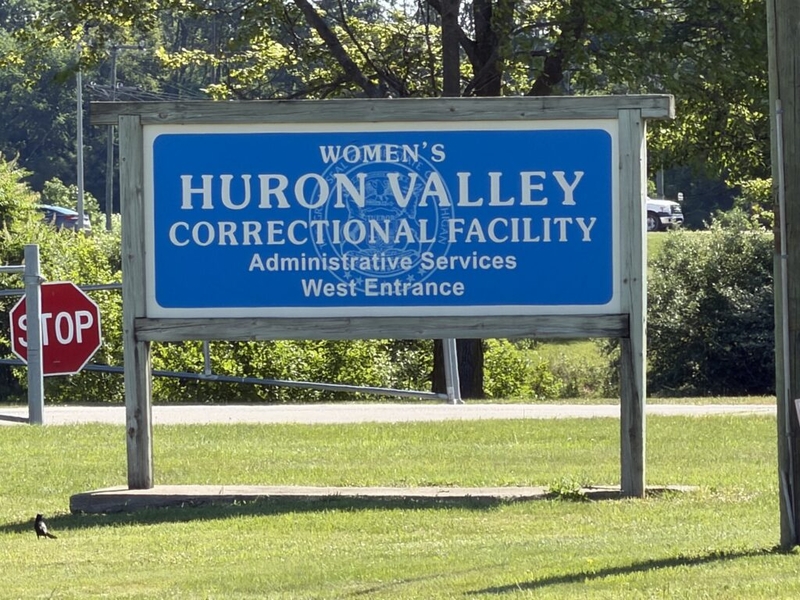
Women's Huron Valley Correctional Facility in Saline Township, Michigan. | Photo by Jon King/Michigan Advance
Following an October federal appeals court ruling allowing a lawsuit alleging toxic mold conditions within the state’s only women’s prison, one of the plaintiffs is seeking a permanent transfer from the Women’s Huron Valley Correctional Facility.
That plaintiff, Krystal Clark, has become a focal point of criticism of the Michigan Department of Corrections, as she faces what her attorneys described as a medical deterioration from toxic mold exposure, which led to an emergency court motion to transfer Clark to Duane Waters Health Center in Jackson in July.
But in laying out their own findings of fact in court proceedings, the department is expressing doubts that Clark has many of the health conditions cited in her request for a more longstanding court order keeping her out of Women’s Huron Valley, describing Clark’s claims as “exaggerated and inaccurate.”
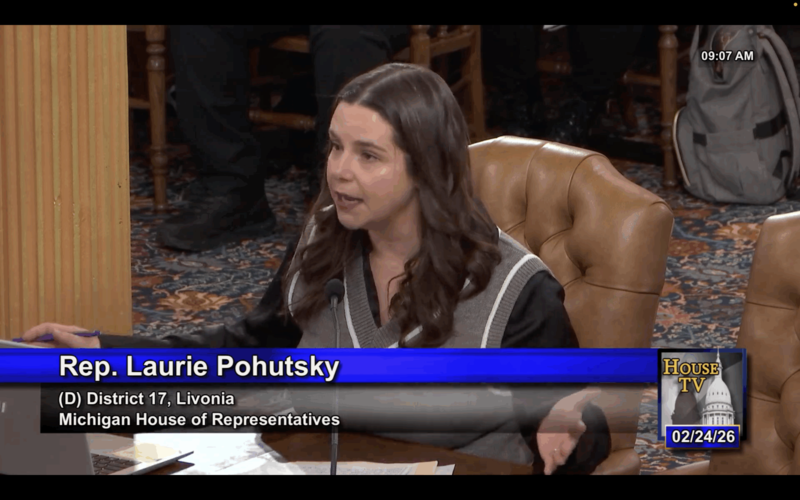
This includes doubts about Clark suffering from mold growing in her ears, which was the centerpiece of testimony from state Rep. Laurie Pohutsky (D-Livonia) at a House Oversight Committee hearing in February.
The filing from the state’s legal team alleges that Clark has refused a biopsy that would be able to conclusively confirm a diagnosis of aspergillosis, a respiratory illness or infection caused by breathing in spores of mold, and has otherwise refused treatment from the department’s doctors.
“Clark claims to suffer from several health conditions, including an ear infection, difficulty breathing, nosebleeds, a severe mold allergy, and coughing blood,” the filing reads. “At various times, she has also complained of a facial droop, vomiting blood, and difficulty walking, but these claims are based on Clark’s self-reported symptoms and lack corroboration in her medical record.”
Pohutsky, as well as state Rep. Emily Dievendorf (D-Lansing), both of whom have openly criticized the department, were critical of the department’s categorization of Clark’s claims as fabricated.
“MDOC has already drawn the conclusion that Krystal Clark is healthy and that her complaints are part of a grand manipulation towards getting money out of the department,” Dievendorf wrote in a statement to Michigan Advance. “The assumption of ill intent toward Clark may be the most disturbing and dangerous of MDOC’s responses because it hangs questions over legitimate health conditions that require a serious response and likely require improvement on the part of MDOC to prevent the same health issues in other incarcerated individuals across MDOC’s facilities.”
The Department of Corrections has repeatedly denied any issues with mold at the facility and released findings of independent environmental testing done by a private contractor, which concluded the facility did not have dangerous systemic black or toxic mold conditions. In response to the emergency motion that temporarily removed Clark from Women’s Huron Valley, the department released a response that disputed the medical need for that transfer.
“Allegations contained in the plaintiff’s motion are not supported by the medical evidence or facts known to the department,” a spokesperson for the department wrote to the Advance in response to the concerns raised by the legislators. “Extensive medical records have been publicly released as part of the response to the plaintiff’s motion for emergency relief. Ms. Clark was not experiencing any emergent medical condition that warranted transfer from Women’s Huron Valley Correctional Facility (WHV).”
However, both legislators state that they have personally seen Clark and attested to her need for medical care outside of Women’s Huron Valley.
“I have witnessed Krystal’s physical condition myself,” Dievendorf wrote. “Krystal has very real health issues that require action, yet her necessary care is being pushed to the month she is expected to be paroled, almost 6 months from now.”

Clark will be first eligible for release on May 9, 2027, according to Michigan’s Offender Tracking Information System, but could be incarcerated up to a maximum date of May 9, 2040.
Pohutsky described what she witnessed of Clark’s condition, specifically the alleged mold in her ear, saying, “It is black and fuzzy, and it completely covers her ear.”
Both legislators also contested the department’s claims that there are no issues of mold within the facility, with Pohutsky calling it “laughable” and adding, “The idea that they’ve eliminated the mold, so she must be lying about any of these conditions being linked to it, is absurd, and they know it.”
Pohutsky added that she sees the statements made by the department in Clark’s case as demonstrating a broader issue with medical care in MDOC facilities.
“Their insistence that none of these symptoms or issues can be true because there’s no medical record of them being true. The whole point is that none of these folks, not Krystal Clark, not anyone else that has been at Huron Valley, not anyone else that is in any of the other MDOC facilities, is getting adequate medical care. So the fact that they keep pointing back to their own medical records, or lack thereof, is sort of beside the point, because they’re not getting adequate medical care,” she said. “People are not receiving adequate care, and their immediate tactic is to act as though it is just simply not happening, and everyone who characterizes it other than completely sufficient and appropriate medical care is wrong. I think it’s insulting.”
Dievendorf added that, when they have expressed concerns to the department, “I have yet to hear MDOC take any responsibility for unsafe infrastructure, unfair conditions of confinement, and inadequate medical care. I have yet to witness MDOC admit it can and should do better.”
Lansing, MI