‘Medically frail’ Medicaid enrollees won’t have to prove their inability to work to keep coverage
Oct 29, 2026 | 6:56 pm ET
Description
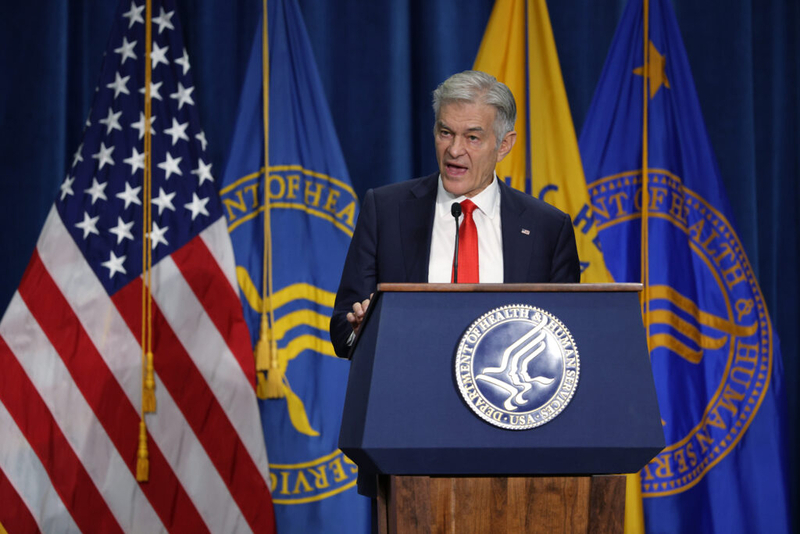
Dr. Mehmet Oz, administrator of the federal Centers for Medicare and Medicaid Services, speaks at the Department of Health and Human Services in Washington, D.C., in December. A federal judge on Thursday struck down the Trump administration’s new guidance on who can qualify for a “medically frail” exception to new Medicaid work requirements. (Photo by Alex Wong/Getty Images)
Medicaid recipients who are disabled or have a chronic illness will not have to prove they are unable to work to be exempted from new work requirements that take effect next year, a federal judge ruled Thursday.
The decision by U.S. District Judge Richard Stearns in Boston grants a partial victory to the 25 Democratic-led states that sued the Trump administration in June, arguing that its new “medically frail” designation was too narrow and would make it too difficult for ill and disabled people to remain on Medicaid, the joint federal-state health insurance program for people with low incomes.
However, the decision also granted some concessions to the administration, most notably by allowing the new work requirements included in the measure known as the One Big Beautiful Big Act to remain in place.
Under that broad 2025 tax and spending law, states that have expanded Medicaid to cover more adults under the Affordable Care Act must require enrollees to work, go to school or volunteer for at least 80 hours a month.
In addition to the 40 states (plus the District of Columbia) that have expanded Medicaid under the ACA, the new rules will apply to Georgia, Tennessee and Wisconsin, which have used federal waivers to expand their Medicaid programs.
In June, the Trump administration released interim guidelines stating that in order to qualify for a “medically frail” exception to the work rules, a Medicaid recipient had to have a significant condition and be significantly impaired in their ability to work.
In a statement unveiling the new guidance, Dr. Mehmet Oz, director of the Centers for Medicare and Medicaid Services, said it would help Medicaid enrollees “build skills and independence through work, education, job training, or community service, creating new opportunities for themselves and their families.”
Stateline reached out to CMS, the U.S. Department of Health and Human Services, and the White House for comment on Thursday’s ruling but did not receive a response in time for publication.
Before the new guidance, states had been operating under the assumption that they would use the federal government’s traditional “medically frail” designation, which includes five distinct categories of disabilities and illnesses but does not require Medicaid agencies to determine whether the person can work.
Now states will not have to scramble to update their enrollment systems to account for the change. Many state leaders worried that the new guidelines would remove eligible people from the rolls and they didn’t have enough time or money to overhaul their eligibility systems to protect them.
“The States have met their burden of showing irreparable harm for which monetary damages would provide inadequate compensation,” Stearns wrote in his 16-page ruling. “Because enforcement of an unlawful definition of “medically frail” may lead to the disenrollment of otherwise eligible vulnerable individuals relying on Medicaid coverage for continuity of care, the States (and public) face potential for great hardship in the absence of an injunction.”
But Stearns declined to strike down two new federal standards the states opposed.
The first requires states to reject proof of medical frailty that is more than a year old. Stearns also upheld a rule that states accept no more than one self-attestation — or a patients’ own formal declaration of meeting an exemption — per enrollment period.
“The court finds the States’ objections to the twelve-month lookback period and the limitation on the use of self-attestations unconvincing,” Stearns wrote. “The Government provided a non-frivolous rationale for adopting each provision.”
Dr. Willie Underwood, president of the American Medical Association, said in a statement that the ruling “is a victory for patients.”
“Patients should not have to clear unnecessary bureaucratic hurdles to keep their health coverage, especially hurdles that go beyond what Congress intended. The AMA will continue fighting to protect access to medically necessary care and ensure bureaucratic red tape doesn’t stand in patients’ way.”
Stateline reporter Shalina Chatlani can be reached at [email protected].