Maryland history… relevant or a relic?
Jun 21, 2026 | 5:37 pm ET
Description
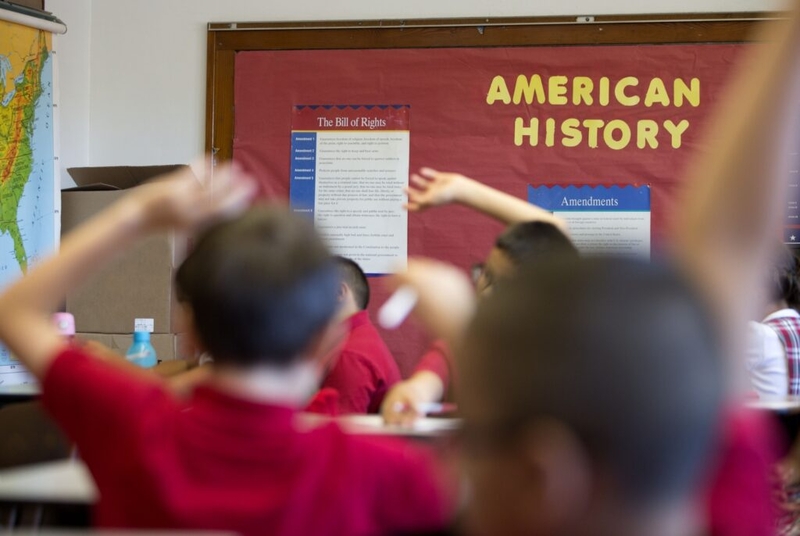
Sidelining history in the curriculum, and giving even less attention to state history, deprives students of knowledge of the events, good and bad, that shaped our state today, writes Jennifer Brown. (Getty Images)
How much do students know about the history of Maryland? As a political science instructor, I often ask myself that question. Semester after semester, I arrive at the same answer: very little.
I think this is more than just a symptom of declining education, or mediocre history curriculum, since most adults don’t know much more than the students. I think history is undervalued in our culture, and state history is valued least. Whether due to neglect, the passage of time, or the rewriting of history itself, it is an unfortunate loss for posterity.
Today the academic trend is to sideline history. Many post-secondary degree paths are moving away from requiring history as a prerequisite for graduation. Psychology, sociology and behavioral sciences take precedence. Likewise, the perusal of Maryland’s primary and secondary curricular requirements reveals the same trend.
History is sidelined by economic and social studies. American history curriculum is now almost entirely centered on social, economic and political movements and upheaval. Certainly, these are topics of interest in American history, but the obvious left-of-center ideological slant, presents an unbalanced perspective to students at best.
Your opinion matters
Maryland Matters welcomes guest commentary submissions at [email protected].
We suggest a 750-word limit and reserve the right to edit or reject submissions. We do not accept columns that are endorsements of candidates, and no longer accept submissions from public officials, elected officials or political candidates.
Opinion pieces must be signed by at least one individual using their real name. We do not accept columns signed by an organization. Commentary writers must include a short bio and a photo for their bylines.
Views of writers are their own.
History should be engaging, thought-provoking and relevant. It allows for exploration of the past through the lenses of people and events that have shaped our state and culture. Delving into Maryland’s past is crucial to Maryland’s future. Educators, citizens and politicians alike should revive and promote the study of Maryland historical facts, for our students as much as for ourselves.
What if students reviewed first-hand accounts of Capt. John Smith as he observed elk, bear and a bay so full of oysters it was crystal clear? What if they read about the oyster pirates that raided the bay in the early 1800s and their skirmishes with the Oyster Police, the state’s first natural resources police force?
What if they could track down records of furriers and settlers who interacted and traded with Maryland Indigenous tribes throughout the region or could trace the records of the Underground Railroad? What if they could identify brave Marylanders who risked their own lives to help men and women escape the evils of slavery?
What if they learned all about Maryland government, from the signing of Official Colonial Charter in 1632, to the battles over the meaning of Maryland’s Act Concerning Religion? What if they could follow the trail of events, including the burning of the cargo ship known as the Peggy Stewart, which led to Maryland’s own declaration of independence in 1776? What if they were familiar with Maryland’s four constitutions, and how each one limited or expanded executive, legislative and judicial power?
What if students learned the history of the College Park Airport, where Wilbur Wright trained the first U.S. military pilots and where the first reported nighttime landing occurred. What if they retraced the path of the B&O Railroad or the C&O Canal?
Students should visit Annapolis, Antietam, the Frederick Douglass Museum, Fort McHenry and countless other historical sites across the state. They could learn about men like John Archer: As the first medical graduate in the United States, he trained doctors in his house, treated those who could not pay and eventually served as a member of the House of Representatives.
They could learn about William Holland Wilmer founder of the Wilmer Institute, the first university-based, combined research, teaching and eye care clinic in the United States. These and thousands of other stories from every town, city and county across the state remind us of the valuable heritage we have as Marylanders.
Certainly, with the good comes the bad, and students should be aware of the errors and injustices in our state’s history, but they should not stop there. These sad stories are not the culmination of the history of our state, rather they teach us what we should not repeat in the future. Students should be taught to take pride in the successes of a state which has such a vibrant and valuable history. What could they achieve with such knowledge and perspective?
Maryland’s history reminds us of where we came from and highlights our achievements, failures, and the struggle to become a great and enduring state. As we celebrate the United States’ 250th birthday and 392 years of Maryland history, it’s time to dust off the history books and investigate the depths of our state’s rich heritage.

Annapolis, MD