Mark Kelly pushes permanent citizenship for DACA recipients as renewal delays spike
May 12, 2026 | 7:19 pm ET
Description
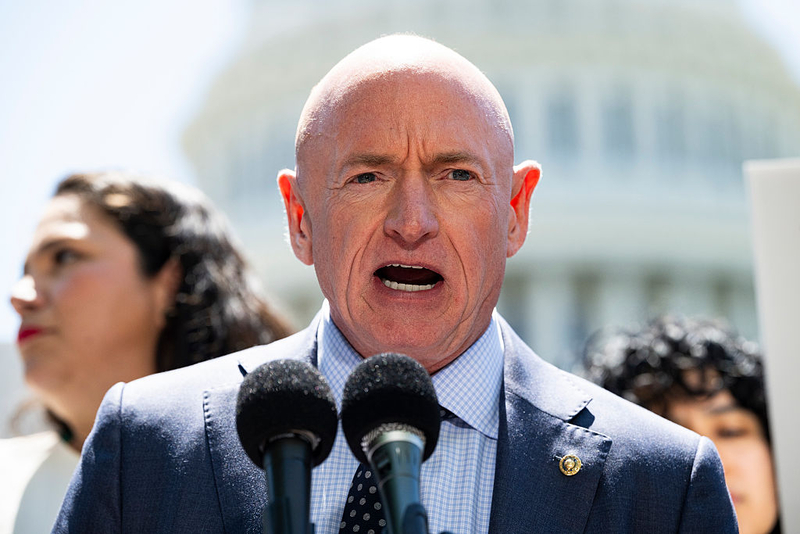
U.S. Sen. Mark Kelly speaks during a press conference on the federal Deferred Action for Childhood Arrivals program on May 12, 2026, outside the U.S. Capitol. (Photo by Graeme Sloan/Getty Images)
Immigrant rights groups and elected officials are calling for the creation of a permanent pathway to citizenship for people who came to the country as minors, even as President Donald Trump’s mass deportation campaign puts them at risk.
More than 500,000 people across the country depend on the work permit and temporary protection against deportation afforded to them under the Obama-era Deferred Action for Childhood Arrivals program, including nearly 19,000 who live in Arizona. But their future ability to legally work and remain in the Grand Canyon State is increasingly uncertain.
While the program has been regarded as a dependable legal shield against deportation for over a decade, that protection is no longer assured. In the first nine months after Trump took office, immigration agents arrested 270 DACA recipients, and 174 of them were eventually deported.
And dramatic delays in renewal processing times could increase that number. DACA holders must apply for renewals to extend their work permits and deportation protections every two years. Allowing their participation to lapse puts recipients at risk of detention and makes them ineligible to work.
From the tail end of the Biden administration through much of Trump’s first year, the average wait time for a renewal was about 15 days. Since then, that wait time has increased by nearly five times. Between October 2025 and February 2026, the processing period for DACA renewals increased to 70 days.
The only time it’s been longer than that was in 2016, when it reached a peak of 79 days as the U.S. Department of Homeland Security transitioned renewals to a fully online process. (U.S. Citizenship and Immigration Services didn’t compile data for 2020, during the pandemic.) Immigrant advocacy groups have reported wait times as long as six months, in some cases.
During a news conference in front of the U.S. Senate hosted by Dream.US, an organization that advocates for immigration reform, U.S. Sen. Mark Kelly lambasted the prolonged processing times, accusing the Trump administration of intentionally lengthening them. The Arizona Democrat said doing so isn’t “right” and that leaving recipients without the protections the federal government has approved since 2012 is unfair to both them and the people that rely on them.
“This leaves hardworking people who have done everything right in limbo,” Kelly said. “It creates uncertainty for them, their employers and their families. Nobody benefits from this.”
Kelly urged Congress and the White House to adopt legislation that resolves the dangers DACA recipients face by overhauling the country’s immigration system and offering them a permanent pathway to citizenship.
Democrats have pushed similar proposals, known as the Dream Act, for more than two decades, without success. The latest iteration, introduced in the Republican-majority U.S. House of Representatives last February, has failed to move forward.
Despite the likelihood that the legislation will prove unsuccessful again this time, Kelly said he believes it might have a chance if Congress and the White House are “serious” about finding long term solutions for “Dreamers,” immigrants living in the country with or without legal authorization who arrived as minors.
“There’s no world where we cannot make this happen,” Kelly said. “This can become the reality. We can pass laws to make sure that Dreamers are safe and secure in the only home many of them have ever known.”
DACA recipients and their family members highlighted the uncertainty of the current system. Kai Martin, who is pursuing a doctorate at Howard University, said her ability to continue her education and research is in jeopardy because her DACA renewal has yet to be approved.
“Despite doing everything correctly, I am once again facing delays that are putting my future on hold,” she lamented.
Dixy Ortiz Osoria, an elementary school teacher who immigrated to the U.S. when she was just 10 years old, said that the two-year renewal process puts her in a constant cycle of fear.
“Every two years, I worry whether my renewal will arrive on time,” she said. “I worry about losing the career I worked so hard for. I worry about being separated from the community and students who depend on me.”
Jen Rickling, from southern Arizona, said that despite her conservative views and her support for stronger border security measures, she also believes in giving Dreamers access to citizenship. That’s a view that’s shared by the majority of Americans: A 2025 survey found that 68% of Americans agreed that Dreamers should be allowed to pursue citizenship.
Rickling’s daughter-in-law, Annie Ramos, was detained earlier this year at her husband’s military base days after registering as newlyweds. Ramos, a DACA recipient who had an order of removal issued against her as a toddler, has since been released, but must wear an ankle monitor and is barred from leaving the state of Louisiana, where her husband is stationed.
Rickling said Dreamers like Annie shouldn’t face deportation for actions they had no say in.
“I don’t think that a deportation order from two decades ago from when Annie was a baby should override her marriage and her life over the past 20 years,” she said.
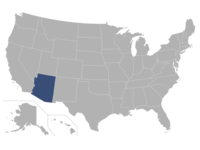
Phoenix, AZ