Maine ends another year with revenue surplus
Jul 24, 2026 | 12:58 pm ET
Description
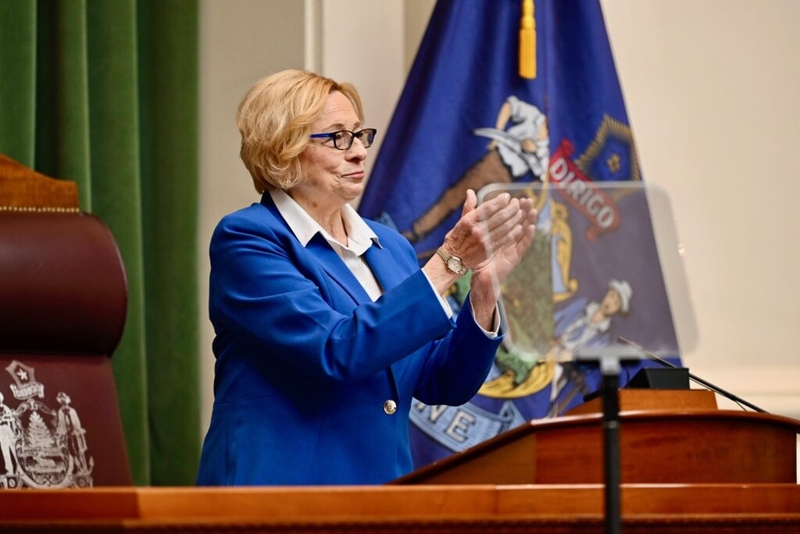
Gov. Janet Mills gives her final State of the State address on Jan. 27, 2026. (Photo by Jim Neuger/ Maine Morning Star)
Maine ended another year with a general fund surplus, allowing the state’s rainy day fund to again reach its statutory cap and helping to fill a transportation funding gap that had halted projects earlier this summer.
Gov. Janet Mills’ administration announced Friday that the state concluded the 2026 fiscal year with an excess of more than $148 million. That’s slightly less than the $152.2 million general fund surplus in 2025, which had grown by nearly $60 million compared with 2024. This marks the fifth consecutive year the state has had a surplus.
Because of the higher-than-expected revenue, the state’s Budget Stabilization Fund, also known as the rainy day fund, has returned to its statutory maximum $1.056 billion, or 18% of the prior year’s general fund revenues.
Budget squeezes through after battle over Gov. Mills’ affordability checks
Mills and the Legislature’s Democratic majority had pulled $292 million from the rainy day fund — over the objection of Republicans and some Democrats — to pay for policy priorities last session, including $155.2 million for relief checks that certain Mainers are expected to start receiving early next month.
The reported surplus comes after Mills and the state financial office have repeatedly warned against major spending in recent years amid projected revenue shortfalls and uncertainty from federal funding cuts under President Donald Trump’s administration.
The higher than expected year-end revenues are first transferred to certain priorities outlined by state law through what’s called the “cascade.” But then the remaining surplus is divided, with 80% slated for the rainy day fund (amounting to $26.2 million this year before the fund reaches its cap) and the remainder going to the highway and bridge capital fund ($115.7 million this year).
Additionally, the Maine Department of Transportation will receive another $20.26 million, which will help address a funding gap that led the department to cut up to $400 million from its planned projects earlier this year.
“Thanks to these year end transfers, many of the projects MaineDOT initially had to put on hold can get rescheduled, and we look forward to thoughtfully, reasonably, and expeditiously processing them in the weeks ahead,” Maine DOT Commissioner Dale Doughty said in a statement Friday.
However, Doughty added that the short-term funding boost does not solve the state’s perpetual challenge with funding transportation projects.
The state’s highway fund, which is separate from the general fund, has long been a point of struggle for lawmakers. Lawmakers have attempted, though unsuccessfully, to combine the funds. A few years back the state diverted various sales taxes that had previously funneled into the general fund to help boost the highway fund. But those taxes are now down and the outlook for the highway fund for the coming years is broadly negative.
The other transfers to be made through the cascade process as a result of the surplus include $1 million to governor’s contingency account, $1 million to Finance Authority of Maine’s loan insurance reserve, $2.5 million to reserve for operating capital, and $2 million to retiree health insurance.
Augusta, ME