Mail-in voting is still an option for this year’s midterms. Here’s what voters should know.
Sep 28, 2026 | 4:00 am ET
Description
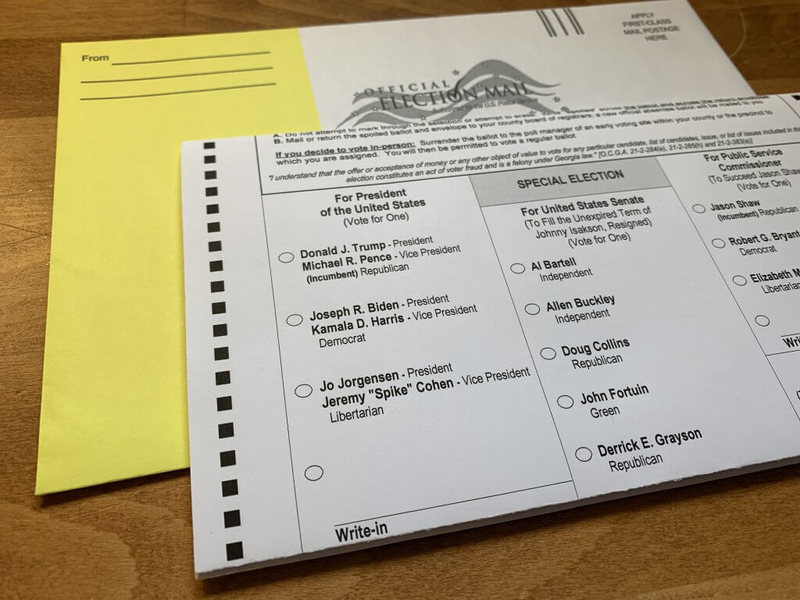
Election officials say that, functionally, nothing has changed about the process of absentee voting for the midterm elections in Georgia. But voters should still make sure to be proactive and follow all necessary steps. Jill Nolin/Georgia Recorder
Voting by mail remains a reliable form of voting in Georgia after the U.S. Supreme Court blocked an effort to restrict the practice over unfounded fears of widespread noncitizen voting. But Georgia officials and advocates say voters should still pay careful attention to the rules and deadlines in order to cast an absentee ballot this year.
The U.S. Postal Service had previously attempted to implement a new Trump administration rule requiring states to send their voter rolls to the federal government and only deliver mail ballots to voters who match federal citizenship data. Georgia Secretary of State Brad Raffensperger, who is a Republican, was among the election officials who filed an amicus brief in the case urging the justices to postpone the rule, arguing that it would be impossible to implement the changes so close to the midterms.
Election officials say that, functionally, nothing has changed about the process of absentee voting for the midterm elections in Georgia. But Wanda Mosley, who serves as deputy policy director of Black Voters Matter, a nonpartisan nonprofit that leads voter registration and turnout efforts, said the legal battle on the national level has led to an increase in absentee ballot-related worries among both new and experienced voters.
“All of the headlines about changes to vote by mail do cause concern for folks,” she said. “Even if a lawsuit fails, there has been an opportunity to chip away at the trust in vote by mail in the community.”
In Georgia, anyone can cast an absentee ballot, but that method of voting is predominantly used by older voters, voters with disabilities, military and overseas voters and college students who want to stay registered at their family’s home address.
Voting absentee, Mosley added, can be beneficial for voters who want to avoid waiting in line at the polls, or are worried about encountering technology issues on Election Day. During the pandemic, it was also a useful way to avoid exposure to illness, with a record-setting 1.3 million Georgians using mail ballots in the 2020 general election.
Georgia’s voter registration deadline is approaching. Here are five things you need to know.
“Here in our state, vote by mail was a hugely popular option for folks to exercise during the pandemic to keep themselves safe,” Mosley said. “And since then, I think a lot of people who used it in 2020 for that reason understood and found it to be real convenient.”
But election workers say that although there will not be changes to Georgia’s vote-by-mail process ahead of the midterms, there is still a degree of uncertainty involved in using this method of voting.
“We are encouraging more people to actually vote in person, only because when we mail a ballot to a person, it is out of our hands as far as when it will get to them and then when it will get back to us,” said Richmond County elections director Travis Doss.
Georgia also offers three weeks of early voting for residents who want to vote in person before election day. Registered voters can cast an early in-person ballot at any early voting location in their county starting on Oct. 13.
But for voters who want to cast an absentee ballot in Georgia, here are the most important things to know.
Requesting your absentee ballot
Georgia is a no-excuse absentee voting state, meaning anyone can request an absentee ballot for any reason. But the state does not send absentee ballots automatically, meaning that any voter who wants a mail-in ballot must fill out an application from the secretary of state’s office.

Elections Director Blake Evans said he encourages voters to be proactive if they want to cast an absentee ballot and make sure they’re following all the necessary steps.
“The main thing I would say is, if you do want to vote by mail, go ahead and get your request in now,” Evans said. “That way, you’ll get your ballot in plenty of time, and then you can always, of course, send it back to the mail. But you are always welcome to return it in person or at a county drop box location.”
To request an absentee ballot, voters can complete a paper form or an electronic application from the secretary of state’s website, which they then must sign and mail, fax, email or drop off in person at their county registrar’s office.
The last day to request an absentee ballot ahead of the general election is Oct. 23. However, Doss, the Richmond County elections director, encouraged anyone who wants to vote by mail to submit their absentee ballot requests early and return their completed ballots as soon as possible. Election Day is Nov. 3.
“If they wait till that Oct. 23 [deadline], you know, we’ll do the best we can,” he said. “We’ll get it out to them, but the challenge is they have to get it voted and get it back to us.”
Returning your absentee ballot
Unlike in some states, which only require a postmark by Election Day, Georgia requires absentee ballots to be delivered by 7 p.m. on the day of the election in order to be counted.
That strict deadline is part of why election officials urge voters not to wait until the last minute to cast an absentee vote. Ballots must also be signed and include the voter’s driver’s license number or a copy of some other photo ID, such as their passport.
Voters can also sign up to receive text or email updates about the status of their absentee ballot through the secretary of state’s My Voter Page to be notified when their absentee ballot is mailed out from the county elections office, as well as when their completed ballot is accepted.
But Evans, the state elections director, said anyone who mails in their ballot but doesn’t see it counted still has the option to have election workers cancel their absentee ballot and issue them an in-person one. Upon arriving at their polling place, election workers will check to see if there is a record in the system of the voter’s absentee ballot being counted.
“If the ballot has been received, then the poll worker will notify the voter that ‘your absentee ballot has been received, you have voted and you cannot vote again,’” he said. But if it hasn’t, “the office can, right then and there, cancel that ballot so that it cannot be accepted anymore, and then the person would be allowed to vote in person on any regular ballot.”

Atlanta, GA